
Political Tug-of-War in AZ-06: Who Will Prevail?
This week we’re taking a look at AZ-06, a district held by Democrats for several cycles until Rep. Ann Kirkpatrick retired in 2022.
By Dr. Julie Martinez Ortega
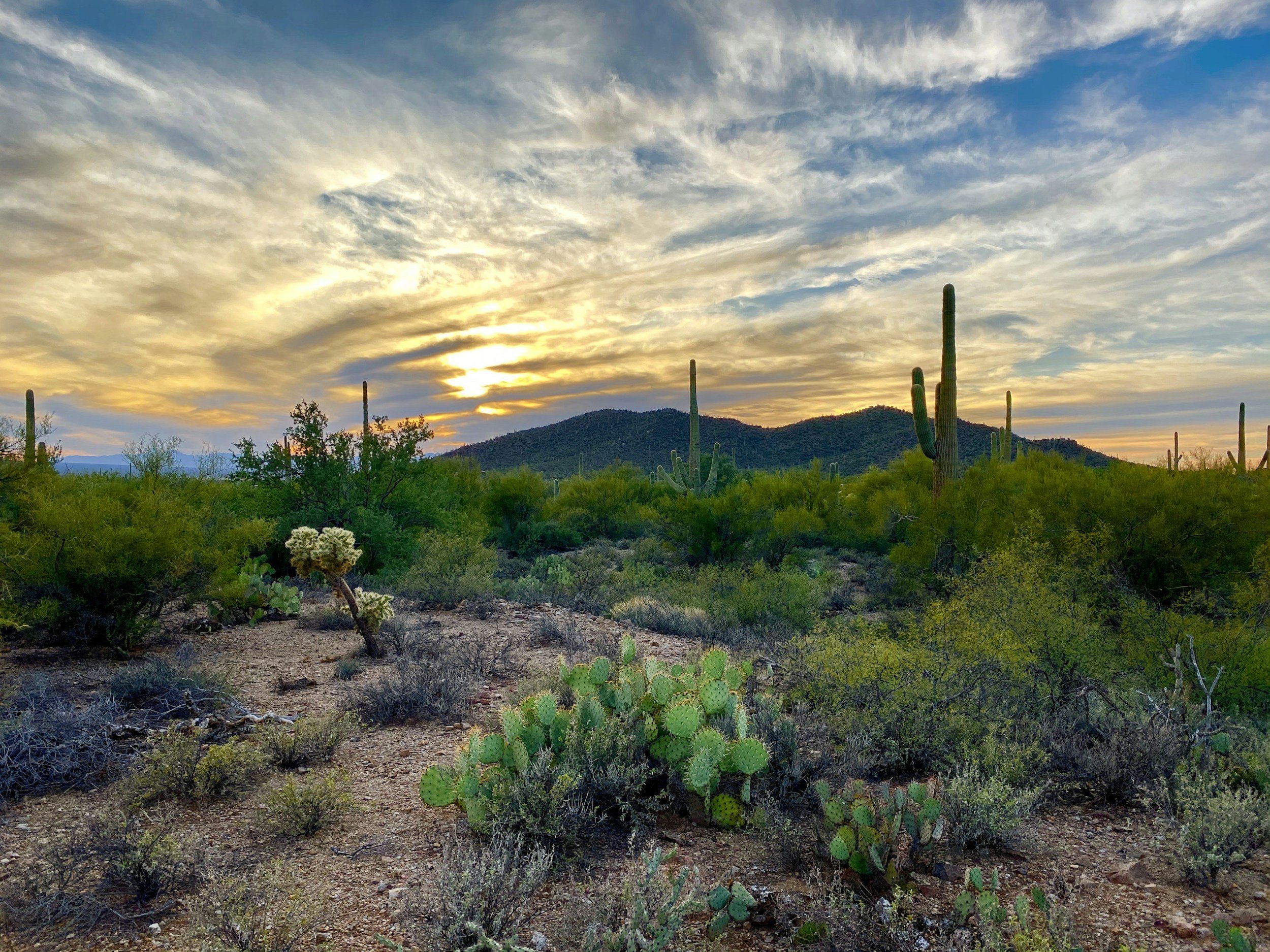
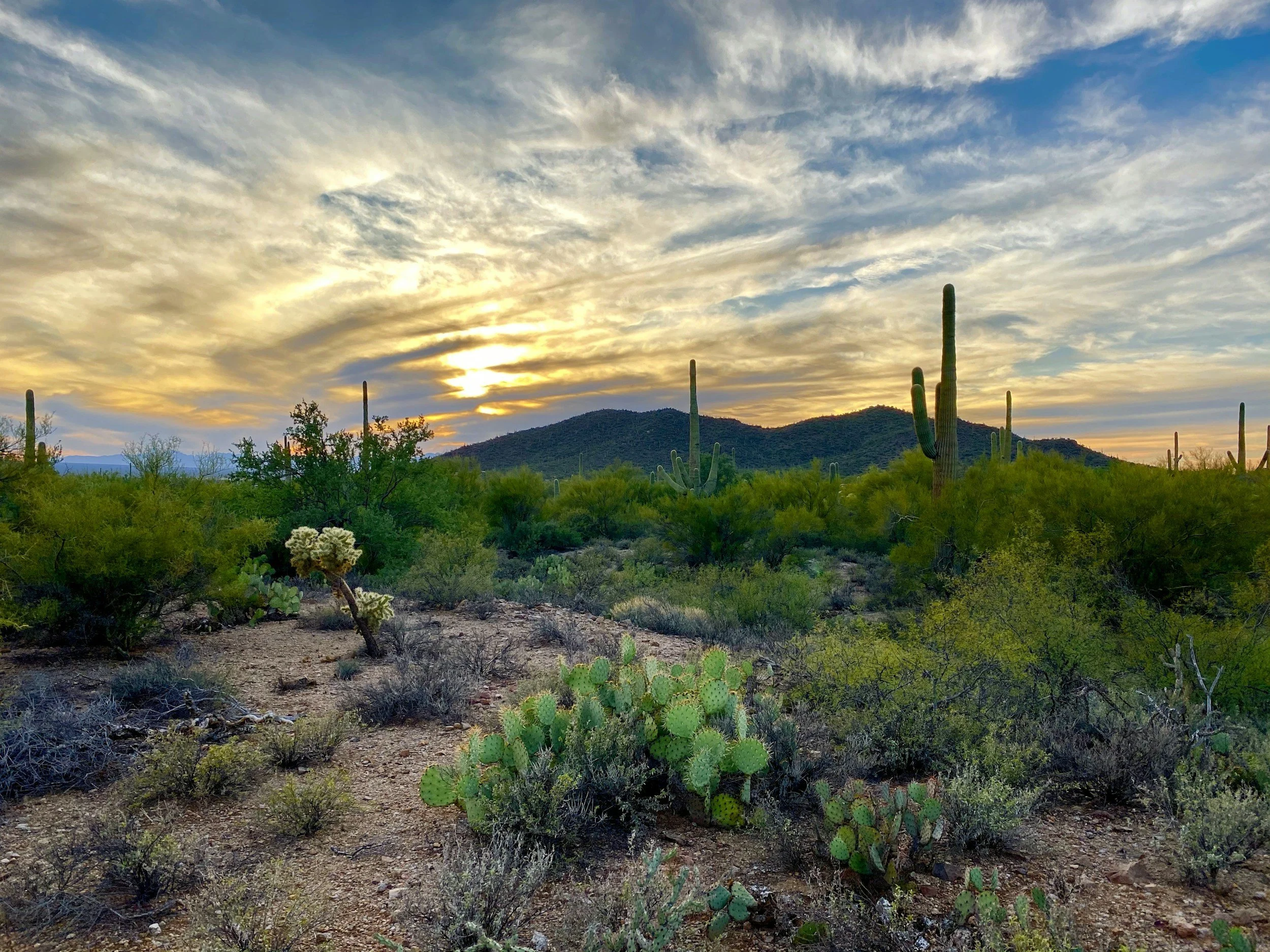
Saguaro National Park
This week we’re taking a look at AZ-06, a district held by Democrats for several cycles until Rep. Ann Kirkpatrick retired in 2022. Subsequently, Juan Ciscomani, a Mexican American Republican, bested Democrat Kirsten Engel with 50.7% of the vote in the 2022 midterm election. Engel is running uncontested for the Democratic nomination on July 30, 2024, so AZ-06 voters will once again choose between these two candidates in a November rematch.
A Competitive but Winnable District
AZ-06 is situated in southeastern Arizona, with its southwestern boundary encircling the Tucson area. The district is primarily rural and semi-rural, with a suburban area outside of Tucson. Most of the district’s population is located in these suburbs. AZ-06 was one of the 18 districts that would have voted for Biden in the 2020 presidential election, had they existed in their current configuration, while being won or held by a congressional Republican in 2022. The district is 63.1% white and 24.75% Latino. The Cook Political Index for AZ-06 is R+3 and the NMI is D+2. Cook lists the district as a “Republican Toss Up.”
Rematch Between Engel and Ciscomani
Kirsten Engel is a former member of the AZ State Legislature, having served in the AZ State Senate in 2021 and in the House of Delegates from 2017-2021. She is a professor of law at the University of Arizona, focusing on environmental and administrative law. Many of Arizona’s major Democratic elected officials and labor unions have endorsed Engel in this rematch. The Democratic Campaign Committee lists her on their Red to Blue list of priority districts for fundraising.
Freshman Republican Ciscomani’s first election was in 2008, when he lost a bid for a seat in the AZ Legislature. He didn’t seek higher office again until his successful race for Congress in 2022. His professional career consists of working in political offices, including an 8-year stint with Governor Ducey of Arizona, a position he held until his election to Congress. He praised the US Supreme Court decision overturning Roe v. Wade. The Wall Street Journal reported that, “he would be open to immigration reform and legal protections for young immigrants who came to the U.S. as children.”
In 2020, Democrat Kirkpatrick won the district with 55.1% of the vote. In the 2022 election to fill the open seat, Republican Ciscomani won 177,201 (50.7%) votes to Engel’s 171,969 (49.5%) votes, with a margin of victory of just 5,232 votes. Given the tight margins over the past two election cycles, turnout will be a key factor in the 2024 election.
Latino Turnout Will be Key to Democratic Victory in 2024
Turnout among all voters nationally tends to dip in midterm elections relative to presidential election years. Unfortunately, the dip is not evenly distributed among different racial groups, with Latino voters tending to sit out midterms at higher rates compared to their white counterparts. Similar to most places in the country, Arizona’s Latino voters historically support Democrats over Republicans at much higher rates than white voters. In 2020, Latinos statewide supported Biden at 61% while only 46% of whites who cast ballots supported him.
In the AZ-06 2022 congressional race, the disproportionate share of Latinos who didn’t vote likely contributed significantly to Ciscomani’s election. In 2020, Democrat Kirkpatrick won the election when turnout among Latino registered voters was 64% and white turnout was 81%. But two years later, in 2022, when Democrat Engel ran, the Latino turnout rate dropped dramatically by 20 percentage points, down to 44%. (It’s worth noting that even at its high point during the presidential election of 2020, Latino turnout at 64% was still lower than the turnout rate among the district’s white voters during the 2022 midterm election at 68%. In other words, Latino turnout in AZ-06 is consistently far below its potential.) Had Latinos voted at their 2020 turnout rate of 64% in the 2022 midterm election, they would have contributed an additional 19,655 votes. If those AZ Latino voters supported the Democrat at the same rate they supported Biden in 2020 (61%), they would have generated an additional 11,990 votes for Engel, which is over two times Ciscomani’s 5,232 margin of victory. Once again, Latinos hold the potential to add a Democrat to their state’s congressional delegation.

Is 2024 the Year Garcia’s Luck Dries up in the Desert?
For the third time, Republican Congressman Mike Garcia is about to face off against a Democrat in a Southern Californian district (CA-27) that favors Democrats in both registration share and partisan preference. Can he beat the odds and get reelected yet again, or will the Democratic nominee this time — George Whitesides — motivate the district’s voters to finally oust Garcia?
By Dr. Julie Martinez Ortega

Santa Clarita, CA
For the third time, Republican Congressman Mike Garcia is about to face off against a Democrat in a Southern Californian district (CA-27) that favors Democrats in both registration share and partisan preference. Can he beat the odds and get reelected yet again, or will the Democratic nominee this time — George Whitesides — motivate the district’s voters to finally oust Garcia?
CA-27 now has all the markers of a Democratic stronghold. With a NMI score of D+8 and Cook Political Report score of D+4, this is considered one of the most hotly contested races nationally. The Democratic Congressional Campaign Committee (DCCC) has designated the Dem challenger, Whitesides, as one of its top fundraising priorities for 2024. Democrats hold a double-digit registration advantage in the district.
CA-27 is among the 18 districts that would have voted for Joe Biden in 2020 had they existed in their current configuration while being won or held by a Republican in 2022. It is also the only Republican-held congressional district to include portions of the actual city of Los Angeles.
An hour north of LA
Located about an hour's drive north of Los Angeles, CA-27 sprawls from Santa Clarita to the far-flung inland desert cities of Lancaster and Palmdale. This district was most recently considered deep red until 2018 when the young and charismatic Democratic Katie Hill managed to unseat the Republican in a race that drew national attention. But less than a year after her election, Hill was forced to resign due to a sex scandal. (Hill served as representative for CA-25. The CA-27 now covers largely the same geographic area as the old CA-25.)
Try, try again
In May 2020, Garcia managed to beat Christy Smith, a member of the CA State Assembly, in the special election to replace her with 54.9% of the vote after a grueling campaign in which he campaigned in support of Trump’s call to “build the wall” and against socialism, cutting taxes, strengthening the military. According to the Los Angeles Times Garcia’s victory marked the first time in more than 20 years that a Republican flipped a California congressional district held by a Democrat.
Smith challenged Garcia that November in the general election, only to lose yet again, but this time by a mere 333 votes. In 2022, Smith faced Garcia for the third time, but lost by a far wider margin of 12,754 votes.
Whitesides, the long-time CEO of Virgin Galactic and a former top-level Obama administration official at NASA, is the Democratic Party’s 2024 nominee. His work for Virgin Galactic in the Mojave Desert involved the creation of jobs in the district’s Antelope Valley.
Whitesides’ winning formula?
CA-27 REGISTERED TO VOTE, BY RACE
How can Whitesides turn the tide in this district and return it to the blue column? When we dig into which voters cast ballots in 2020 (when Garcia won by a healthy margin) and compare that to 2022 results for CA-27 (when Garcia won by just 333 votes), we see that the pool of voters differed in some very meaningful ways. This is especially true when we focus on white and Latino voters. When the votes were tight in 2020, whites comprised 49% of those who cast votes and Latinos comprised 30%. These shares somewhat mirrored each group’s composition of the registered voters of CA-27 (whites 45% and Latinos 33%), although whites overperformed and Latinos underperformed at the ballot box.
CA-27 2022 BALLOTS CAST, BY RACE
But in 2022 when Garcia won by almost 13,000 votes, whites rose as a share of voters to almost 60%, massively overperforming, while Latinos dropped precipitously by almost a third, down to 23%. With Latinos showing up to vote at a rate such that their share of the voters is a full 10 points lower than their registration rates, there was no way that Smith could emerge victorious.
Spoiler alert: Latino vote crucial
Whitesides must learn an important lesson from this comparison of Latino turnout in 2020 and how it differed from that of 2022: The only path to victory in November of 2024 runs straight through the district’s Latino community. (If you’ve been following all of our blog posts so far in this 2024 congressional races series, you will start to see a recurring theme!)

Wealthy Long Island, NY District Sees Rematch
This week we’re taking a look at the NY-04, which is located in affluent southern Long Island in New York and includes the towns of Hempstead, Mineola, Oceanside, Woodmere, and Long Beach. Republican Anthony D’Esposito is the district’s current representative. This race is yet another rematch of 2022.
By Dr. Julie Martinez Ortega
Town of Hempstead's old Town Hall
This week we’re taking a look at the NY-04, which is located in affluent southern Long Island in New York and includes the towns of Hempstead, Mineola, Oceanside, Woodmere, and Long Beach. Republican Anthony D’Esposito is the district’s current representative. This race is yet another rematch of 2022.
A safe seat for Democrats
NY-04 is considered a safe seat for Democrats, with a New Majority Index score of D+9. Cook Political Report ranks it as D+5. For the 2024 cycle, Cook categorized the district as a “Republican Toss Up.” This district is one of the 18 districts across the country that would have voted for Biden in 2020 had they existed in their current configuration (Biden’s 2020 margin in the district would have been 15%) but that also elected a Republican to the House of Representatives.
As of 2024, this district, alongside California's 22nd, is the most Democratic-leaning congressional district represented by a Republican. Despite its structural advantages for Democrats, it’s currently held by a freshman Republican.
This district is located just east of John F. Kennedy Airport. It’s 99% urban and a significant part of it is water-adjacent. When it comes to household income, NY-04 ranks among the top wealthiest districts nationally. NY-04 is the second-wealthiest congressional district in New York. Its median household income is $122,164 and the mean HHI is $152,531. Almost a quarter of the district’s households have a HHI over $200,000 or more. Just over 50% of the district’s residents are white; 22% are Latino; 16.3% are African American, and 7% are Asian American.
In 2022, four-term House member and Democrat Kathleen Rice decided not to run for reelection in the NY-04, and Lauren Gillen, former supervisor of Hempstead, was the Democratic Party’s nominee for the open seat. Gillen faced D’Esposito, a former NYPD police officer who managed to win with 51.8% of the vote.
A total of 271,493 votes were cast in the 2022 election, with D’Esposito winning 140,622 and Gillen winning 130,871. D’Esposito’s margin of victory was 9,751 votes.
Incumbent former NYPD officer
D’Esposito is a first-term congress member and a relative newcomer to electoral politics. Prior to becoming an elected official, Esposito was an officer with NYPD until 2020. He had a record of excessive force complaints and reprimands from the department. He was appointed to the Hempstead city council in 2016 and later was elected to a full term, where he served until winning the 2022 election to represent NY-04. D’Esposito has endorsed Trump in 2024 for the presidency and has been an outspoken critic of Democrats for how they’ve handled the surge of migrants to the state.
Challenger former town supervisor
Gillen is considered the presumptive Democratic nominee despite having a few challengers in the primary. The DCCC is already listing her on its “Red to Blue” program, meaning it intends to provide a high level of support to her in the general election. A lifelong resident of NY-04, Gillen has spent her career in service to those in need, assisting people living with HIV/AIDS and providing pro bono domestic violence support. In 2017, Gillen became the first Democrat elected as Hempstead Town Supervisor in over a century, where she led revitalizing the town’s infrastructure and pursued legal action to protect the town’s public water supply.
Progressives Mount Challenge in Southern New York District
This week we turn to New York, where progressives are mounting a strong challenge to unseat several Republican incumbents in toss-ups and seats that lean Democratic. In New York’s 17th congressional district, located in the southern portion of the state, Mondaire Jones is trying to return to Congress.
By Dr. Julie Martinez Ortega

Sleepy Hollow, New York
This week we turn to New York, where progressives are mounting a strong challenge to unseat several Republican incumbents in toss-ups and seats that lean Democratic. In New York’s 17th congressional district, located in the southern portion of the state, Mondaire Jones is trying to return to Congress. First elected in 2020 to represent NY-17, Jones ran unsuccessfully in the NY-10 Dem primary after redistricting changed the boundaries of the district. He’s now running in the newly configured NY-17 against Republican Mike Lawler.
The NY-17 is one of the 18 districts nationally that would have voted for Joe Biden in the 2020 presidential election had they existed in their current configuration while electing or re-electing a Republican to represent them in Congress. Cook Political Report rates it as a D+3, meaning it leans Democratic. It is 64.4% White, almost 20% Latino, 7% Black and 5% API. The district has a significant Jewish population that includes conservative Hasidic communities in Rockland County. Situated to the north of Manhattan, the district includes all of Rockland and Putnam Counties as well as much of Northern Westchester County.
Who is Mike Lawler?
NY 17 2022 ELECTION RESULTS
Mike Lawler currently represents the NY-17. A first-term Republican in this seat, Lawler surprised almost everyone by vanquishing Sean Patrick Maloney, a leader within the Democratic Party, in 2022 and flipping the seat from Blue to Red overnight. With 50.29% of the vote (143,550 votes), Lawler won the seat but cannot rest on his laurels going into the November election. Lawler has only four years of experience as an elected official, two in the NY State Assembly and now two in Congress. Before that, he worked as a political consultant and as the executive director of the NY State Republican Party. Since taking office, he’s been prolific on social media and appeared frequently on Fox News. Most recently he introduced a bill to defund public universities that promote antisemitism in reaction to a CUNY Law School commencement speech.
Mondaire Jones back for more
Mondaire Jones is considered a progressive and was one of the first openly gay African Americans elected to Congress. He served one term in Congress before his district was reconfigured, putting him at a great disadvantage despite his incumbency status after fellow Democrat and chair of the DCCC, Sean Patrick Maloney, decided to run in his district. Jones grew up in Nyack, NY, which is within the NY-17. A star student raised by his single mom and grandparents, he attended Stanford and later earned a law degree from Harvard. While in Congress, Jones took progressive positions on key issues, such as supporting the Green New Deal and Medicare For All. In addition to Jones, MaryAnn Carter, a rural Mississippi native and Westchester County IT director and former town supervisor, is running for the Democratic nomination.
While voters in the NY-17 will not choose their Democratic Party nominee until June 25, Jones is well positioned, having raised almost $4 million as of April 2024.
Powerful backing
Jones has the backing of the formidable Working Families Party, which has a proven track record of electing progressive candidates to office. Unlike in most states, New York allows organizations like WFP to run candidates on the actual ballots as their nominee, which can provide a major boost to candidates who appeal to progressive voters that the group supports. So, in addition to their thousands of “boots on the ground” who carry out its field programs, the WFP endorsement enables the candidates name to be highlighted on the actual ballot on election day.

Razor-Thin Margin in Northern Phoenix’s AZ-1
This week we take a look at the race in Arizona’s 1st congressional district where incumbent Republican David Schweikert will defend his seat against the Democratic nominee in November. The AZ primary will be held on July 30.
By Dr. Julie Martinez Ortega

This week we take a look at the race in Arizona’s 1st congressional district where incumbent Republican David Schweikert will defend his seat against the Democratic nominee in November. The AZ primary will be held on July 30.
District overview
AZ-1 consists of some of the wealthiest parts of the Phoenix metro region, and is situated just north of the city’s center. It is primarily rural, but it contains a few small cities (including Scottsdale and Paradise Valley) with thriving commercial areas. The median household income is relatively high at $91,562, which is second only to the AZ-5 statewide. The share of adults in the AZ-1 with a bachelor’s degree or higher (52.6%) far exceeds that of any other district in Arizona.
A Republican incumbent faces shifts among white voters
Schweikert first won election to Congress in 2010 after a tough primary but decisively prevailed over the Dem nominee. However, his margins of victory have trended against him over time due to changes in the district’s demographics. Two rounds of redistricting resulted in fewer conservative voters in his district after both the 2010 and 2020 Census counts. In addition, while the district is still overwhelmingly white (70%), the share of college-educated whites has risen considerably over the past two decades. AZ-1 contains wealthy heavily suburban areas with large concentrations of the college-educated white voters who have trended away from the GOP nationally as well as within the state. Moreover, in 2020, the Republican stronghold of Prescott was moved into AZ-4, depriving Schweikert of a key segment of his base voters.
Despite these redistricting and demographic changes, Schweikert has remained a formidable candidate, even against strong Dem nominees. The DCCC and House Majority PAC played hard in AZ-1 in 2020, spending on ads attacking Schweikert’s congressional ethics code violations, highlighting the $50,000 fine he paid after admitting to over 10 House ethics violations. However, the DCCC does not currently include AZ-1 on its Red to Blue fundraising priority list, so 2024 might not present such a strong challenge to Schweikert/Republicans.
The six challengers: AZ primary – July 30
On July 30, Arizonans will choose the Democratic nominee for the AZ-1 seat. Earlier this month, six candidates squared off on a debate stage. The event was hosted by Clean Elections, Arizona’s nonpartisan voter education agency. Candidates included:
Andrei Cherny, past chair of the AZ Dem Party
Marlene Galán-Woods, a former Republican who supported former AZ governor and ultra conservative, Jan Brewer
Dr. Andrew Horne, an orthodontist whose daughter experienced a school shooting
Kurt Kroemer, a businessman
Conor O’Callaghan, an Irish-born immigrant
Dr. Amish Shah, a physician
O’Callaghan reported the highest fundraising numbers of all six contenders and he had the most cash on hand. (All numbers are based on FEC reports as of March 31, 2024.)
MARCH 31, 2024 FEC REPORTS AZ-1
Early internal polling in February by the O’Callaghan campaign and conducted by SurveyUSA shows “D race wide open” according to election watcher Garrett Archer. Important findings were:
Likely voters prefer a generic Dem to Schweikert by a 3-point margin, 39% to 36%.
19% of likely voters said they were undecided and 6% said they’d vote for a candidate from a third party.
Schweikert won in 2022 with just 50.4%
In 2022, Schweikert eked out a narrow victory over Jevin Hodge with 50.4% of the vote. Hodge was a young, charismatic candidate who ran a strong race with the help of national Democratic donors. With overall decent voter turnout (361,477 votes cast), Schweikert won 3,195 more votes than Hodge.
Latino vote key
While overall turnout was not noteworthy, the differences in turnout rates by race among registered voters warrants a closer look. The turnout rate among white voters was 68%. The turnout rate among the next largest group, Latinos, was markedly lower, with only 44% of Latino registered voters casting ballots. The 46,696 Latino registered voters in the district comprise 8% of all registered voters in AZ-1, which is not a large share. But there are more than enough registered Latino to create a different outcome this November given the razor-thin margin in 2022 of just 3,195 votes. Had Latinos turned out at a rate of 51% instead of 44%, they would have generated enough votes to enable Hodge to tie with Schweikert.
Clearly, the 2024 Dem nominee must invest in smart GOTV programs targeting Latino voters in AZ-1.
Rematch Among Two Latinas in Mexican American-majority district in South Texas
This week we focus on a district race in the Lone Star state where Democrats are fighting to turn the state a little less Red with each electoral cycle. The TX-15 district includes a thin strip of the far south of Texas.
By Dr. Julie Martinez Ortega

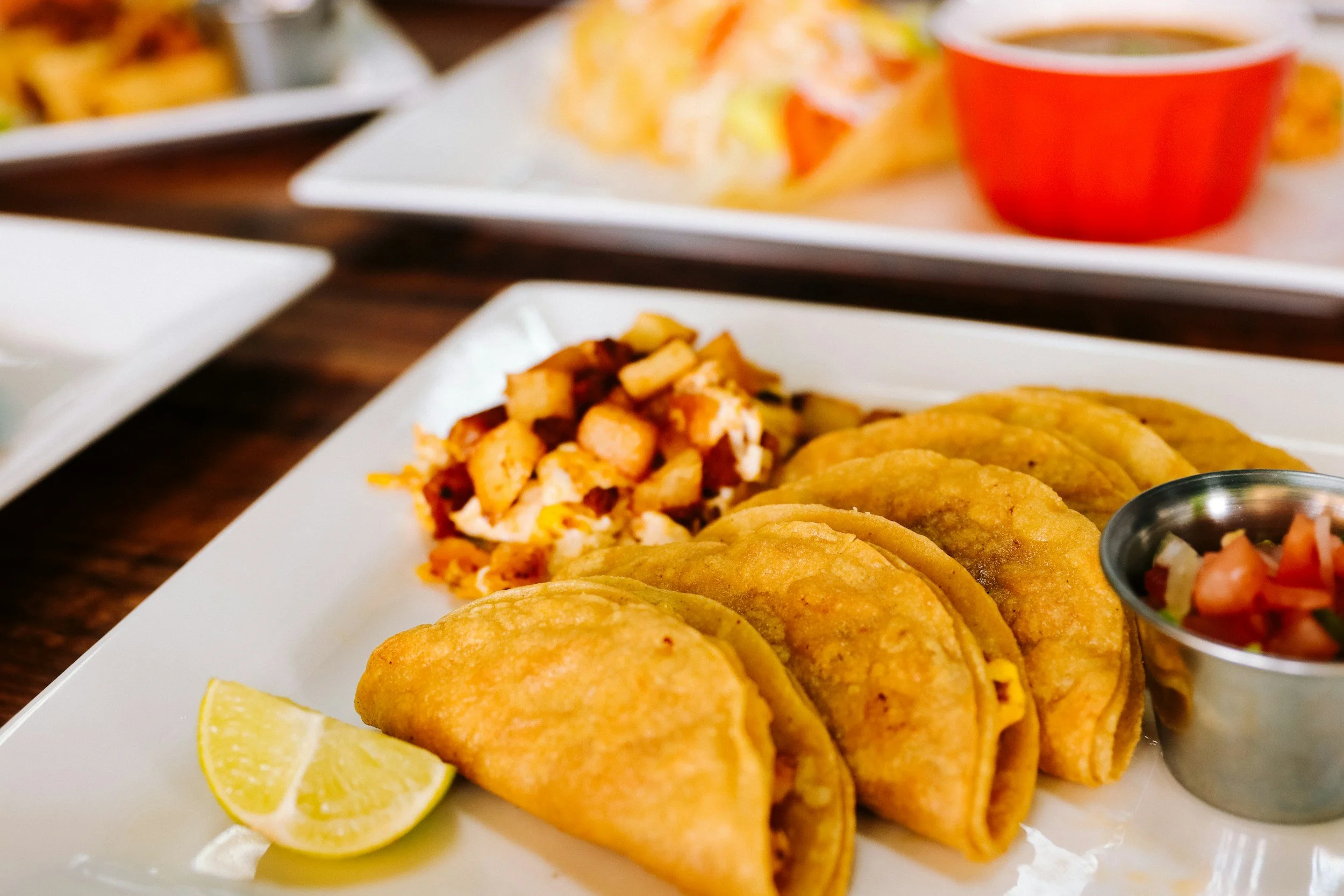
Tex-mex cuisine in McAllen, TX
This week we focus on a district race in the Lone Star state where Democrats are fighting to turn the state a little less Red with each electoral cycle. The TX-15 district includes a thin strip of the far south of Texas and the Lower Rio Grande Valley where Tex-mex cuisine can trace some of its origins.
Pro-“Tio” Trump Incumbent
Republican incumbent Monica De La Cruz is a congressional freshman in the TX-15, having just won the seat in 2022 in this recently reconfigured congressional district. De La Cruz, 49, is a Mexican American Latina who has led several small businesses, most recently an insurance agency. She was raised by a single mother and holds socially conservative positions. She’s stated publicly that Trump has shown that he values the Latino community through his policies, and she dismisses his racist and misogynistic words and actions by likening him to your favorite “tio” (uncle) who speaks bluntly. In particular, she has supported the Trump approach to immigration policy, which is a very salient issue in this border congressional district. She’s called Biden’s position on the US-Mexico border a “disaster” and agreed with extreme immigration positions expressed by Elon Musk. She also supported the Laken Riley Act which would have required ICE to detain and deport undocumented people who committed theft, shoplifting, and other crimes.
Contestant from family of farm workers
De La Cruz bested fellow Latina Michelle Vallejo, 32, a Mexican American Democrat, in 2022. Vallejo has stepped forward to contest for the seat again this year. She describes herself as coming from a family of farm workers, immigrants, and entrepreneurs. Before she lost her mother to a battle with multiple sclerosis, Vallejo often traveled with her across the border into Mexico seeking access to medical care. Vallejo’s talent, discipline, and hard work during high school won her a seat in her undergraduate freshman class at prestigious Columbia University where she earned a degree in political science and history before returning to her South Texas community to put her skills to work for the betterment of her fellow Texans.
Mexican Americans make up 77% of the district’s eligible voters
The TX-15 is a district comprised of mainly rural regions that, like most rural parts of the country, tend to be more conservative. McAllen is the only major population center within this thin strip of a district that stretches north-south through an economically challenged southern part of the state. The district’s lines changed dramatically after the 2020 Census, but it remains a district that strongly favors Democrats, with an NMI score of D+14, meaning that it’s 14 percentage points more likely to elect a Democrat over a Republican compared to the average House congressional district. The Democratic nature of the district is primarily due to its large share of Mexican Americans (who primarily tend to support Dems), who make up 77% of the district’s electorate (eligible voters).
Voting trends in the TX-15
In 2022, De La Cruz beat Vallejo by a healthy margin of over 12,800 votes. At first glance, it seems like Republican De La Cruz has little to worry about this November and that this district is actually more Red than anticipated. But if we peel back a few layers, the outlook for a Democratic take back of a seat is much brighter.
TX-15 among the districts with the lowest low voter participation
TX-15 REGISTERED TO VOTE, BY RACE
The TX-15 is predominantly Mexican American and is located in a part of the state and nation with a deep history of political, social, and economic disenfranchisement of Mexican Americans. As such, it should come as no surprise that the district ranked 401 out of 435 districts in 2022 when it comes to voter turnout for federal elections. Indeed, only 151,889 people cast votes in the district for this race, with De La Cruz getting 80,978 to Vallejo’s 68,097. Compare this to TX-37, a solid Blue district where the very popular and entrenched incumbent handily beat the challenger by almost 4 times as many votes. In that TX-37 race, 285,789 voters cast ballots, which is almost double the number cast in the TX-15. The overall turnout rate among registered voters in the TX-15 was 39% whereas the turnout rate in the TX-37 was 54%. The overall voter registration rates in these two districts are also quite different, with the TX-15 having only 409,000 people registered while the TX-37 has over 527,000 registrants.
Racial differences in civic participation
TX-15 2022 BALLOTS CAST, BY RACE
TX-15 2022 Turn out Rate White vs Latino Voters
The differences in turnout by race in these two districts are striking. Latinos comprise 77% of the eligible voters in the TX-15, so their turnout can make or break a candidate’s chance at victory. In the TX-15, only 33% of the registered Latinos cast ballots in 2022 while 46% cast ballots in the TX-37 that year, a dramatic difference. Meanwhile, registered white voters in each of these districts voted at almost identical rates, 56% in the TX-15 and 59% in the TX-37. In the TX-15, this resulted in white voters casting 53,000 votes compared to a little over 101,000 votes cast by Mexican Americans. Had the racial breakdown of votes cast been proportional to those individuals registered to vote, Latino votes would have outnumbered whites by an over 3 to 1 ratio. Given that Latinos are much more likely than whites in TX to support Democrats, the actual 2022 outcome (that is, the GOP victory by De La Cruz) would almost certainly have been different had Latinos turned out at a higher rate.
From exit polling we can see that in 2020, 58% of Latinos in Texas voted for Joe Biden, while only 33% of whites did. We can use this info to estimate what would have been the 2020 outcome in TX-15 had ALL registered voters cast ballots. In other words, we estimate the votes that would have been won by De La Cruz and Vallejo if there had been 100% turnout among all registered voters in the TX-15. The result is that Democrat Vallejo would have been projected to win the election by about 3 percentage points.
Conclusion
With a predominantly Mexican American electorate, the TX-15 should be a solidly Blue district where the Democratic nominee coasts to victory each November. But the racially disproportionate and obscenely low voter participation patterns among Latinos in this district led to a perverse election outcome in the first race run here after the 2020 creation of new district boundaries. Those who claim to care about political representation will have no choice but to execute robust registration and GOTV programs to ensure that this district sends a representative to Washington who reflects the will of the district’s constituents.

Two Asian Americans Vie for House Seat in Orange County, CA That Includes Little Saigon
This week we’re looking at the CA-45 race in Southern California between Republican incumbent Michelle Steel and her Democratic challenger Derek Tran. This is considered one of the most hotly contested races nationally. The district includes parts of Orange County as well as a small part of Los Angeles County and is home to one of the nation’s highest concentrations of Asian Americans.
By Dr. Julie Martinez Ortega

Little Saigon, Westminster, CA, USA

Incumbent Michelle Park Steel (R) and Derek Tran (D)
This week we’re looking at the CA-45 race in Southern California between Republican incumbent Michelle Steel and her Democratic challenger Derek Tran. This is considered one of the most hotly contested races nationally. The district includes parts of Orange County as well as a small part of Los Angeles County and is home to one of the nation’s highest concentrations of Asian Americans.
Largest Vietnamese population outside Vietnam
CA-45’s boundaries were drawn to provide Asian American voters the ability to elect a representative of their choosing. It includes the nation’s largest Vietnamese American community and is centered around Orange County’s Little Saigon, which has the largest concentration of people of Vietnamese descent outside Vietnam.
The API community comprises the largest share of the electorate in the CA-45 at 39%. The Vietnamese American community is a strong force within the greater API community making up 16% of the district’s voters. The next largest group in the electorate is whites at 33%.
CA-45 REGISTERED TO VOTE, BY RACE
Voters supported Biden over Trump by 6 points
The CA-45 is one of the 18 congressional districts in the nation where the voters supported Joe Biden over Donald Trump in 2020 (by 6 points) yet chose a Republican candidate as their representative in Congress. And registered Democrats outnumber registered Republicans in the CA-45 by 5.7 points. Democrats comprise 37.8% of all the registered voters in the district while 32.6% are Republicans and 24% are no-party-preference voters. Nonetheless, in 2022, Steel managed to beat Democratic nominee Taiwanese American Jay Chen by over 10,000 votes.
Steel vs Tran: Korean American Republican vs Vietnamese American Democrat
CA-45 2022 BALLOTS CAST, BY RACE
Michelle Steel is a Seoul-born Korean American who has been active in Republican Party politics for over two decades. She was elected to Congress in 2020 and survived her first reelection campaign in 2022 in a closely contested battle with Jay Chen (Steel won with 52.4% of the vote).
Steel has been an outspoken opponent of reproductive choice, opposing abortion and supporting the Supreme Court’s decision in Dobbs that left abortion access up to the states. She is a co-sponsor of the Life at Conception Act, which declares that human life begins at the moment of fertilization. Steel has been a strong fundraiser and has consistently reported large contributions in each filing period.
Derek Tran, a child of Vietnamese refugees, speaks openly about the important role that government programs and community support played in his family’s ability to achieve their American Dream. Tran is a first-time candidate and enlisted in the Army out of high school, eventually becoming an attorney specializing in discrimination and personal injury cases. Fluent in Vietnamese, Tran is able to communicate directly with many in the CA-45’s Vietnamese electorate. Tran entered the primary months later than his fellow Democratic congressional candidates but prevailed to become one of the two House candidates in this race whose names will be on the ballot in November.
Not afraid to throw mud
In the 2022 election, Steel distributed flyers in the district depicting her Democratic opponent Chen as a communist sympathizer despite his service in the U.S. Navy and that Chen’s grandmother fled China to escape communist rule. Given Steel’s demonstrated willingness to throw mud to see what will stick, we might see similar below-the-belt antics as she faces off against Tran, the son of Vietnamese refugees who fled communism.
Complex racial dynamics
This race has tricky racial dynamics. As in 2022, both candidates on the November ballot will be API, requiring Steel and Tran to convince the API voters in the district that they are the API candidate who best represents the needs of the API community.
The API voters within the CA-45 have a turnout rate of 45%, meaning that 45% of the registered API voters actually cast a ballot in 2022. Given that APIs comprise the largest share of the eligible voters, we’d expect them to have cast the most ballots in the 2022 election. However, ballots cast by API voters only comprised 32% of all votes cast compared to 46% by whites. Whites were able to exert a disproportionate impact on the electoral outcome in the CA-45 given that they are only 33% of the eligible voters. *Native Americans comprise of only 56 people registered to vote in the district.
How Dems can avoid repeat of 2022: turning out Latino voters
Tran will have to contest for every API vote in the district, building on his base within his own Vietnamese community to avoid the same fate as Chen’s in 2022. But Tran could also focus on improving turnout among Latino voters in the district who may be even more likely than API voters to support the Democratic candidate. The district’s 95,639 registered Latinos comprise almost a quarter of its registered voters, yet Latinos only cast 34,961 (16%) of the ballots in 2022. In other words, two out of three registered Latinos (about 60,000!) stayed home in 2022 when the election’s outcome was decided by only about 10,000 votes. Tran would do well to target these Dem-friendly Latino voters in November for GOTV.

Mismatch in the California Central Valley
This week we feature yet another California rematch. In this newly draw CA-13, in the San Joaquin Valley, incumbent freshman John Duarte (GOP) faces challenger and Democrat Adam Gray in this district that was newly drawn after the 2020 Census redistricting process.
By Dr. Julie Martinez Ortega


Incumbent John Duarte (R) and Adam Gray (D)
There’s no reason why this San Joaquin Valley rematch shouldn’t go Blue
This week we feature yet another California rematch. In CA-13, located in the San Joaquin Valley, incumbent freshman John Duarte (GOP) faces challenger and Democrat Adam Gray in this district that was newly drawn after the 2020 Census redistricting process.
This new 13th congressional district includes all of Merced County; most of the population of Madera County; and parts of Stanislaus, Fresno, and San Joaquin Counties.
Second smallest margin of victory
The CA-13 is a district filled with working-class Latino families. The median family income there is just over $67,000, which is low relative to that of the rest of the state ($91,551), and the average education level is also low, especially among Latinos, with many households dependent on farmworker incomes.
In 2022, the CA-13 had the second smallest margin of victory for a House race nationally (a mere 564 votes), despite it being drawn by the CA Redistricting Commission as a seat that Democrats should be able to win.
Dems>GOP
As close as the 2022 race was, the underlying statistics in this district suggest that it should be represented in Congress by a Democrat. The voters there preferred now-President Biden over Donald Trump by over 11 percentage points in the 2020 cycle. And what’s more, the district has more registered Democrats than Republicans.
In the March 5, 2024 primary election, Duarte received 54.9% of the vote and Gray 45.1% and they were the only two candidates on the ballot. Duarte received 8,465 more votes. But the general election tends to draw out more Democrats than the general election does.
Agricultural area
The CA-13 comprises mainly agricultural areas in California’s Central Valley. While it’s not a progressive hotbed, its electorate is over 65% POC, which makes it a majority-minority voting district that we’d expect to be represented by the POCs’ favored candidate.
Instead, the CA-13 elected John Duarte in 2022, a man who describes himself as “not that far from a lot of” his colleagues in the House Freedom Caucus on fiscal issues. Duarte’s only job before being elected to Congress was working at his parents’ multi-million dollar agribusiness after he graduated from college. But it seems he didn’t do so well there. In 2017, the US Army Corp of Engineers accused him of violating the Clean Water Act by plowing a field, and he was ordered to pay a $2.8 million fine, hardly the sort of thing that his average constituent has ever experienced. In contrast, Democrat Adam Gray grew up working in his family’s supply and feed store. As a state assemblyman, he fought for fair access to water for the people in his district who depend on it for their livelihoods and has secured better access to healthcare for the rural constituents.
CA-13 REGISTERED TO VOTE, BY RACE
Turnout
To win in this district, Adam Gray is going to have to shrink the turnout gap between the district’s white and Latino populations from that of 2022 when Latinos turned out at a rate of 30% compared to whites at 57%.
Latinos comprise 53% of the registered voters in the CA-13. Combined with API (7%), African American (4%), and Native American registered voters, POC voters comprise 67% of the district’s registered voters. But while Latinos comprise over half of the registered voters, in 2022 they only cast 39% of the total ballots. White voters trended in the opposite direction. Whites were only 36% of the registered voters in the district, yet they cast half of all the votes in 2022.
CA-13 2022 BALLOTS CAST, BY RACE
More than enough voters
While it’s true that the 2022 race in the CA-13 was extraordinarily close, with Duarte winning by less than 600 votes, there is no reason why this district is not solid Blue given its demographics and the issues that matter most to its constituents. There are more than enough voters in the district to elect candidates who would represent their interests. *Native Americans comprise of only 98 people registered to vote in the district.

Latino Turnout Will Make or Break the House Rematch in San Joaquin Valley
This week we’re looking at another California rematch: in CA-22. Democrat Rudy Salas is back for another shot at this House seat held by incumbent Republican Rep. David Valadao in this highly competitive district, one with a long history of bouncing back and forth between the two parties. Redistricting has changed the regions included in this district, which is located in the San Joaquin Valley, yet it remains a toss-up.
By Dr. Julie Martinez Ortega


Incumbent David Valadao (R) and Rudy Salas (D)
This week we’re looking at another California rematch: in CA-22. Democrat Rudy Salas is back for another shot at this House seat held by incumbent Republican Rep. David Valadao in this highly competitive district, one with a long history of bouncing back and forth between the two parties. Redistricting has changed the regions included in this district, which is located in the San Joaquin Valley, yet it remains a toss-up.
In 2022, we listed CA-22 as one of the most flippable districts in the country, and we are once again including it for the 2024 cycle.
Currently, this district, alongside New York's 4th, is the most Democratic-leaning congressional district represented by a Republican.
History of CA-22 Bouncing Between the Parties
Recent Electoral History of CA-22 (votes in thousands)
Incumbent Valadao currently occupies a seat that has experienced slight changes to its boundaries with redistricting. However, the seat has been and remains a hotly contested one, with congressional Republicans managing to win despite the district’s diverse demographic makeup (it’s majority Latino). Still, it’s important to note that those victories were by the slimmest of margins.
The Choice: Valadao vs Salas
2024 will bring a rematch between Salas and Valadao. Salas is a five-term member of the California State Assembly. Born and raised in the agricultural center of California, where he labored in the fields alongside his father, Salas then worked his way into UCLA where he graduated. He later returned home and became the first Latino councilmember in his hometown in over a century.
Valadao has a very different but familiar life story. As a young man, he inherited a share of the lucrative dairy farm established by his father. Under Valadao’s leadership, the bank seized the dairy farm after they defaulted on over $9 million in loans and failed to pay a supplier. He eventually agreed to pay over $325,000 to his former employees who took legal action because they believed they were denied minimum wage and overtime pay as well as legally required breaks.
CA-22 REGISTERED TO VOTE, BY RACE
Why Dems Can Win in CA-22
CA-22 has one of the highest concentrations of eligible POC voters (71%) in the country. Given the high predisposition of POC voters to support Democrats, CA-22 should be an easy win for Dem candidates. But, alas, the vote outcomes in this district fail to reflect this reality due to the relatively low turnout rates among voters of color compared to that of white voters. In 2020, white voters turned out at a rate that was 13 points higher than their POC counterparts.
Valadao doesn’t fit the district
In any redistricting conversation, CA-22 would easily fit the definition of a majority-minority district—a district designed to ensure that its “minority” community has a legitimate chance to elect the candidate of their choice. As a conservative white politician (Valdao’s parents are immigrants from Portugal) who consistently votes against the interest of the overwhelmingly Latino residents, Valdao is out of step with his constituents.
What Salas Needs to Do Differently in 2024: Turnout Latinos and other POC
To win in November, Salas will need to motivate Latinos, who make up the largest share of registered and eligible voters in the district, to choose the ballot box over the couch. In 2022, the turnout rate among Latinos was almost half of that by white voters in CA-22, with just 27 out of 100 registered Latinos casting a ballot compared to 51 whites. Even the district’s African American voters, who nationwide have relatively high turnout rates, only voted in CA-22 at a rate of 31% among registered voters in 2022.
CA-22 2022 BALLOTS CAST, BY RACE
Given that Latinos comprised half of the ballots cast in 2022 (50%), Salas needs to shore up support among the Dem-friendly Latinos, in addition to employing a strong GOTV program among this large constituency. The same is true among African American voters who cast over 4,000 ballots in 2022, which was more than Valadao’s margin of victory. *Native Americans comprise of only 291 people registered to vote in the district.

This Southern California Democrat Can Flip His District With Two Key Strategies
In 2022, we identified the CA-41 in Riverside County in Southern California as a flippable district in the 2022 midterm election, and continued to do so in the 2024 rematch between incumbent Republican Ken Calvert and the Dem challenger, Will Rollins, despite Rollins’ 2022 loss by over 11,000 votes (4.6 percentage points) out of over 239,000 votes cast.
By Dr. Julie Martinez Ortega


Incumbent Ken Calvert (R) and Will Rollins (D)
In 2022, we identified the CA-41 in Riverside County in Southern California as a flippable district in the 2022 midterm election, and continued to do so in the 2024 rematch between incumbent Republican Ken Calvert and the Dem challenger, Will Rollins, despite Rollins’ 2022 loss by over 11,000 votes (4.6 percentage points) out of over 239,000 votes cast.
The underlying fundamentals of this district continue to indicate that this is a district that is well within the reach of Democrats. But, as the adage goes, you can’t keep doing the same thing over and over and expect a different outcome. That’s especially true in the electoral context. So, how can Rollins and his supporters change things up to win this time around come November?
Why Is the CA-41 Flippable in 2024?
The CA-41 is considered a flippable district since the majority of its electorate supports Democratic candidates, even though this support hasn’t always translated to victory at the ballot box for Dems. Voter registration has increased with redistricting. Before the 2020 redrawing of district lines, Republicans had a voter registration advantage of 264. Now, that has flipped and Democrats have a voter registration advantage of 3,183. It is also widely considered one of the most competitive districts in the nation based on its past voting patterns that favored Republicans.
CA-41 was redrawn after the 2020 Census to include the city of Palm Springs, widely considered “The gayest City in America.” It was the first city in the nation to elect an entirely LGBTQ+ city council, ranks third in the nation with the most same-sex couples, which solidified its standing as not just a cultural bastion of gay-friendly policies, but an electoral one. Palm Springs voters prefer a Democrat over Republican candidate. But just as importantly for this race, they overwhelmingly oppose openly anti-gay Republicans like Calvert.
Ken Calvert has built a reputation as a steadfast opponent of equality for members of the LGBTQ+ community. His challenger, Will Rollins, is a young, openly gay man who served as a federal prosecutor whose caseload focused on counterterrorism and counterintelligence, including some of the insurrectionists who attacked the U.S. Capitol on January 6th. He’s challenging Calvert, a 32-year incumbent who has supported some of the most extreme positions of his party by joining the lawsuit to overturn Roe and voted for a national abortion ban with no exceptions.
Historically, heavily LGBTQ+ Palm Springs voters have been highly engaged in the electoral process, as evidenced by their above average rates of voter turnout (54% vs. 34% in the rest of CA-41). However, this segment of the district cannot elect someone to Congress on their own. The good news is that a significant share of eligible voters in the CA-41 are voters of color (44.2%) and are registered as Democrats. These voters, combined with the politically active LGBTW+ residents of Palm Springs comprise the majority of eligible voters in the district.
CA-41 REGISTERED TO VOTE, BY RACE
Why Didn’t Rollins Win in 2022?
To win in 2024, Rollins will need a clear understanding of what went wrong in 2022. A brief analysis of the 2022 election results in the CA-41 reveals that two key constituencies, voters of color and young white voters, who tend to vote more progressive, did not turnout at the rates necessary to ensure that Rollins would prevail.
Rollins Must Engage Voters of Color
We’ve written extensively about the high correlation between race and partisanship, with voters of color being significantly more likely than white voters to support Democratic candidates, and this district is no exception. But all the support imaginable is never enough if those supportive eligible voters of color do not show up and cast ballots. By “punching below their weight” in 2022, voters of color in the CA-41 couldn’t push Rollins over the top.
CA-41 2022 BALLOTS CAST, BY RACE
People of color comprised 42% of those registered to vote in CA-41, while white voters comprised 58%, making this district one with a high share of POCs in its electorate, which bodes well for Democrats. *Native Americans comprise of only 264 people registered to vote in the district.
Despite being 42% of the registered in CA-41, in 2022, ballots cast by POCs comprised a mere 29.9% of the total cast. In contrast, votes cast by whites comprised just over 70% of all ballots. This disproportionality in voter participation had significant repercussions for Rollins in 2022, and he’ll need to mitigate this in order to win in 2024.
The difference in turnout rates for each ethnorace group is detailed below. Despite being a large share of the eligible and registered voters in 2022, POCs were much less likely than whites to participate in the election by casting ballots. This is best understood by seeing the wide range of turnout rates for each of the race groups in the CA-41. Whites turned out at the robust rate of 61%, compared to the next largest ethnorace group, Latinos, who only turned out at a rate of 34%.
CA-41, 2022 TURNOUT (percent that voted), BY RACE
White Voters Under 45 Need to be Engaged and Mobilized by Rollins
Like Latino voters, younger white voters are more likely to support Rollins over Calvert. But, like Latinos, these young white voters also punched below their weight within CA-41 in the 2022 midterm election. Whereas older whites voted at a rate of 72% among those registered, the youngest voters (those under age 30) voted at a rate that was less than half of that (31%). The white voters ages 30-44 performed slightly better at 44%, but they still had nowhere near the turnout rates of their older counterparts.
The Bottom Line
In order for Rollins to send Calvert packing with his fellow retro dinosaurs, he will have to lean into voter outreach strategies that maximize voter participation among people of color and white voters under the age of 45. These eligible voters who support Democrats live in the district and deserve representation in Congress. But Rollins will need a smart and concerted effort to identify, educate, and mobilize them if he wants to achieve a different outcome in November, 2024.