Top 16 Most Flippable House Seats for Democrats in 2024
Republicans have made it abundantly clear that they cannot be entrusted to control the U.S. House of Representatives. Whether it’s dragging their feet to fund the most critical functions of our military and social safety nets, failing to ensure that we comply with international pacts, or refusing to respond to unanticipated crises like the tragic destruction of the Francis Scott Key Bridge, they have proven they need to give up the reins.
Sweet Sixteen for 2024
Dems only need a net gain of four seats
By Dr. Julie Martinez Ortega

Republicans have made it abundantly clear that they cannot be entrusted to control the U.S. House of Representatives. Whether it’s dragging their feet to fund the most critical functions of our military and social safety nets, failing to ensure that we comply with international pacts, or refusing to respond to unanticipated crises like the tragic destruction of the Francis Scott Key Bridge, they have proven they need to give up the reins. The GOP currently holds the thinnest of margins in the House—218 seats out of the total 435 seats—yet they are still able to control which issues House members will take up and which will remain unaddressed.
Thin Republican margin
Currently, the Republican margin is so thin that, due to multiple vacancies, Republicans can only afford to have one of their members vote with the Democrats without losing control of vote outcomes.
“This November, Democrats have a solid chance to reset the balance of power in the House in their favor. ”
This November, Democrats have a solid chance to reset the balance of power in the House in their favor. To do so, Democrats will need a net gain of four seats, assuming that each of the currently vacant seats will be filled by a member from the same party as the person who vacated it.
We’ve identified 16 congressional districts (CDs) currently held by Republicans that should be winnable by a Democratic candidate this fall.
Considering racial demographics
Our Sweet Sixteen list contains our top picks among the approximately 75 CDs that are considered by the major Democratic voices as “in play” for 2024. We chose these 16 CDs based on the factors listed above such as racial demographics, historic support for Dems, turnout differentials by race, and the past level of investment in Dem voters in that district (as measured by recent turnout rates), among others.
We gave preference to those CDs located within key 2024 states such as Arizona (2), California (7), Texas (1), and New York (5) largely because of the higher potential for increasing election salience among potential voters when multiple districts are clustered within a specific state (that is, operatives and activists can create more buzz among voters when they focus their efforts within one state or geographic area instead of taking a scattershot approach nationally). We also gave preference to those CDs where external factors such as legal challenges have created the conditions for easy Democratic victory in 2024, namely in the AL-02 in Alabama: this newly created CD is heavily African American and therefore considered a safe Democratic seat. Its voting-age population is 47.6% Black; 45% white.
Rationale for Sweet Sixteen
Our Sweet Sixteen list consists of CDs where:
Biden won the majority of votes in 2020 in those districts (with two exceptions).
Rationale: Support for Biden over Trump indicates that potential voters in this CD are open to Democratic candidates and their policy positions.
The share of POC voters is over 50% (this is the case in five CDs), or over 25% (this applies to the remaining 11 CDs).
Rationale: The high share of POC voters in these CDs is highly correlated with stronger support for Dems among the electorate, especially those who aren’t likely to vote without special efforts by campaigns and civic engagement advocates.
POC voters participated in the 2020 election at rates that were at least 15 points lower than that of white voters (applies to six CDs)
Rationale: Where POC voters “punch below their weight” by not turning out at the same rates as white voters, Republicans benefit. For POC voters to reach turnout parity with Republicans, Democrats must actively invest in effective turnout programs among the POC and among the pro-Democrat white electorate.
Other indexes undercount
By the way, organizations that put out similar indexes (but that only consider past votes and don’t take into account racial and ethnic demographics), such as the Cook Political Report’s PVI, have rated seven of these Sweet Sixteen districts as Lean Democratic, one as a true Toss-Up, and eight as Lean Republican. The algorithm of other indexes undercounts the partisan leaning of those voters who did not participate in the two most recent presidential elections; those voters tend to be voters of color.
The New Majority Index: A better index
The New Majority Index (NMI), created by Steve Phillips, founder of Democracy in Color, takes into account the racial and ethnic backgrounds of all potential voters in a CD, regardless of whether they’ve voted regularly in the past. NMI takes into account the voter turnout rates of each race group in the district, and past vote outcomes.
The NMI categorizes eight of the Sweet Sixteen as Democratic seats, four as Toss Ups, and three as Lean Republican. The full list of districts can be viewed on the NMI site here.
Path to win back control for Dems
Smart and early investments in the Democratic nominees and the civic engagement infrastructure in these 16 CDs is the path for Dems to win back control of the House this year. Under the leadership of Speaker Hakeem Jeffries, the House could work effectively with the Senate and the White House to restore a functioning federal government that serves everyone in this country.
CA-03 Congressional District Poised to Flip from Red to Blue
Drawn as a white-majority district by the California Redistricting Commission in 2022, it is considered one of only three competitive toss-up districts in the state by the Commission.
By Dr. Julie Martinez Ortega


Map courtesy of Ballotpedia
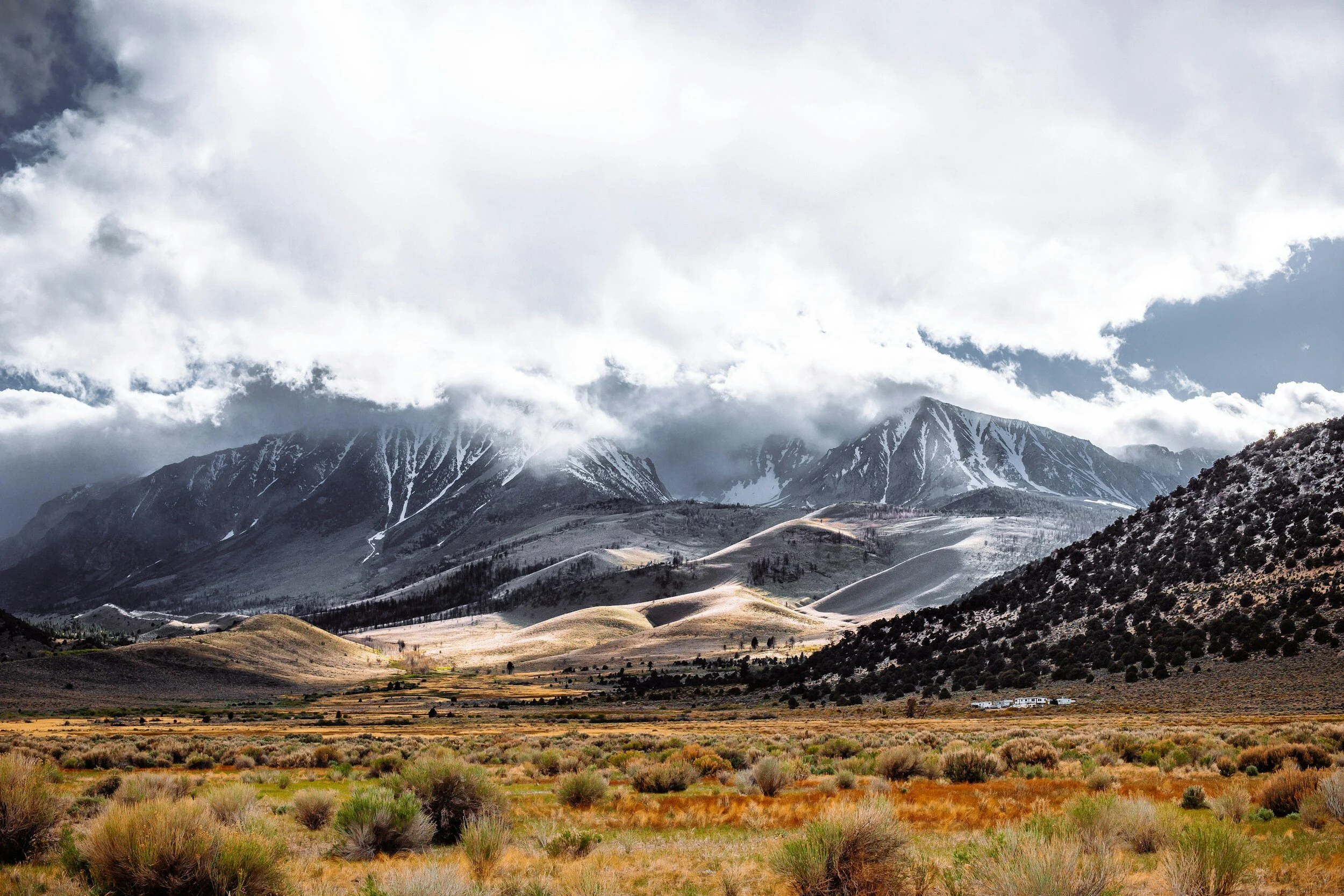
The CA-03 congressional district is poised to flip from Red to Blue in 2024. Drawn as a white-majority district by the California Redistricting Commission in 2022, it is considered one of only three competitive toss-up districts in the state by the Commission. Running along the CA-NV border through the central part of the state known as the Sierra Nevada region, CA-03 has no major metro centers within it and is mainly comprised of rural areas. The largest city in the district is Roseville, with fewer than 142,000 residents. CA-03 is also home to Lake Tahoe, Death Valley National Park, and several national forests.
Less racially diverse post-redistricting in 2022
The CA-03’s geographic boundaries were redrawn in the post-2020 Census redistricting process, making it less racially diverse. Today, only 14.3% of its residents are Latino; 7.4% are AAPI; 1.5% are African American; and less than 1% are Native American. Approximately 70% of its residents are White.
Although the CA Redistricting Commission considered the district to be a toss-up, national political pundits rate the CA-03 as having a PVI of R+4. Our New Majority Index rating for the district is slightly less Republican, with an NMI score of R+3. Notably, Trump won this district in 2020 by less than two points.
The congressional seat is currently held by Republican Kevin Kiley who won the seat in 2022 after redistricting. In its previous incarnation, the district had been considered a Democratic stronghold. CA-03 included much of the Sacramento Valley and had been represented by Democrat John Garamendi for several cycles.
Republican incumbent Kevin Kiley

Incumbent Kevin Kiley (R) and Jessica Morse (D)
Incumbent Kiley is an attorney and a former educator and is in his first term as the district’s Congressional Representative. Prior to being elected to Congress, Kiley served in the CA State Assembly. As a member of Congress, Kiley has refused to say whether President Biden won the 2020 election legitimately. He has also opposed California Governor Gavin Newsom’s executive order requiring all new vehicles in CA to be zero emission by 2035. Kiley supports charter schools, and introduced legislation to ban state and local governments from implementing vaccine requirements. In 2021, Kiley announced his candidacy for governor of California in that year’s recall election, but his campaign was ultimately unsuccessful.
Democrat challenger Jessica Morse
Having won almost 43% of the vote to Kiley’s 55% in the March 2024 nonpartisan primary, Democrat Jessica Morse will challenge Kiley for the CA-03 seat in November. A fifth-generation Californian, Morse’s ancestors crossed the Sierra on covered wagons and ultimately settled in the foothills of the Sierra Nevada. A national leader in wildlands and wildfire policy, she continues her family’s legacy of environmental stewardship. In 2005, Morse worked in Iraq alongside U.S. troops for 18 months as part of the U.S. State Department’s humanitarian branch. A public servant to the core, Morse volunteered on the ground in Paradise, CA after the devastating Camp Fire as well as establishing the Fresno Farm Bridge to help family farms stay afloat during the COVID-19 crisis.
DEI debate (conveniently) ignores the problem it’s supposed to help solve
In a recent, now viral, sit-down interview with Don Lemon, Elon Musk, one of DEI’s top public enemies, doubled down and continued to assail diversity, equity, and inclusion programs. Musk said society should stop making racism a “constant subject,” adding: “I think we need to move on.”
By Steve Phillips
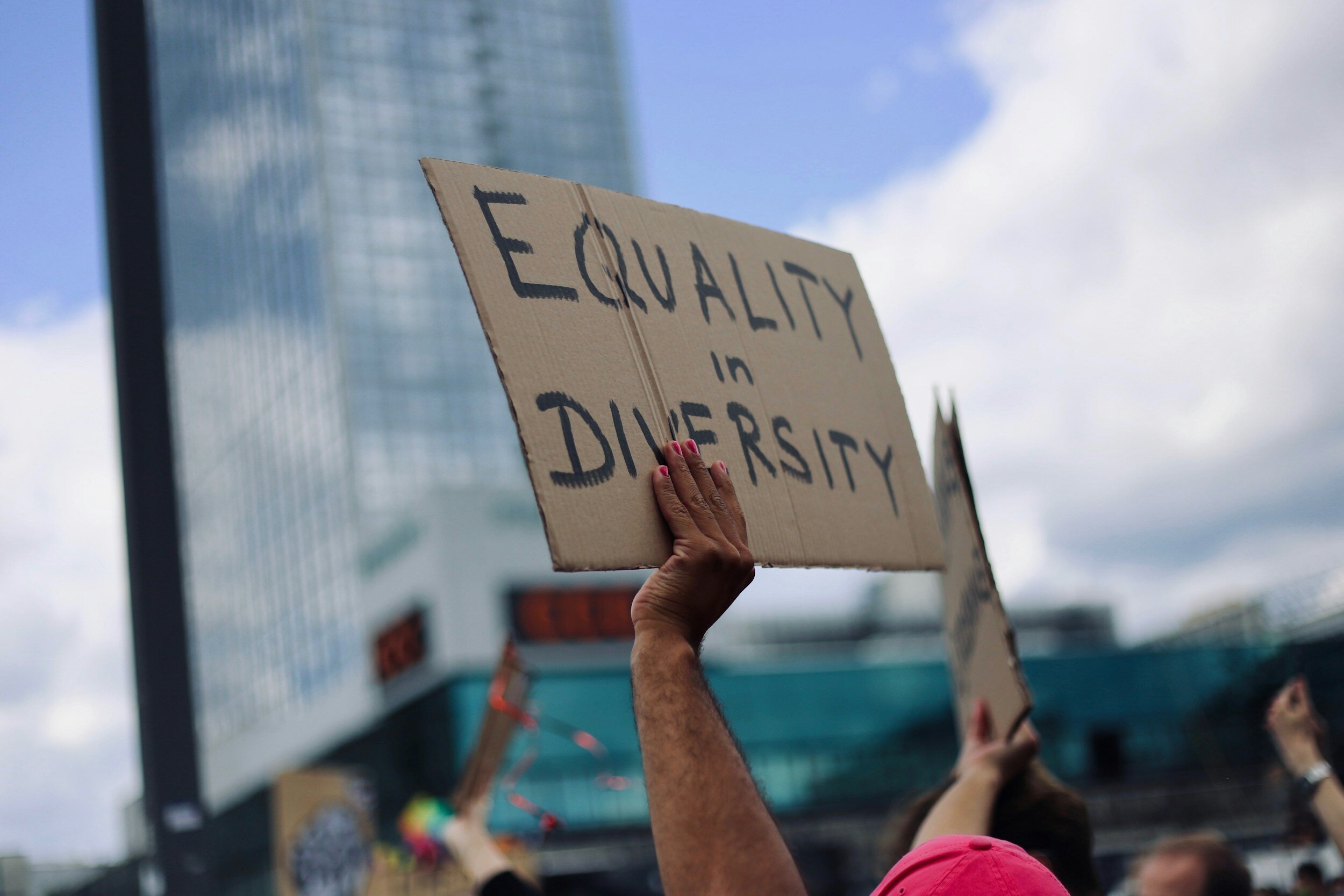
If not DEI, then what?
Elon Musk thinks we should simply move on.
In a recent, now viral, sit-down interview with Don Lemon, Elon Musk, one of DEI’s top public enemies, doubled down and continued to assail diversity, equity, and inclusion programs. Musk said society should stop making racism a “constant subject,” adding: “I think we need to move on.”
One attempted remedy
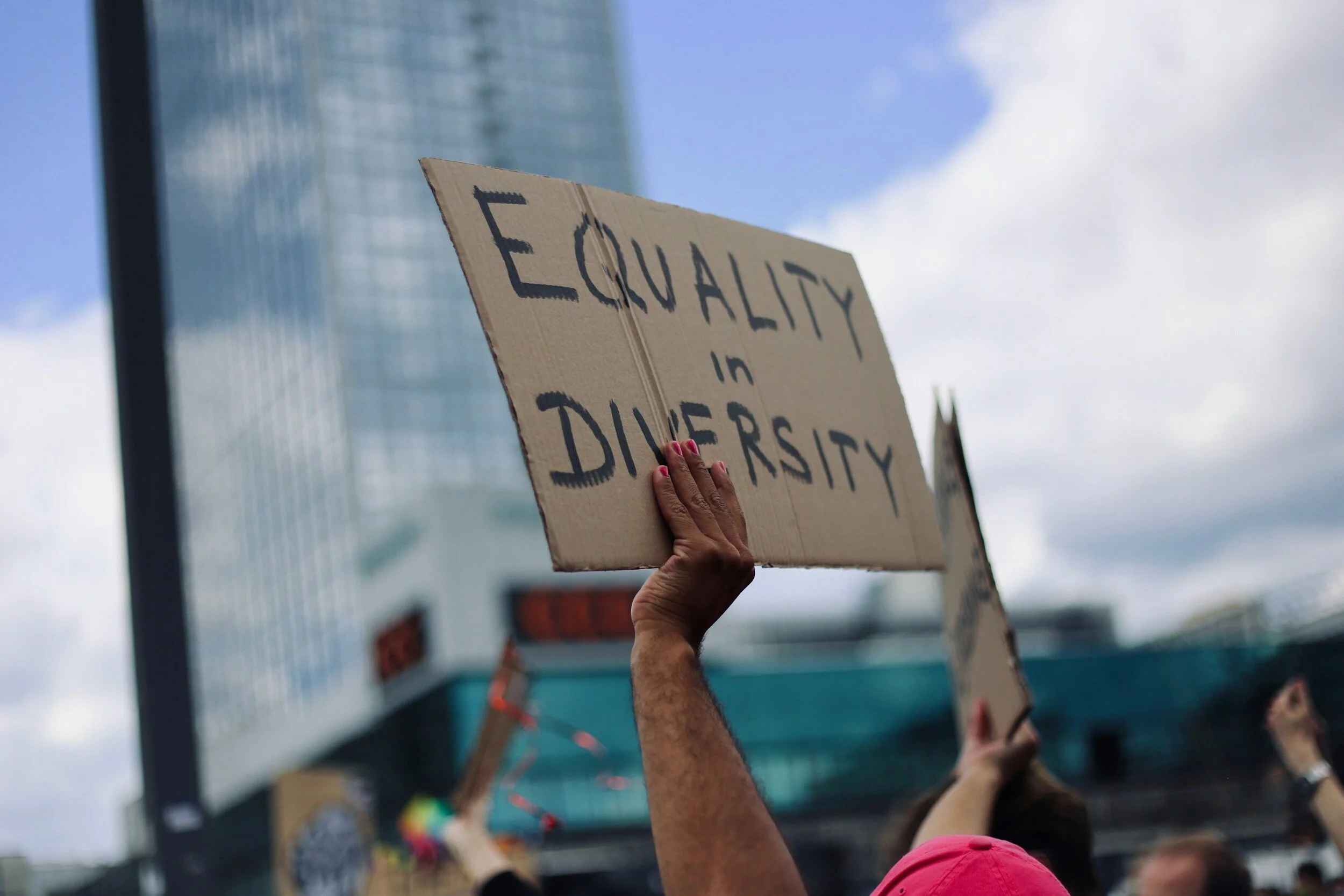
Attacks on DEI initiatives in academia, government, and business by high-profile, powerful business leaders like Musk and politicians, are all the rage these days (emphasis on rage). But if we step back from the sound and fury of the barrage against DEI, we can see that it’s simply one attempted remedy to fix a much larger and longer standing problem — the more than 400 years of historical and systemic racism in our country that has led to a gargantuan, ever-widening gap of inequity.
No amount of coaxing us as a nation toward “moving on” can mend that gap.
DEI, like any attempted remedy to any problem, is not perfect. However, my criticism of DEI is diametrically opposed to that of Musk and its mostly conservative foes; I firmly believe that the initiatives do not go far enough or fast enough. We’ve been dealing with systemic racism and white nationalism since 1619. Even though Musk told Lemon, “we [should] look to the future, rather than the past,” the fact is that the past is the present when it comes to the impact of this country’s racist history and the rate at which most Black people and other people of color experience racism and racial bias. What we need now are bigger and bolder solutions, and to unapologetically push for greater change.
Persistent racial wealth gap
“...the net worth of the average white household today is $250,000, that same figure for the average African American household is just $27,100. ”
By any objective measure, the problem that DEI was designed to remedy remains far greater than any perceived ills, inconveniences, or loss of privileges that may have precipitated in its relatively short lifespan (even with its roots in the 1960s and 1970s, that still wasn’t that long ago). For example, whereas the net worth of the average white household today is $250,000, that same figure for the average African American household is just $27,100. The plethora of social and economic inequalities in housing, employment, education, and other aspects of society are inexplicably intertwined with this enormous racial wealth gap that was created — and never rectified — through a system of free Black labor that created enormous white wealth. Do we say to these average African American households, just move on?
Those who support and do the work of DEI understand that achieving true equality requires more than just removing explicit barriers; it demands continuous, proactive efforts to address implicit biases, systemic injustices, and cultural norms that perpetuate discrimination.
Post-George Floyd “racial reckoning”
After the May 2020 police murder of George Floyd ignited nationwide and international protests against systemic racism, 50 top U.S. corporations quickly jumped in to partake in this “racial reckoning,” making broad claims and (ultimately short-lived) pledges to do their part to address the persistent inequalities wrought by racism. These companies — including JPMorgan Chase, Bank of America, Pepsi, Facebook, Google, and Apple — made an estimated $50 billion commitment, mostly in loans and grants, with many vowing to integrate racial justice initiatives in the way they do business day to day. WalMart proclaimed “Black Lives Matter; football players put pithy social justice slogans on the backs of their helmets. A year after Floyd’s murder, job postings with DEI in the title or description increased 29%, according to the job site Indeed.
Then, last June the Supreme Court, with its conservative majority, struck down affirmative action in college admissions (an outcome that conservatives had been pushing for many years). With their decision, the Court effectively sent up a Bat-signal to conservative opponents of affirmative action. Those opponents took the signal and ran wild, fanning out and pressuring private employers to fall in line, even though the court’s decision didn’t apply to corporations at all.
Fast and furious backlash
“By late-2023 DEI-related job postings had declined 23% from the same time a year prior. ”
The impact of this backlash has been fast and furious. By late-2023 DEI-related job postings had declined 23% from the same time a year prior. This year, companies continued to slash teams dedicated to DEI. On the academia and government front, every day brings fresh news that opponents of DEI are all in to win this battle. In the current legislative session, Republicans in more than 30 states, including Florida, Texas, and Tennessee, have introduced or passed more than 100 bills to restrict or regulate DEI initiatives.
Earlier this year, in January, billionaire hedge fund manager Bill Ackman, who led the call for the ousting of Claudine Gay, Harvard’s first Black president, penned a 4,000-word diatribe stating that, “DEI is racist because reverse racism is racism, even if it is against white people.” In a billionaire pile on, Musk, in a retweet of Ackman’s tirade, wrote, “DEI is just another word for racism. Shame on anyone who uses it.” (This after he tweeted last December, “DEI must die.”)
DEI and U.S. history of racism
Well, no, DEI isn’t another word for racism, but setting that aside for the moment, what about racism itself? What’s the plan for dealing with that? And where are the angry tweets and 4,000-word diatribes against racism?
Attacks on measures to address systemic racism in this country are not new. They go back as far as the 1776 Continental Congress when representatives of Southern states struck down words condemning slavery from the Declaration of Independence, the country’s founding document. Abraham Lincoln’s interest in healing the wounds caused by hundreds of years of chattel slavery was attacked by the Ackmans of his day, accusing Lincoln of kowtowing to abolitionist political leaders “who had Negro on the brain.”
One can’t help but wonder where Ackman and Musk and their ilk would have stood at prior pivotal points in our nation’s history. Though the truth is, we probably don’t have to wonder too hard, even if Musk, in his interview, claimed that “if you study history broadly, everyone was a slave…we are all descended from slaves.” (Oh really, Elon? Does that mean I might run into you at the next family reunion?)
“Negro on the brain”
Ackman’s lament that “the Harvard board should not have run a search process which had a predetermined objective of only hiring a DEI-approved candidate” sounds suspiciously similar to saying that the Harvard board had modern-day Negro on the brain.
If societal problems that gave birth to DEI persist, then the opponents of reform measures like affirmative action and DEI must either not know or care about these deeper ills plaguing our nation. It’s hard to believe they don’t know. So it must be that they don’t care.
The more damning question is, do we care? Do we, collectively as a nation, care more about remedying centuries-long systemic racism that created and continues to perpetuate a massive racial wealth gap than the false narrative of “reverse racism” that white billionaires are shouting from the Twitter tops?
And by “we,” I am specifically wondering about progressive and even some moderate whites in this country who make up a significant portion of this “we.”
“Vision to see that injustice”
I am reminded at this time of the words Dr. Martin Luther King expressed in his “Letter from a Birmingham Jail.” After encountering backlash to his era’s remedies for racism, including nonviolent protests and civil disobedience, King wrote, “First, I must confess that over the past few years I have been gravely disappointed with the white moderate. . . I suppose I should have realized that few members of the oppressor race can understand the deep groans and passionate yearnings of the oppressed race, and still fewer have the vision to see that injustice must be rooted out by strong, persistent and determined action.”
Our nation’s failure to stay the course after the end of the Civil War led to the destruction of Reconstruction and handing back nearly half the country to Southern slaveholders who, along with many of their descendants, went on to foster and defend legalized white supremacy for the next nearly 100 years.
Ending the status quo
In his interview, Musk said, “We as a country should move beyond questions of race and gender. We should treat people as individuals and base our opinion of them on their characters and skills.”
“I don’t think anyone would disagree with that,” Lemon said. “All I’m saying is that that’s not happening.”
Without sustained, focused, intentional, and even controversial action, memories fade, commitments recede, and the status quo endures. Lest we repeat the mistakes of the past, we would do well to stop and ask, if not DEI, then what are we going to do to address long-standing systemic racism and discrimination?
The meaning of July 4th
Two weeks ago, thousands of people around the country celebrated Juneteenth, commemorating the day enslaved people in Galveston, Texas found out they were free.
In the short period between Juneteenth and July 4th, the U.S. Supreme Court dismantled decades of progress towards freedom and equality for all, from allowing business owners to lawfully discriminate against LGBTQ+ people to gutting affirmative action in higher education.
By Steve Phillips

Two weeks ago, thousands of people around the country celebrated Juneteenth, commemorating the day enslaved people in Galveston, Texas found out they were free.
In the short period between Juneteenth and July 4th, the U.S. Supreme Court dismantled decades of progress towards freedom and equality for all, from allowing business owners to lawfully discriminate against LGBTQ+ people to gutting affirmative action in higher education.
Who gets to be an American?
These latest actions from modern-day Confederates engaged in a civil war to keep America a white Christian nation remind me of Frederick Douglass’ 1852 Independence Day speech titled, "The Meaning of July Fourth for the Negro" where he asked: “Do you mean, citizens, to mock me, by asking me to speak to-day?” Douglass’ words ring just as true today as they did 171 years ago, and the fight to define who gets to be an American continues as the majority of members of the Court champion and advance a minority agenda.
Despite these very real setbacks, however, we are still winning.
Not going backward in time
The truth is, the majority of people around the country want to advance justice and equality, and are not interested in going backwards in time. The Court also attacked Roe to force its minority agenda, but we’re watching that action backfire politically across the country, from Kansas and Michigan ballot measures to midterm results. As The 19th News’ Orion Rummler shared on our podcast recently, there is little proof that anti-LGBTQ+ or anti-abortion platforms worked for Republicans during the 2022 midterms.
Top 10% Plan
The decisions handed down by the Court in the last several days are gut-wrenching, to be sure. But from crisis comes opportunity, and to truly make progress towards racial justice we need policies that are far more imaginative and radical than affirmative action (which was a Nixon-era compromise in the first place).
One example of the kinds of creativity this moment demands can be found in Texas (yes, Texas). The state’s Top 10% Rule, for example, has been floated as a potential template for retaining diversity in higher education in the face of the Supreme Court’s decision.
The Top 10% program automatically admits anyone who graduates in the top 10% of their high school class into the state’s university school system. (That’s top 10% at every school, not just the top 10% of students across the state.) According to a 2021 data analysis report from the Intercultural Development Research Association, “the Top 10% Plan is the principal admissions driver for Latino, Black and Asian American students into UT-Austin, with 82% of admitted Latino students coming from the plan, 73% for Black students, 74% for Asian American students and 69% for White students in 2020.”
Creative and forward-looking solutions
While the program is not a standalone solution to increasing diversity, it offers an example of what creative and forward-looking solutions can look like.
Today’s modern-day Confederates are not stopping because they know that this country is changing rapidly, whether they like it or not. They also know that they’re on the losing side, and that’s why they’re fighting with such ferocity and resorting to such draconian measures.
Douglass’ question remains relevant as America celebrates its 247th year as an independent country: “Are the great principles of political freedom and of natural justice, embodied in that Declaration of Independence, extended to us?”
We have the power to change the answer to that question.

5 Ways to Help Stop Cop City, Atlanta
In September 2021, the city of Atlanta approved the creation of the Atlanta Public Safety Training Center that has come to be known as Cop City.
By Fola Onifade

In September 2021, the city of Atlanta approved the creation of the Atlanta Public Safety Training Center that has come to be known as Cop City. Cop City is an 85-acre project that would serve as a training ground for police officers to engage in what organizers are calling “urban warfare,” or attacks on mostly Black and Brown people. Cop City is proposed to be built on what is currently the Weelaunee Forest, a sacred forest to the Native American Muscogee people. This land also cuts through majority Black and Brown communities, threatening to displace an already vulnerable population within the city’s limits.
On June 6, despite protests and calls from the community to stop the creation of Cop City, Atlanta City Council decided to forge ahead and approve $90 million for the police training facility. Organizers across the city, as well as many across the nation, are not backing down however, and are gearing up to take action to make sure the voice of Atlanta is heard.
What’s happening is important and has implications across the country. If Cop City is successfully built, it will only be a matter of time before more facilities like it are created, putting more Black and Brown people at risk.
I spoke with my friend and organizer Kwame Olufemi, cooperative director of the Community Movement Builders, a national collective of Black people building sustainable communities, about what folks outside of Atlanta can do to support. Whether you live in Atlanta or not, here are some ways you can get involved in the fight to stop Cop City:
Donate to the National Bail Fund Network
On May 31, police arrested three organizers with the Atlanta Solidarity Fund, a non-profit fund that provides bail and legal support to protestors who are arrested. The organizers were charged with one count each of money laundering and charity fraud. According to the Atlanta Community Press Collective, the arrests are a part of a wave of repression facing protestors who oppose Cop City.
With the help and support of the community, the organizers have been released. While members of the Atlanta Solidarity Fund are currently unable to run operations, Olufemi recommended supporting the National Bail Fund Network, a network of over 90 community bail/bond funds that free people from jail and immigration detention.
2. Donate to the Atlanta Community Press Collective and support independent media
The Atlanta Community Press Collective is an abolitionist, not-for-profit media collective of writers and researchers in Atlanta. The group’s goal is to make the inner workings of local government accessible to the public and to “provide an independent voice in a local media landscape increasingly dominated by corporate interest.” According to Olufemi, ACPC is one of the independent news outlets doing investigative journalism and reporting on what’s going on with Cop City.
Scalawag Magazine, which we’ve frequently featured in our Democracy in Color newsletter, is another independent, abolitionist news organization that has been committed to lifting up the fight to stop Cop City. I highly recommend adding them to your reading list.
3. Participate in the week of action from June 24-July 1
Starting June 24, folks from across the country will be in Atlanta participating in a week of action to stop Cop City. Events and protests will take place across Atlanta. Participants are encouraged to host their own events at Brownwood Park and/or Weelaunee People's Park.
To get involved remotely, visit Stop Cop City Solidarity to select a tactic and the best way for you to help.
4. Familiarize yourself with the Atlanta Police Foundation’s corporate donors and contractors hired to build Cop City
The Atlanta Police Foundation cannot build Cop City on its own. Organizers are raising awareness to disincentivize corporations from committing to building Cop City and calling on contractors working with the APF, such as Brassfield & Gorrie—one of the nation’s largest privately-held construction firms—to divest from the project.
5. Support the referendum and/or Vote to Stop Cop City
After the Atlanta City Council rejected protesters’ pleas to refuse the funding of the training facility, activists decided to take the fight to the ballot box and file a referendum petition. According to Capital B News the referendum would repeal the original ordinance that authorized the mayor’s office to enter into a lease agreement with the Atlanta Police Foundation for the land in the Weelaunee Forest. As of June 21, organizers have 58 days to get 75,000 signatures from Atlanta city residents to officially put the referendum on the Nov. 7 ballot.
If you live in Atlanta, visit Cop City Vote and sign the petition to stop Cop City. If you don’t live in Atlanta, you can help spread the word about the petition to friends and family who do live in the city.
You can find more ways to get involved and support the referendum here.
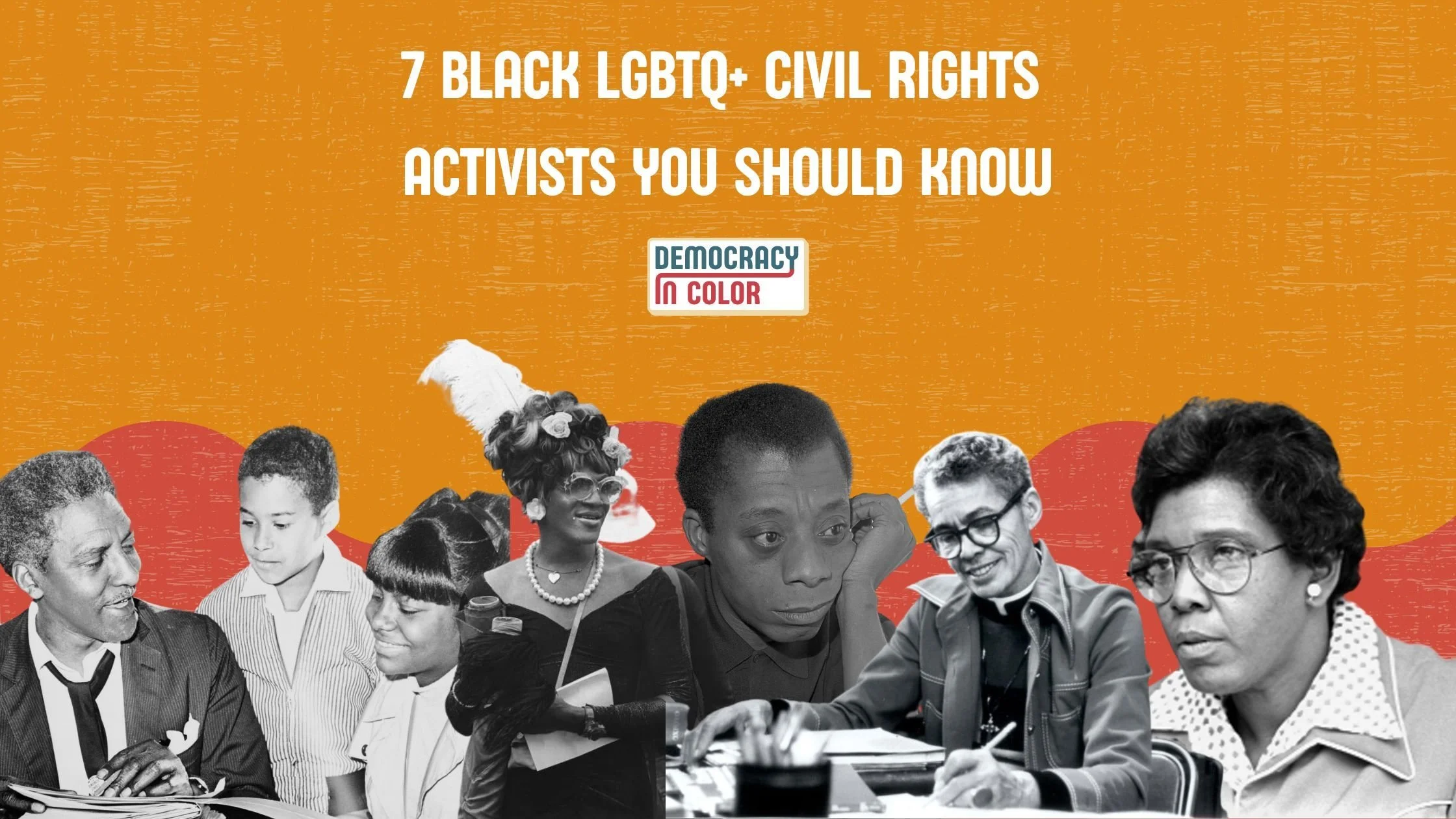
7 Black LGBTQ+ Civil Rights Activists You Should Know
The fight for LGBTQ+ rights has always been inextricably tied to the fight for Black civil rights. While more LGBTQ+ leaders of the civil rights movement have begun to receive acknowledgment in recent years, this was not always the case.
By Fola Onifade

The fight for LGBTQ+ rights has always been inextricably tied to the fight for Black civil rights. While more LGBTQ+ leaders of the civil rights movement have begun to receive acknowledgment in recent years, this was not always the case. Some had to hide the truth about their sexual orientation or gender identity, while others, like Bayard Rustin, were even punished by law for living their truths. Still, queer leaders of the civil rights movement played a critical role in the shaping of the movement and ideas that would eventually lead to the passage of the Voting Rights Act of 1965.
Let us not forget that Black trans people were at the forefront of Pride’s earliest days, and that Pride itself started as the Stonewall Riots, in the language of the unheard, as Dr. King would say. And while we’ve made progress since the ‘60s, there’s still much to be done, much to be angry about, and much to fight back against. In that spirit, we’re lifting up a few queer trailblazers from the civil rights movement and beyond who continue to inform and guide the movement and political work of today.
1. Barbara Jordan

Civil rights leader, attorney, and university professor Barbara Jordan became the first African American woman elected to the Texas Senate in 1966, where she also served as the first Black woman in American history to preside over a legislative body as president pro tem of the Texas Senate. In 1972, she became the first Black woman elected to Congress from a Southern state. Jordan never explicitly acknowledged her sexual orientation in public, but was open about her life partner Nancy Earl. Her election inspired hope in Black women across the country, including Democracy in Color founder Steve Phillip’s mom (Don’t worry, we’ll be diving into that story in the coming weeks.)
2. Bayard Rustin

Bayard Rustin was an LGBTQ+ and civil rights activist and a key player in the labor rights movement. Rustin organized the 1963 March on Washington for Jobs and Labor. He was one of Dr. Martin Luther King Jr.’s closest advisors and has been credited with introducing Dr. King to the idea of nonviolent resistance. In 1953, Rustin was convicted of a misdemeanor vagrancy violation for having consensual adult sex in a parked car in Pasadena, California. The court sentenced Rustin to 60 days in jail and ordered him to register as a sex offender. In 2013, President Barack Obama posthumously awarded Rustin the Presidential Medal of Freedom and in 2020, and California Governor Gavin Newsom pardoned him. The pardon read: “His conviction is part of a long and reprehensible history of criminal prohibitions on the very existence of LGBTQ people and their intimate associations and relationships.”
3. Ernestine Eckstein
Ernestine Eckstein was the first Black woman to be on the cover of the lesbian magazine The Ladder, a magazine published by Daughters of Bilitis (DOB), the first lesbian civil and political rights organization in the country. She also worked with the NAACP while in her home state of Indiana, and she joined the Congress of Racial Equity when she moved to New York. Eckstein was keen on inclusion across identities, and stressed the importance of coalition building in her work. In 1964, she became the vice president of the DOB’s New York chapter. Like other queer Black civil rights activists of the time, she viewed the fight for civil rights and for LGBTQ+ rights as joint fights.
4. James Baldwin

James Baldwin is one of the greatest American writers and thinkers of all time. During his life, he was one of only very few openly gay men involved in the civil rights movement. As a sharp and prescient social critic, Baldwin spoke to the realities of racism and homophobia in America. Baldwin, who was present at the March on Washington in 1963 and the Selma to Montgomery March in 1965, had a close relationship with both Dr. King and Malcom X, and was working on a screenplay about Malcolm X’s life when he received the news of King’s assassination.
5. June Jordan
Poet, playwright, essayist, and academic June Jordan was a devoted human rights and political activist and a key member of the Black Arts Movement of the ‘60s and ‘70s. She came out as bisexual in the ‘70s, at a time when such an identity was maligned by both straight people and gay folks who considered bisexuals as the “weak link” in the struggle for sexual equality. In 1991, she founded the influential arts and activism program Poetry for the People at the University of California, Berkeley.
6. Marsha P. Johnson

Note reads: If I keep dressing like this, I’ll save the world from nuclear apocalypse. But will anyone love me for it? I’ll save the world anyway. I know what looks good.
Marsha “Pay it No Mind” Johnson was a transgender rights activist, drag queen, and one of the key figures of the Stonewall uprising in 1969, which served as the foundation for what we know as Pride today. Despite her own personal and mental health struggles, Johnson was a staunch advocate for trans rights, homeless queer youth, and those affected by the AIDS epidemic. In 1970, Marsha, along with trans activist Sylvia Rivera, founded Street Transvestite Activist Revolutionaries (STAR) to help house young trans people in a safe environment where they could organize and fight for their rights.
7. Pauli Murray

Pauli Murray was a lawyer, writer, poet, organizer, and Episcopal priest. Murraybecame the first African American to receive a J.D. from Yale Law in 1965. Their theories contributed to the legal groundwork for much of the civil rights movement, and their arguments and interpretation of the Constitution helped win the fights for public school desegregation, women’s rights in the workplace, and the extension of LGBTQ+ rights through the Civil Rights Act of 1964.Murray, who wrote about their gender identity and experiences of gender dysphoria, co-founded the National Organization for Women, served as the vice president of Benedict College in South Carolina, and became the first person to teach African American Studies and Women’s Studies at Brandeis University.

From the Margins to the Center: Pulitzer Prizes and the rise of Asian American winners and leaders
A few weeks ago, when this year's Pulitzer Prize award winners were announced, I was struck by the number of Asian American winners and finalists.
By my count, out of the 23 categories, there were at least eight Asian Americans named (see list below). Given that May is also Asian American and Pacific Islander Heritage Month, this all felt serendipitous, significant, and magnificent—a true cause to celebrate!
Featuring Q&A with Playwright Kristina Wong, Pulitzer Finalist, Juror
By Sharline Chiang

A few weeks ago, when this year's Pulitzer Prize award winners were announced, I was struck by the number of Asian American winners and finalists.
By my count, out of the 23 categories, there were at least eight Asian Americans named (see list below). Given that May is also Asian American and Pacific Islander Heritage Month, this all felt serendipitous, significant, and magnificent—a true cause to celebrate!
To mark this exciting slate of recipients, I interviewed one of my favorite artists, the hilarious and brilliant playwright Kristina Wong, who was a drama finalist for the Pulitzer last year—the first Asian American woman to receive this honor—for her one-woman play, Kristina Wong, Sweatshop Overlord. She was also a juror this year in the same category.
Wong is part of a long line of AAPI artists and writers who have worked hard to place our perspectives and humanity front and center.
According to the 2020 Census, about 20 million people in the U.S. identify as Asian, Native Hawaiian or Pacific Islander alone, making up 6.2% of the nation’s population. When combined with the additional 4 million people who identify as multiracial AAPI, the percentage goes up to 7.2%.
We’ve been here for more than 150 years
AAPIs have been part of this country for at least 150 years, and Asian Americans are the fastest growing racial or ethnic group in the U.S. Yet for the majority of our nation’s history, we have been, at best, rendered invisible in popular culture or, at worst, depicted in narrow, often damaging ways that reinforce the image of us as perpetual foreigners and “others.”
When awards like the Pulitzers go to AAPIs, a clear signal is sent that our stories matter, and that excellence does not equal whiteness.
In 2020, writer Viet Thanh Nguyen joined the Pulitzer Prize board as the first AAPI member in its 103-year history. Nguyen was the Pulitzer recipient for fiction in 2016 for his debut novel, The Sympathizer (which has been adapted into an HBO series that comes out next year. Cast includes Sandra Oh and Robert Downey Jr. I’m counting down the days!).
“We have to have it”
In an interview last summer with AAJA Voices, Nguyen said, “It is important that the Pulitzer board has an Asian American representative, and it’d be great if we had more than one.”
He added: “The important thing about having representation of any kind is that, number one, we have to have it. And number two, we have to have a diversity of it in every way. So we have to have diversity within an organization—and then within every category, we have to have diversity within that category.”
Luckily his words did not go unheard. Last December, Sewell Chan, editor-in-chief of The Texas Tribune, was elected to the board.
Part of the American story
AAPI representation in positions of influence within cultural entities like the Pulitzer matter because these individuals bring their lenses and lived experiences to lift up artists and work that better reflect the true diversity of our society.
For AAPIs, the type of recognition that comes with winning a Pulitzer award can help increase the understanding that we are complex and fully dimensional, that we belong here, and that our stories are part of the overall American story.
According to a recently released report by The Asian American Foundation, 1 in 2 Asian Americans feel unsafe in the U.S. and nearly 80% of Asian Americans do not completely feel they belong and are accepted.
The report also found that 26% of respondents (across racial and ethnic groups) said they could not name a famous Asian American figure and 32% could not name a famous NHPI (Native Hawaiian and Pacific Islander) person. When asked to name a famous Asian American figure, top responses were: Jackie Chan (who is not American); Bruce Lee (who died 50 years ago), and Kamala Harris.

Photo credit: Tom Fowler
Q & A with Kristina Wong, Pulitzer finalist and juror
Why is AAPI representation among Pulitzer jurors important?
I'd have to scrutinize the list of past jurors, but to my memory, there have not been many AAPI jurors as there have barely been any AAPI finalists or winners. I think it would be inaccurate to assume that an AAPI juror would ensure that more BIPOC writers would move to the top. What I do think is that as an AAPI juror, I bring a certain expertise of what AAPI artists are creating and can spot when something feels like it's being explored in a fresh, dramatic way.
When we had narrowed it down to a top 10, I think it was meaningful for the jury to hear me reflect on how Lloyd Suh's Far Country was one of the few plays set on Angel Island, which is part of my family's history. And it's a history many Chinese Americans don't even know about. [Editor’s note: Far Country was named a finalist this year.]
What difference do you feel you made by being a juror?
I think I joked that day of the jury that I was the one slowing the day down because I was definitely rooting for a lot of “weird” plays. We had a process where at the top, we'd go through the entire list and name plays we'd like to discuss—even if they didn't seem to have a path forward. There were a lot of non-traditional plays I was advocating for and just wanted to talk about. So much of the process was just me saying aloud in the room: “Wouldn't it be so cool if we saw a Pulitzer winner/finalist who was (of this marginalized group or practice)?” We'd stop to fantasize for that moment, even if it was clear that that particular entrant was not going to be the “weird play winner” that year.
What is something interesting about being a Pulitzer juror that most people don't know or realize?
You can't advocate to be a juror. You get asked, or you don't. Also, jurors read EVERY SINGLE PLAY SUBMITTED. If you submit a play that was written on Adderall and premiered it in your backyard—we will read it. When I was beat out for a Pulitzer in 2016 by Hamilton, I assumed that the jury ignored my (clearly superior!) entry and picked Hamilton because it was so popular. But nope! They actually did read and (had the audacity to) pass on my play.
Also, we don't pick the actual winner. We submit three finalists and the Pulitzer Board determines the winner from the three plays we submit! So it's a surprise for the jurors on the day of the announcement too!
The 2023 winner in drama was English, by Iranian American Sanaz Toossi. What stood out to you and the jurors about English?
It's oddly simple and sweet in premise and while set in Iran, is very much about American life and who will have a future with power and agency and who will not, all depending on their ability to master English. The actors are not performing in Farsi but speak unaccented English with ease to show they are speaking Farsi, and then an awkward halted English when they are speaking English in the class.
There's a lot of humor about the English language and the chapters and being in the middle or not knowing where you are exactly. It was just very touching.
You and your production, Kristina Wong, Sweatshop Overlord, were a Pulitzer finalist for drama last year. What was it like being a juror this year, on the other side of the process?
Again, it was a HELL OF A LOT OF READING. It was 89 scripts (91 if you count the individual plays in some of the trilogies submitted). I was also doing a run of my show in Los Angeles for a month during the reading period and had to take a break from reading because it was just too hard to do a solo show and read other plays.
I really loved the jury process and discussing plays with jurors. So many were plays that I'll never get to see in production, so it felt like I was getting the entire year in review via my tablet. I had two thoughts the whole time:
Is this how awesome college would have been had I actually done all my reading?
How the hell did my play eek through this really competitive process?
How did it feel to be named a finalist? How did being named a finalist impact your work/career?
I've been absolutely drunk with power since it was announced last year. Also my default answer to almost every question has now become “DO YOU KNOW WHO I AM?!”
When I first applied for the Pulitzers in 2016, it was a huge inside joke between me and my best friend Brian Feldman. I actually got a press pass from NBC Asian America and attended the announcement with three speeches ready: an acceptance speech, a concession speech, and a speech if I was the finalist. I wrote about it in this essay. The telling people I was a “Pulitzer Prize Contender” was its own performance art piece.
On the morning of the 2022 Pulitzer announcement last year, Brian texted to wish me luck and I didn't even bother tuning in. I just figured as an Asian American woman who makes solo theater, living in LA, that I would never be literary enough for a Pulitzer Prize. There was no precedent of women like me getting this award. I was at lunch in Chinatown when my phone started blowing up from everyone who was watching the announcements. I spent the rest of the day/year/ life since that moment freaking out.
My name now is on the same list as Thornton Wilder and Tennessee Williams. Crazy.
Bonus fun question: Earlier this year you won a Doris Duke Artist Award—a no-strings-attached prize of $550,000. What is the most frivolous thing you have purchased so far with that prize money?
The most frivolous thing I have gotten so far is a savings account to hide the money in. I haven't bought anything that nuts, honestly. I have made more donations than I normally do. But I'm the same cheapskate woman you knew from before. I still put the toilet paper and the toiletries from the hotel in my suitcase. I still buy my groceries from World Harvest Food Bank.
AAPI Pulitzer Prize Winners and Finalists 2023 (partial list)
Memoir
Stay True, by Hua Hsu ~ winner
Fiction
The Immortal King Rao, by Vauhini Vara ~ finalist
Drama
English, by Sanaz Toossi ~ winner
The Far Country, by Lloyd Suh ~ finalist
General Nonfiction
Kingdom of Characters: The Language Revolution That Made China Modern, by Jing Tsu ~ finalist
Investigative Reporting
Trisha Thadani (with Joaquin Palomino) of The San Francisco Chronicle ~ finalist
Criticism
Andrea Long Chu of New York Magazine ~ winner
Feature Photography
Stephen Lam (with Gabrielle Lurie) of The San Francisco Chronicle ~ finalist

We are Multitudes: Why the Everything Everywhere All At Once Oscar Wins Matter
On Sunday, as I watched Michelle Yeoh and Ke Huy Quan tearfully accept their Oscar awards, I pumped my fists and dabbed my eyes. Asians sweeping the freakin’ Oscars!
By Sharline Chiang

On Sunday, as I watched Michelle Yeoh and Ke Huy Quan tearfully accept their Oscar awards, I pumped my fists and dabbed my eyes. Asians sweeping the freakin’ Oscars!
Even though I already knew it was a possibility (they’d taken home the same awards at the Golden Globes), I still couldn't believe what I was seeing. Yeoh won Best Actress and became the first Asian actor to nab the award, and is only the second woman of color to do so (Halle Berry won it in 2002). Quan, who won Best Supporting Actor, is the first Vietnamese-born actor to win an Oscar for acting.
By the end of the night Everything Everywhere All At Once, the art-house-ish film starring Yeoh, Quan, and a nearly all-Asian American cast, took home a total of seven awards including Best Picture.
Asian American social media blew up. #OscarsSoAsian! (In addition, RRR's "Naatu Naatu" won best original song, becoming the first-ever song from an Indian film to win the prize. And the Elephant Whisperers won Best Documentary Short film, a first for an Indian production.) History had been made.
I indulged in the moment, staying up way too late joy-scrolling—playing clips of Yeoh and Quan’s speeches on repeat and devouring as much coverage and Asian pride and glee as possible. A year ago I could never have imagined any of it.
The multidimensional-ness of being Asian American
When the trailer came out at the beginning of 2022, I immediately texted my good friend, another Chinese American mom who, like me, is a daughter of immigrants from Taiwan. “Holy cow, we have got to see this!” (Except I didn’t say cow.) The trailer showed a struggling middle-aged Asian American immigrant mom who’s been chosen to save “the multiverse.” She starts off looking exhausted and haggard (like so many of us!), but next thing, she’s opening up cans of whoop-ass on her enemies! It was like some kind of personal fantasy come true. And starring Michelle Yeoh—The G.O.A.T.—to boot. I thought: pandemic shmandemic, I’m going to a theater to see this.
I figured the movie would deliver plenty of laughs (which it definitely did). I was prepared to cheer, guffaw, and be entertained by a story about empowerment. What I did not expect was to find myself in a dark theater surrounded by mostly strangers as I bawled my eyes out, trying in vain to muffle my cries so as to not be ejected from the premises. (I imagined an usher saying “Ma’am, we’re only halfway through the movie. You’re going to have to leave.”) I did not expect the actual themes—Asian mother-daughter relationships; what is gained by breaking intergenerational abuse and trauma patterns; the tolls of immigration; and the piercing power of love, reconciliation, and healing.
Somehow through all the action scenes, bawdiness, over-the-top gags, chaotic montages, strangeness, bloodiness, and hot-dog fingers, the film managed to convey the multidimensional-ness of being Asian American—especially an Asian American woman. It depicted the certain brand of pain so many of us carry resulting from intergenerational trauma, as well as our wit, moxie, and humanity with such deft and precision that it broke me wide open. (Amazing how even a few rocks can make you feel so much.)
I left the theater in an emotional daze, palms sore from clapping. My friend and I agreed that we had never seen anything like it and couldn't believe a movie like that had been made in our lifetime. Like it was made just for us. We also wondered how the movie, with its weirdness and overall Asianness, would be received by “the rest of America.” It’s not for everyone. But mostly we talked about how it made us and our families’ stories feel seen, how it seemed to reveal to us insights we didn’t even know we needed about ourselves. I said: “Is this how white people feel?” White people in this country with their generations of movies, wide selections in which characters who look like them are at the center of their own stories, heroes of their own hero’s journeys, complex and so fully human—is this what it feels like?
Not just villains and sidekicks
Ever since she was little, I had tried to explain to my daughter, who is 11 now, that when I grew up in the 70s and 80s I hadn’t seen any Asians positively represented in popular culture. Almost all the characters who “looked like me” were racist stereotypes and tropes that existed to either hinder or support the white hero’s goals. Kung fu gangsters, “Dragon ladies,” and other inscrutable Orientals were to be defeated. Sidekicks like Kato or Sulu were to be loyal and helpful. Submissive geishas and prostitutes were to be objectified and used. Then there were the nerds, the bumbling butts of jokes with heavy accents like Long Duk Dong. But it was hard to get her to understand. She, like the rest of Gen Z, had far better options, so many shows and movies led by complex Asian and Asian American characters like those in Fresh Off the Boat, Turning Red, Shang Chi, and Ms. Marvel.
Around the time she was eight, I began telling her that when I was her age, attending schools in a mostly white suburb of New Jersey, I wished I was white. I told her how my parents and I were regularly subject to racism, how kids bullied me and twice set fire to the trees around our house. I told her that like many Asian Americans, my parents and I felt we were at best invisible and at worst seen as strange and weak. She had always been eager to hear my stories even if they made her a bit sad. But she was a biracial kid growing up in diverse Berkeley, California. I knew she couldn’t fully understand or relate, and in many ways I was glad.
Then came the pandemic.
“Perpetual foreigners, perpetual threats”
In the spring of 2020, she would begin to hear me talking to my husband about how anti-Asian harassment and other acts of hate and violent attacks against AAPI were skyrocketing across the country, including in nearby Oakland and San Francisco. About how my parents, who still live in Jersey and came to this country in 1967, had stopped leaving their house even to go on short walks for fear of being beaten. She heard me rant about how Trump, with his comments about the “Kung flu” and the “Chinese virus,” led many to blame Asians and Asian Americans for the pandemic. Each week the news of attacks were reminders that we were still seen as perpetual foreigners, perpetual threats, not fully human.
On March 16, 2021, exactly two years ago today, a white man shot and killed eight people at Atlanta area spas. Six of the victims were Asian women. Shortly after that day my daughter refused to go on walks alone with me. She said she felt safer walking with my husband, who is white. “Because if people see us they will know we are Asian and they might attack us,” she said.
According to a report released last year by Stop AAPI Hate “one in five Asian Americans experienced a hate incident in 2020 or 2021.”
“A beacon of hope and possibilities”
On Sunday night, even as I drifted to sleep with snippets of Michelle Yeoh’s speech (“for all the little boys and girls who look like me watching tonight, this is a beacon of hope and possibilities”) and Ke Huy Quan’s (“my journey started on a boat; I spent a year in a refugee camp, and somehow I ended up here, on Hollywood’s biggest stage”) echoing in my ears, those painful memories from my childhood and over the pandemic swirled in my mind.
I wondered if this was the beginning of some never-ending era of more Asian American representation, more Oscar-worthy roles, a true bursting of the dam that would help others increasingly see us as fully human, and deserving of being included in what it means to be American. Or if this would instead be a moment met with unspoken (as well as spoken) backlash and a kind of “that’ll do” response from audience members and the powers that be in Hollywood.
Regardless, I do know this: that for Asian Americans like myself, even though living in this particular country, in this universe and multiverse, isn't always easy, getting to collectively witness Sunday night’s wins—and experience that rare surge of validation that our stories matter, that we are worthy of being celebrated and seen—made us feel, however temporarily, like this is a pretty great place to be.

5 Things I’m Thankful For This Year
This time last year was a difficult one for me and my family. A health diagnosis had taken us all by surprise, creating a cognitive dissonance between the holiday we were supposed to be celebrating in a spirit of gratitude and the reality of our life circumstances. At the same time, there was no shortage of distressing news in the country and world at-large.
By Fola Onifade

Photo by Priscilla Du Preez on Unsplash
This time last year was a difficult one for me and my family. A health diagnosis had taken us all by surprise, creating a cognitive dissonance between the holiday we were supposed to be celebrating in a spirit of gratitude and the reality of our life circumstances. At the same time, there was no shortage of distressing news in the country and world at-large. One year out, however, I’m reflecting on just how grateful I am for my family, my friends and my community. From political victories to life-saving art, here are just a few things I’m thankful for this year.
Progressive local elected officials and the organizers who canvassed for them
In Cabarrus County, North Carolina, which is just a 30 minute drive from where I live in Charlotte, North Carolina, voters elected Democrat Diamond Staton-Williams to represent House District 73 in the state’s General Assembly, making her the first Black person to represent the previously Republican-held county.
Continued demographic changes in this state paired with the dedication of organizers who knocked on over 28,000 doors in areas heavily populated by Black, Latino, and other folks of color, helped Staton-Williams win her race against Brian Echevarria by just 629 votes, according to Axios. Flipping the district wasn’t just historically significant, Staton-Williams’ victory helped stave off a Republican supermajority in the state House by just one seat.
Black Twitter
The future of Twitter—much like democracy in this country—remains unclear, but one thing that has yet to fail me is Black Twitter. If you’re unfamiliar, Black Twitter is the large Twitter subculture responsible for many of the trending topics, jokes, memes, and pop culture references that seep their way into the larger zeitgeist. I grew up on the internet and Twitter was very much a part of that experience. There is no other digital space quite like Black Twitter where we find a way to laugh through the pain, stay connected and apprised of the news, and learn from one another. Whatever happens to the social media platform, having had the chance to experience Black Twitter is one I’ll always cherish.
Gen Z voters
As a self-proclaimed Zillennial (too young to be a true Millennial and too old to keep up with TikTok trends), I am both grateful and overjoyed by how young Gen Z voters showed out for this year’s midterms.
And why wouldn’t they? Many voters who have turned 18 over the last 4-6 years have had no choice but to be politicized in the face of climate change, gun violence, police brutality, and attacks on women’s and LGBTQ+ rights. These Gen Z voters took to the streets in 2020 to protest the police murders of George Floyd and Breonna Taylor and they have kept marching all the way to the polls. We even have our first official Gen Z representative, Florida’s Maxwell Frost, headed to Congress.
I’m grateful for this new cohort of young, multiracial, progressive, and energetic citizens and I’m excited to see how they transform our country’s politics.
Black women artists and their vision
Beyonce’s Renaissance album, Issa Rae and the cast of Insecure, Toni Morrison’s Sula, Quinta Brunson and the cast of Abbott Elementary, Queen Latifah and the cast of Living Single—these are the Black women writers and entertainers that helped me survive a really rough year.
Art matters, precisely because in times of difficulty and struggle, it’s often the first place we turn to, whether for solace, laughter, reflection, or commiseration. Art allows us to experience other worlds through the eyes and mind of another human being, and that kinship—no matter how short-lived—can be life saving. I know it was for me.
Healthcare workers
While our healthcare system still has a long way to go when it comes to equal access, affordability, and racial equity, it’s also true that there are thousands of healthcare providers who are saving lives and taking care of our communities.
Doctors, nurses, technicians, and other hospital workers across the spectrum braved the harrowing conditions of a once-in-a-lifetime global pandemic, putting their own lives at risk to provide care. While COVID ravaged the world, people were still getting ill and injured from other causes, and I don’t think we’ll ever be able to thank healthcare workers enough.
There’s so much more I could add to this list, including my family, friends and community but I’ll save that for turkey time. Happy Thanksgiving!

How to Hold the House: Driving African American Turnout in Cincinnati
Incumbency is supposed to have its privileges, but somebody forgot to tell that to the Ohio Republicans who drastically altered OH-01 after the 2020 Census, essentially leaving their incumbent Steve Chabot to sink or swim as Democratic challenger Greg Landsman and party members go all out in an attempt to flip the seat and retain control of the House of Representatives.
By Steve Phillips and Dr. Julie Martínez Ortega
Photo by Jonathan Rivera on Unsplash

Map courtesy of Ballotpedia
Incumbency is supposed to have its privileges, but somebody forgot to tell that to the Ohio Republicans who drastically altered OH-01 after the 2020 Census, essentially leaving their incumbent Steve Chabot to sink or swim as Democratic challenger Greg Landsman and party members go all out in an attempt to flip the seat and retain control of the House of Representatives.
HIGH LEVEL
Although Warren County, Chabot’s core area of support, remains in the district, he must now find a way to pull out a win with a sizable chunk of majority Democratic Cincinnati and other cities heavily populated with people of color. Failure to do so will end his almost 30-year term as a member of Congress.
Cincinnati, overall, is considered one of the most segregated geographical areas in the country, and the section of Cincinnati that is now part of OH-01 is heavily African American. It’s also home to the neighborhoods with the highest concentrations of Asian American residents. The newly drawn OH-01 includes the east of the river portion of the city of Cincinnati, which is over 41% African American. Another 6.4% are AAPI and Latino.
The Democratic nominee and current Cincinnati City Council Member Greg Landsman is a young and energetic Harvard graduate with deep roots in Ohio’s faith-based community. He obtained a master’s degree in theological studies while in Cambridge and he worked as the Director of Faith Based and Community Initiatives under former Ohio Democratic Governor Ted Strickland. Landsman also worked as the Executive Director of The Strive Partnership, a Cincinnati initiative to improve student education outcomes.
Chabot’s extreme positions on choice, LGBTQ+ rights, and privacy overall—including in contraception use—are in sharp contrast to Landsman. Chabot voted against the Women’s Health Protection Act of 2022 and the Ensuring Access to Abortion Act of 2022. Chabot’s voting history gives Landsman great examples of how a vote for Chabot is a vote for a GOP-controlled Congress that would pummel women’s freedom and reproductive rights.
NMI RATING
The mainstream prognosticators rate the district as a Toss-Up. Cook Political Report has the race in its “Republican Toss Up” column despite assigning the district a PVI score of D+2.
The NMI rating for OH-01 is D+6, making it “Likely Democrat” and well within the reach of Democratic challenger, Greg Landsman. Approximately 24% of the district’s electorate are people of color but in past elections they’ve trailed their white counterparts with respect to voter turnout by 21 percentage points.
If Landsman can motivate the African American community in Cincinnati to turnout at higher rates than they have historically, he has a solid shot at flipping the district.
GROUPS ON THE GROUND
One of the main issues motivating the Ohio electorate is the “right to choose” and Planned Parenthood Action (PPA) is at the forefront of leading the voter engagement efforts around the issue. When the U.S. Supreme Court overturned Roe v. Wade, Ohio’s S.B. 23, which would ban abortions starting at approximately 6 weeks, went into effect.
Thanks to support from National President Alexis McGill Johnson, PPA Ohio led the charge and secured a temporary restraining order and later, a preliminary injunction to keep the status quo laws in effect until the matter could be more fully examined.
FINANCIALS
As of September 30, 2022, Republican incumbent Steve Chabot has raised $1,735,105. Meanwhile, Democratic challenger Greg Landsman has managed to outraise Chabot, bringing in $2,076,606.

PROJECTED VOTES IN 2022
If eligible voters of color in this newly drawn district turn out to vote at the same rates as 2020 white voters in OH-01, Democrats could easily win this seat by a substantial margin.
In 2022, there would be over 27,359 additional voters of color in OH-01 casting ballots if they turned out to vote at the same rate as white OH-01 voters in 2020.
If those additional voters of color supported the Democratic candidate at the same rates as they did in 2020, Democrats could see almost 23,418 additional votes for their nominee.
Chabot won the 2020 House race against Democrat Kate Schroder by 27,538 votes, which was 7 percentage points. But the 2022 voters in the newly drawn OH-01 voted for Biden over Trump by more than almost 35,000 votes, so Chabot has a high hill to climb in order to keep his seat.
