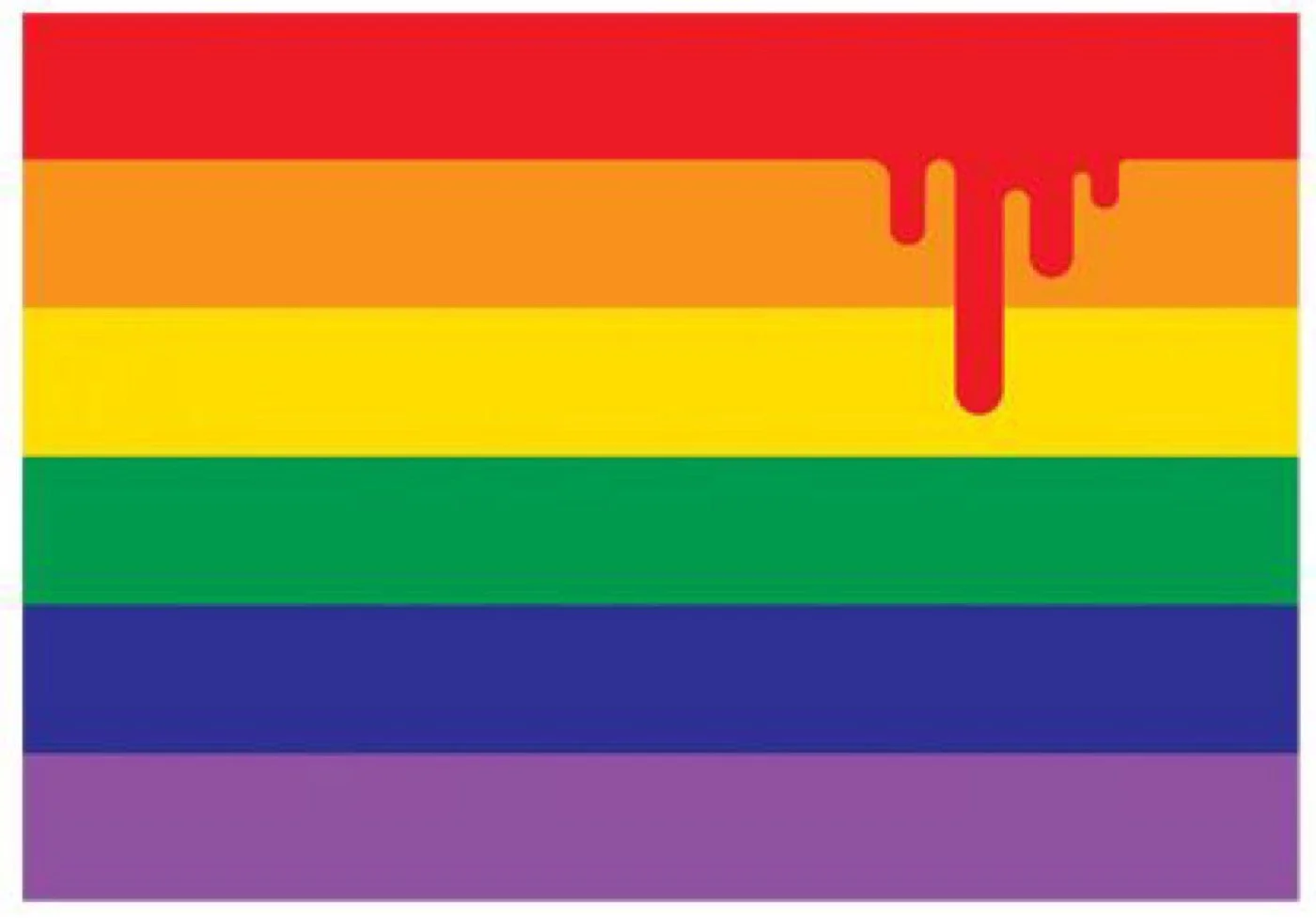
an open letter to straight, white, american men
6 years ago, on the evening of june 12th, my phone — ever the harbinger of nothing good — buzzed me out of my book to let me know that a terrorist attack had taken place in orlando, florida.
Updated Intro Published June 21, 2022
Original Article Published on Medium June 18, 2016

6 years ago, on the evening of june 12th, my phone — ever the harbinger of nothing good — buzzed me out of my book to let me know that a terrorist attack had taken place in orlando, florida. this time at a queer nightclub called pulse. it was latin night. my people, mi gente. i sat in bed, & with my soon-to-be wife sleeping next to me, i furiously typed out an exhausted plea, a letter to straight white men asking them to give up something for the greater good. when the sun came up, i rubbed my aching eyes & thought, this letter is good. maybe this will be enough to get someone to finally understand.
pulse was devastating. from dancing to death. from pride to dried blood that once had a beat of its own. marginalized communities know trauma & are adept at finding ways to overcome it. we are rarely surprised by the atrocity of the oppressor. what we weren’t ready for, i believe, is that pulse was the herald of coming times, the bearer of worse tidings ahead — these times. i believe that forward progress halted that night. that racists & queerphobes, were set loose like zombies into the night who learned to survive on fox feeds & gunpowder. at the time though, i was foolish enough to think that things were finally about to change. i thought soon we’d have our first female president, & that once & for all we’d create common sense gun laws, codify a woman’s right to choose, put an end to the hijacking of our constitution to create legislation meant to harm queer communities & communities of color, & shore up that wall between church & state. instead, we ended up with our first sack of greasy, week-old fries for a president & ongoing & renewed efforts to make hate great, ad nauseam.
6 years ago this open letter didn’t necessarily hit like a clapper on a bell. while it rang clearly for me, it started a family feud, friends unfriended, & white men from all around sent me super awesome messages [insert sarcasm emoji, here]. but i didn’t care.
& i don’t care now.
homegrown terrorist attacks in america have only increased.
if truth rings out, & you cover your ears, does truth still ring out? absolutely yes.
an open letter to straight, white, american men
orlando, america. sunday, june 12th, 2016. we have set a record — a bloody record inspiring millions of prayers & moments of silence world-round. signs, hashtags & photos have declared solidarity & love: we are all orlando, never forget, orlando united, pride. often, out of tragedy comes a thoughtful, grief-filled hush. &, then, as time passes, the hush becomes the noise of every day — normal comes back to those of us not directly affected. & as before, we continue moving back & forth on the same line that we were standing on before. a slide board that lets us look strong and feel fit. contoured by roadblocks & trenches deeply cut, our path does not lead forward. We stay stuck, side-to-sideing it, oblivious that we are going nowhere. these aren’t the contours of a melody, but patterns of stress, the pitch of a caged bird singing. we have a gun-barrel view, so myopic in scope, that now all we’ve left is a tunnel of vision through which we’ve looked so long, we’ve lost periphery. are we afraid that going to that horizon, leaning over & demanding change, will cast us out over an edge unknown, a world more terrifying than this one? how long will we pretend the world is flat?
and so:
dear straight, white, american men:
you have some answering to do. you won’t like being categorized — thrown together as one definable quantity with single definable qualities wrought from the worst of you. but, you’ll get used to it. you’ve stereotyped the rest of us for as long as you have been recording history. it’s your turn to feel it. after these now familiar tragedies, people ask: how could this happen here? who is responsible? we seek answers; we look for blame. it’s time for you to stand up and answer these questions, to own up to them. it’s time for you to say that you have allowed it — that you are responsible. your refusal to lay down your guns allows you to continue picking them up.
how can i be responsible? how am i to blame? i can hear you from here. & i can recall every moment in my life where you have laid the blame everywhere else, on everyone else, but yourself — all the while, living in a society that you built: with your guns, with your laws, with your force. your insistence to keep your ar-15s, your military-grade weapons, that you’ll use to protect yourself against home invasions, or for that fantasy you have of saving scores of innocent people out there in your day-to-day from some random mad man (who, oddly, will end up looking a lot like you, carrying the same type of gun), are days less likely to come than an aurora, a sandy hook, a san bernardino, an orlando. (this list is incomprehensibly incomplete.) but you fail to acknowledge this. instead you build a mythology that allows yourself to turn blindly away from your own complicity. the real events, the ones i’m talking about — they are here. they are true. & they are happening more & more often, closer & closer together. they are taking more & more lives. they aren’t going to stop happening until you decide to do something about them. our country has been built on laws that have been designed & enforced by you. we did not have founding mothers, so it is in your image this country has been shaped, & it’s time to admit that the mirror has been broken for centuries.
we need to talk honestly about your fear — your straight, white fear. i need to ask you this: dudes, what are you so afraid of? because it looks to me like you’re afraid of your own reflection. & that fear you have? it isn’t based in reality. that fear you have, & your expression of that fear, that fear that makes you believe you need an arsenal that could take out a small country, or 49 innocent people, or protect your home from intruders — it isn’t real. what it is, however, is contagious. it’s contagious to those who look to you for acceptance, to those who look to you for a reprieve from the bullying, the jokes, the taunting, the anger.
your fear is what fuels the shadows among you, the ones who are deeply wounded by your fear, the ones who are so afraid of your fear turning on them that they set out to prove to you that they are not your fear. your fear is a contagion that spreads & turns light places dark. your guns, you say, make you men, so men turn to guns to find strength. men turn to guns & then turn those guns on the other thing you fear — anyone who is different from you, anyone who challenges your supposed place at the top of the food chain. because isn’t that what this is all about. isn’t home invasion just a euphemism for, oh shit, we’re losing power to women & people of color? isn’t your insistence to hold so tightly to your guns just a resistance to the fact that somebody else is beginning to take over the writing of history?
we are taking your history hostage, and we have demands. from now on, we need your prayers & your moments of silence to come out as actions, as votes, as laws — out loud — long before you feel the need to pray for those souls you ignored while they lived, while they danced, while they loved — while they challenged your reflection of a world that no longer likes the way it looks. silence is deadly. so knock it off. we need you to scream. for those of you who chose to pray after orlando, fine. but it didn’t do anything but make you feel better. for most of you, it’s all you do after tragedy — you take your hats off, you lower your heads, you whisper your prayers. maybe those prayers are truly for the lgbtq+ community, a prayer that asks for a kinder, more accepting world for us. maybe it’s a prayer released out as some form of guilt for the things you’ve said or done against us. maybe your hands were folded in apology for those words & actions you wish you could take back. it doesn’t really matter. if we can’t hear them, or see them turn into something real & good, we can’t start to trust you. because most of you have reason to feel some form of guilt for your part in a long cycle of treating us as orphans, criminals, jokes, degenerates. for causing us harm with your words or your fists or your bodies or your guns. so from now on, we don’t want your prayers. we can’t stand them.
listen, we know about fear. what we know most about fear is that it is so often born of hate. it is the father of hate crime, & we know what hate crime looks like — from glimmer to done. & we know that your fear of those of us who live differently than you — who look different, act different, are different, has taken shape in your mind as hate. & hate begets resolve: the ugly stiff resolve of crime against my people. we know about this because it has been happening to us since the dawn of time. we know this happens because there is not one of us who hasn’t experienced it — not one of us who hasn’t felt the percussion of your repercussions.
personally, idon’t blame islam. I don’t blame christianity. i blame you. everyone who has fired their hatred upon me — riddled me with their saliva, rained the shrapnel of their supposed superiority & strength upon me — they have all looked exactly like you. &, in my life, when i have stared into the eyes of your straight, white brother holding his fists above me, deciding what his next move would be, i know that if he’d had a gun, he’d have used it. & don’t be fooled by that last sentence there — this is not one man, one time. those of us in my community, those of us who came of age in a world where gay bars were safe havens, where the rest of the world was a world you didn’t walk out into alone, & if you did, you’d better pretend you weren’t a dyke or a fucking fag — we remember what it was like to let down our guard — what price we paid when we thought we were in safe company — how quickly safe company could change. so we played our parts, and when we didn’t — when we refused to play the part that would make you more comfortable, we felt the history of your world and its laws allowing you to do the things you’ve done.
i come from the margins. i always have. & i will always do so loudly. i speak from the margins, but i am yelling at the center. i am yelling at you. use your voice for something better. speak up against derogatory comments when you hear them. stop saying them yourself. don’t laugh at gay jokes — don’t fucking tell them. instead say they are offensive. don’t say you don’t mind trans women because you can spot a “real woman” a mile away. don’t say lesbians you find attractive are such a waste, & quit saying gays are fine just don’t hit on me, man. & when you stand up & say these things are wrong, don’t say it’s because your daughter is gay or trans, or your brother or your friend. say it’s because you don’t like bigots. say it’s because you believe that everyone deserves equal protection under the law, that you believe we all deserve dignity & respect. your prayers won’t change our culture. but your words, out loud, to the everyday people in your life, will. make it about you. not us. tell the bigots they are wrong; tell the guy who makes a “harmless” joke, that it isn’t funny, and it’s offensive. & stop making certain we know, when you express acceptance of the lgbtq+ community, that you are not lgbtq or +. we don’t care. it’s time for you to change. to really change. & if you did hit your knees to pray for those who died in orlando, you’d better accept that it was way too late. they needed laws. they needed gun sense. they needed straight, white, male america to quit holding onto their assault rifles like they were vital organs.
thousands of people are dying in this country because of those guns you make ridiculous excuses for. you dare to say that the way we live our lives is fine as long as you don’t have to see it. but you need to see it. because those latinx men & women, those boys & girls, those members of my family who dared to dress how they wanted, love who they wanted, & danced like there was literally no tomorrow — they were living a life that was beautiful & true. they weren’t hiding behind an archaic amendment written by guess who? you think your “right” to your ar-15s is a right that somehow outweighs the right of 49 people to have LIFE — 49 people — none of whom should have ended their lives with goodbye texts to their mothers from bathroom stalls.
i’ve been spit on, clawed at, cursed at, hissed at, hit, slapped, pushed, pushed down. i’ve had objects hurled at me, bottles broken over my head, & videos left on my doorstep to make certain i knew just what a penis looked like, in case i needed to know. i’ve had my property destroyed, graffiti-ed, burned, soaked in blood and raw fish. i’ve been forced, fooled & fractured by america’s finest — white men like you. i could go on, but it’s pointless — because i’m alive. what i have endured has been exactly that: endurable. i have fought off & defended myself against more white men than most of you combined. your anger, your rage, which none of us can possibly legitimize, is what fuels the guy on the edge. where do they come up with these ideas? they get them from you! how many times have you said hateful or derogatory things about women, other races, other genders, gay people, trans people? these killers don’t come out of mid-air. they are born from the seeds of hatred that have been planted over & across decades & millennia by people just like you. you have to stop enabling the hate — with your fear, with your silence, with your judgment, with your fists, & with your guns.
listen straight, white men — it’s time to quit acting like you don’t play the biggest part in this. because you have been making the laws in this country from the get-go. but we are rising up. the brown, the queer, the women. & guess what? We are absolutely coming for your fucking guns.
5 AAPI Women Changing the World
To kick off Asian American and Pacific Islander Heritage Month, we’re re-upping five episodes featuring inspiring AAPI women across the country who are stepping up to the fight to defend our rights and our democracy.
From electeds to activists, AAPI women are powerful changemakers in all corners of politics.
Edited by Fola Onifade
To kick off Asian American and Pacific Islander Heritage Month, we’re re-upping five episodes featuring inspiring AAPI women across the country who are stepping up to the fight to defend our rights and our democracy.
If you like what you hear, you can find all of our podcast episodes here.
Know someone who should learn more about these incredible women? Share this page with them because that’s how we build power!
How to Win with Georgia’s Bee Nguyen

Bee Nguyen, Candidate for Georgia Secretary of State
Bee Nguyen is a Georgia State House representative who took over Stacey Abrams’ seat in 2017, becoming the first Vietnamese-American elected to the Georgia House of Representatives. She is currently running for Georgia Secretary of State.
Listen to the full episode with Bee below or wherever you get your podcasts.
Tram Nguyen on How Virginia Turned Blue

Tram Nguyen, Co-Director of New Virginia Majority
Tram Nguyen is the co-director of New Virginia Majority, an organization she helped build into one of the premier civic engagement groups in the country. Under her leadership, New Virginia Majority now serves as the hub for a powerful voter mobilization network that includes nine chapters and hubs, an annual budget of $3 million and has the ability to turn out 200,000 progressive voters of color.
Listen to the full episode with Tram below or wherever you get your podcasts.
Bold Asian American Activism and Its Roots with Judy Tzu-Chun Wu

Judy Tzu-Chun Wu is currently a professor of Asian American Studies at the University of California, Irvine and director of the Humanities Center. She received her Ph.D. in U.S. History from Stanford and previously taught at Ohio State University.
Her first book, Dr. Mom Chung of the Fair-Haired Bastards: the Life of a Wartime Celebrity was a biography of Margaret Jessie Chung, the first American-born Chinese woman doctor.
She is also the co-editor of Women and Social Movements in the United States, 1600–2000 and editor for Amerasia Journal.
Listen to the full episode with Judy below or wherever you get your podcasts.
Who is the Next Stacey Abrams? (Vanita Gupta)

Vanita Gupta is the 19th United States Associate Attorney General, and the third-ranking official at the Department of Justice. Prior to her role in the Justice Department, Vanita was the president and CEO of the Leadership Conference on Civil and Human Rights, an organization that has worked extensively through litigation and activism to protect low-income voters and voters of color.
Listen to the full episode where we discuss Vanita below or wherever you get your podcasts.
The Kamala Harris We Know

Vice President Kamala Harris is the first Black, Asian American and woman to serve as Vice President of the United States. In 2010, she became the first Black and Indian American to serve as Attorney General in California.
Listen to the full episode where we discuss our relationship with VP Harris below or wherever you get your podcasts.

Where No Black Woman Has Gone Before
I have admittedly never watched Star Trek (the original or newer versions), but when I learned that Stacey Abrams made a cameo in the season finale of Paramount+’s Star Trek: Discovery, it immediately piqued my interest.
Black women like Stacey Abrams and Judge Ketanji Brown Jackson are reshaping the future
By Fola Onifade

I have admittedly never watched Star Trek (the original or newer versions), but when I learned that Stacey Abrams made a cameo in the season finale of Paramount+’s Star Trek: Discovery, it immediately piqued my interest.
So, last Thursday, with popcorn in hand, I sat down to watch the finale. I tried to keep up with the plot, and then, with just a few minutes left before the show ended, the President of United Earth stepped off a spaceship wearing her hair in a plaited updo and a regal cape fit for the leader of a planetary state. I couldn’t help but smile from ear to ear as I watched Stacey Abrams, aka “Madam President,” greet the members of the Discovery starship. Hearing them call her “President” felt so right, like watching her embody her future potential title with confidence.
Breaking molds
Abrams may have been playing a character, but her leadership in Georgia and around the country is no work of fiction. In the book Caste, author Isabel Wilkerson talks about America’s long-running play that has cast all of its inhabitants into fixed and rigid roles based on the color of their skin. “For generations,” Wilkerson writes, “Everyone has known who is the center stage in the lead. Everyone knows who the hero is, who the supporting characters are, who is the sidekick good for laughs, and who is in shadow, the undifferentiated chorus with no lines to speak, no voice to sing, but necessary for the production to work.”
In the last several years, however, Black women like Stacey Abrams have increasingly broken the mold for those roles — defying the usual casting and taking the center stage as national leaders, powerbrokers and decision-makers.
From the Silver Screen to Supreme Court
At this very moment, Judge Ketanji Brown Jackson is poised to change the face of the U.S. Supreme Court forever. If confirmed by the Senate, she will become our nation’s first Black woman Supreme Court Justice. Her presence on the bench would exemplify who can carry the torch as a standard bearer of justice in a country where Black women continue to demand equality, body sovereignty, and safety. When women like Jackson and Stacey Abrams emerge on the stage of our national theater in roles they were never considered for, they represent a threat to an old playbill.
Jackson and Abrams are contributing to a world where young women and girls can imagine themselves as co-creators of their futures, as members of a cast with power and authority to shape their present. In her newest project Naomi, award-winning director Ava DuVernay tells the story of a young Black high schooler and Superman fan who finds out it’s not just her favorite superhero that has power, but that she possesses her own special powers as well. Likewise, characters like Lupita Nyong’o’s Nakia and Danai Gurira’s Okoye in Marvel’s Black Panther are helping to reshape our collective consciousness by showing Black women as fearless heroes who save the day, and power players who summon those around them to their highest selves.
We see ourselves
In researching the original 1960s version of Star Trek, I learned that actress Nichelle Nichols, who played the ground-breaking character of head communications officer Lieutenant Uhura, submitted her resignation in 1967 after the first season and was prepared to make a return to theater. That same weekend, she met Dr. Martin Luther King at an NAACP event in Beverly Hills and he told her how much he and his family loved the show and seeing her on it. When she explained that she was planning to leave the show, he told her, “You cannot and you must not.” About the significance of her role, he said, “When we see you, we see ourselves, and we see ourselves as intelligent and beautiful and proud.”
Dr. King explained to Nichols that her role allowed Black Americans to imagine a future with them in it. “Three hundred years from now…we are here. We are marching,” he told her. “We all know they cannot destroy us because we are there in the 23rd century.”
They can’t destroy us now, either, because we are here presiding over courtrooms, leading local governments, in the White House, and passing life-changing legislation. In this century, a Black woman like Stacey Abrams can be president in a sci-fi classic and in real life too.
A version of this article was published in the Democracy in Color newsletter. Sign up to receive weekly letters like this in your inbox here.

5 Activists of Color Making Women’s History
Since launching our podcast in 2020, we’ve had many powerful women on the show who are advancing democracy, fighting Republican attacks on America’s multi-racial majority, and championing new ideas on how to fight racism.
These strategists, authors, and professors are shaping U.S. history as we speak
Edited by Fola Onifade
Since launching our podcast in 2020, we’ve had many powerful women on the show who are advancing democracy, fighting Republican attacks on America’s multi-racial majority, and championing new ideas on how to fight racism.
To kick off Women’s History Month, we’re re-upping four episodes featuring some of these “she”-roes and elevating their work and their stories. This list is not exhaustive because we’re fortunate to have had so many powerful women of color on the show. You can find all of them here.
Know someone who should learn more about these incredible women? Share this page with them because that’s how we build power!
Aimee Allison on the Power of Women of Color

Aimee Allison is the founder and president of She The People, a nationally-renowned network of women of color making political and social change. (She was also the former president of Democracy in Color!)
Aimee is also a writer, innovator and champion of racial and gender justice. She has dedicated her life to achieving a multiracial democracy and she uses her platform to make the case that women of color are the saving grace of American democracy.
Listen to the full episode with Aimee below or wherever you get your podcasts.
Not a Nation of Immigrants with Roxanne Dunbar-Ortiz and Anathea Chino

Left to Right: Anathea Chino, Co-Founder and Executive Director of Advance Native Political Leadership & Roxanne Dunbar-Ortiz, Author of “An Indigenous People’s History of the United States”
Roxanne Dunbar-Ortiz is a historian, author, memoirist, and speaker. She is the author of several books and articles on indigenous peoples rights to self-determination, including the book, An Indigenous People’s History of the United States and her newest book, Not a Nation of Immigrants: Settler Colonialism, White Supremacy and a History of Erasure and Exclusion.
Anathea Chino is the co-founder and executive director of Advance Native Political Leadership, the first and only national native organization focused on electing Native Americans to local and state leadership.
Listen to the full episode with Roxanne and Anathea below or wherever you get your podcasts.
Pride: Hope, Struggle, and Taking Back Power with Rebecca Marques

Rebecca Marques is the Texas state director for Project One America in the Human Rights Campaign, where she leads the organization’s legislative and electoral work in the state.
Before that, she served as a political strategist for the ACLU of Texas where she led the organization’s LGBTQ and reproductive rights work at the Texas state legislature and advocacy efforts across the state.
Listen to the full episode with Rebecca below or wherever you get your podcasts.
Bold Asian American Activism and Its Roots with Judy Tzu-Chun Wu

Judy Tzu-Chun Wu is currently a professor of Asian American Studies at the University of California, Irvine and director of the Humanities Center. She received her Ph.D. in U.S. History from Stanford and previously taught at Ohio State University.
Her first book, Dr. Mom Chung of the Fair-Haired Bastards: the Life of a Wartime Celebrity was a biography of Margaret Jessie Chung, the first American-born Chinese woman doctor.
She is also the co-editor of Women and Social Movements in the United States, 1600–2000 and editor for Amerasia Journal.
Listen to the full episode with Judy below or wherever you get your podcasts.

5 New Year’s Resolutions for the Democratic Party to Adopt in 2022
How Democrats can step into some “New Year, New Party” energy.
How Democrats can step into some “New Year, New Party” energy
By Fola Onifade

1. Print this New York Times article by Stacey Abrams and Lauren Groh-Wargo and take detailed notes.
If Democrats want to win in 2022, they should start by reading (or hopefully, re-reading) this opinion piece by Stacey Abrams and Lauren Groh-Wargo literally titled “How to Turn Your Red State Blue.”
In 2021, the Democratic-led Congress approved a $1.9 trillion pandemic-relief bill with no Republican votes. The relief funding, also known as the American Rescue Plan, extended child tax credits to millions of Americans, helping to cover childcare expenses and combat childhood poverty. State and local governments (including Republican-led states) have received billions in funding. A few examples of how that funding was used include: increasing pay for childcare workers in Boston, Massachusetts; preventing evictions in San Antonio, Texas; and supporting students from low-income areas in San Jose, California.
With no Republican support for the bill in Congress, such progress would have been unlikely if Georgia voters hadn’t turned out in droves during the 2020 elections, helping to secure the White House and the Senate for Democrats. Democrats weren’t even thinking about Georgia as a key to winning until the fate of Congress came down to the wire, and the Peach State became the party’s last hope to win the Senate.
But back in 2014, Abrams (who is running for GA governor this year) founded the New Georgia Project, a voter registration and civic engagement organization, and she began to lay the foundation for the massive turnout in the 2020 election, transforming what was once a solidly red state into a political battleground. Georgia’s not the only state with the potential to upend the balance of power in this country. As Abrams and Groh-Wargo say in their piece: “By identifying an untapped or underrepresented voter pool, states can redefine their path to victory.
2. Stop tripping over the filibuster and pass voting rights legislation.
Resolution number 2 might be the lowest hanging fruit on this list if Democrats would stop tripping over a procedural hangup. This is the easiest resolution to follow since Democrats control both houses of Congress right now. And it’s the most urgent, given the failed coup attempt that took place one year ago on January 6th in the U.S. Capitol after Biden won his election and the unrelenting attacks on voting access since.
Democrats failing to protect the right to vote after millions of voters defied the odds in Georgia, Arizona, and elsewhere across the country—securing the executive and legislative branches of government for the party—is wholly unacceptable at this point.
We deserve better, and while it shouldn’t have taken this long, a new year would be a great time for Democrats to show their commitment to democracy by protecting the most basic and important element of it.
3. Hire qualified staffers who've stepped in a Black barbershop or hair salon.
Cultural competency is a critical factor in winning over voters, because politics, at the end of the day, is a matter of culture. In Black communities, hair salons and barbershops are more than just businesses—they’re community centers for conversation, exchanging ideas, and sharing knowledge. Patrons discuss music and entertainment, their hopes and fears for their children, the price of groceries, and the cost of healthcare. Just a few minutes spent in any of these spaces will reveal the complexity and depth among Black voters’ interests that can’t be grasped from one conversation with a Black celebrity or a scroll through “Black Twitter.”
4. Stop asking white guys to explain trends among Latino voters (or really any voters of color).
If you leave it to the white data geeks whose number-crunching steers much of the Democratic decision making machine, they’ll tell you that the Latino vote for Democrats in 2020 “dropped” compared to prior elections because these voters were supposedly turned off by threats of “socialism” and messages like “defund the police.” But those takes are not enough to explain the record level of turnout among Latinos who voted for Biden or the important nuances within the Latino community.
In September of last year, we had Executive Director of Somos Votantes Melissa Morales on our podcast to share her insight on the 2020 Latino vote. And for our last episode of 2021, NBCNews.com’s Suzanne Gamboa broke down what members of the Latino community continue to share with her about what matters to them. Research and reporting led by actual members of the Latino community consistently show that what matters most broadly among this group are issues like education and jobs.
Resolutions 3 and 4 go hand-in-hand because understanding the unique perspectives of voters in a multiracial society requires rigorous analysis to accompany cultural competency. If Democrats really want to understand voters of color in order to win elections, they can start by overcoming their own biases and hire, listen to, learn from, and support organizers, researchers, staffers, reporters, and voters of color from all walks of life who have both the expertise and the lived experience that truly reflect the New American Majority.
5. Prioritize justice over “popularism.”
“Popularism” is the belief among mainstream Democrats that candidates should poll endlessly to figure out what’s popular among voters and only talk about those issues on the campaign trail. But in a country where extending the right to vote to Black Americans in 1965 resulted in a mass exodus of white folks from the Democratic Party, only talking about what’s popular often means ignoring the supposed “unpopular” topic of injustice that threaten the lives of many Americans, specifically Black folks and other people of color, women, trans and non-binary people, disabled people and many others.
Expecting Democrats to abandon “popularism” is a BIG ask, given their tendency to shy away from taking bold action that benefits voters, the party and democracy, but at least there’s some precedent. For example, last year, as mentioned above, Congress passed trillions of dollars in federal relief, billions of which helped significantly reduce child poverty through the child tax credit. At the local level, thanks to the 2019 pilot in Stockton, California created by the city’s former mayor Michael Tubbs, guaranteed income programs have now popped up in several different cities across the nation from St. Paul, Minnesota to Pittsburgh, Pennsylvania, blazing a path towards economic justice by providing individuals and families with much needed funds. And it turns out, lifting people out of poverty is popular among those who could use the help.
Getting my portrait painted
Magdalena, my artistic child, age 10, was creating a portrait of a classmate. In the portrait, the friend’s skin was peach, like a “skin-colored” crayon; the highlights were blue.
By Maya Castillo
ORIGINAL ARTICLE PUBLISHED ON MEDIUM JULY 19, 2021

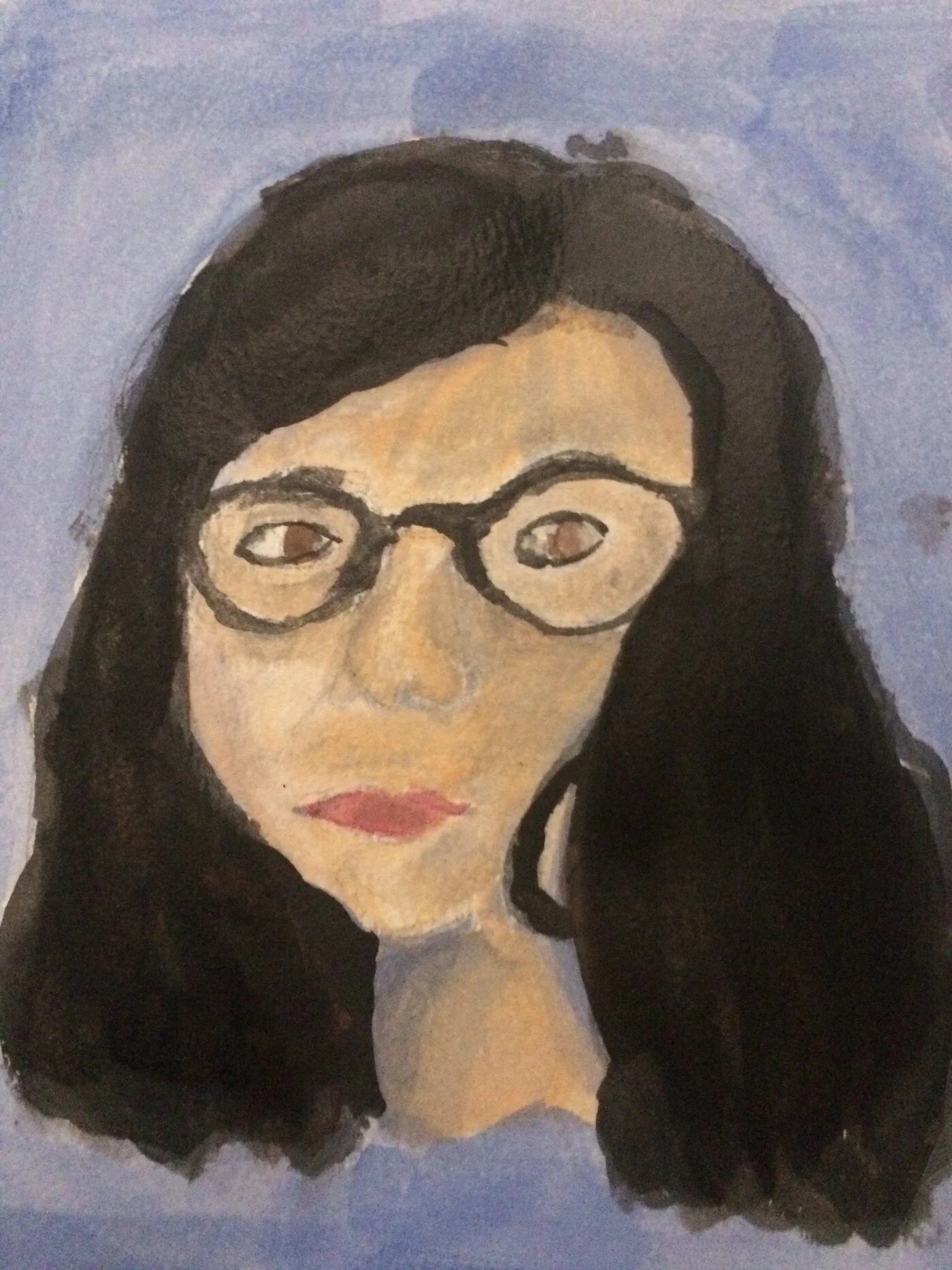
Magdalena, my artistic child, age 10, was creating a portrait of a classmate. In the portrait, the friend’s skin was peach, like a “skin-colored” crayon; the highlights were blue. I asked Magdalena if she’d paint a watercolor portrait of me and she said yes. She asked me if she could go through my closet and look for something different for me to wear.
“Um…but all you have to do is a painting of my face. Just like the painting you’re working on right now,” I told her.
“No. That won’t work for the painting of you.”
She went through my closet, picking and choosing and discarding several items of clothing that I actually like very much. We settled on a blouse, tan colored, with ducks and hearts. I know this sounds terrible but it’s actually pretty cute. She told me she’d take it from me if it didn’t fit me anymore.
After arranging my clothing, she arranged my hair, sighing frequently. Next, she tackled the lighting in the bedroom, moving a bedside lamp, a chair, playing with the overhead light and opening blinds. She arranged me in my seat and adjusted the angle of my head.
“Can I read while I wait?” I asked.
“No. It ruins the light and the position of your face,” she replied.
“Crap,” I said. “So. I just sit here?”
“Yes. Stop moving. Now look up. Take off your glasses,” she commanded. “This is my process. How do you want this painting? Picasso-style?”
“Sure. That sounds good.”
“I don’t know how to do Picasso-style.” She shrugged. “Your face is shaped weird. Why is your face so small? Your forehead is too small. This is going to be challenging. I guess your nose is normal though. Good thing some of your face is normal or this would take all day.”
“Then why did you offer Picasso-style?” I asked. She shrugged again. “So how did you do that painting of your friend?”
“Photo reference!” she said.
“Can you just take a few photos of me and use those?” I asked hopefully.
She started to grunt disapprovingly every time I moved, even to scratch my nose.
“Mom. No. Do you want this done right or not at all? I’m going to have to custom mix colors for your lips. They’re… purplish. Hmm...”
I managed to get a hold of my cell phone. I texted my husband. Help me. He walked into the room, surveyed the scene, laughed a little, and walked away. After a few minutes Magdalena told me that I could leave because her sketch was complete. I changed my clothes back to the black t-shirt and jeans I’d been wearing. I felt relieved. She finished her painting. It was just my face, neck up, without even a peek of the blouse she had told me to wear. I laughed.
This self-assured, light caramel-colored child is one of the lights of my life. She is one of many reasons we can’t just roll our eyes at the sudden surge against teaching “critical race theory” in schools as “not a thing that happens” or with memes.
When Magdalena was five, we were new to Virginia and she was starting kindergarten at a highly rated elementary school in Falls Church. She was outgoing and VERY talkative from an early age. We were a little worried that her gregariousness would translate to disruptiveness in a classroom setting, but we were wrong. In class, during work times, she was attentive, caring, and eager to follow the rules. She loved school. Outside of school, she was a mile a minute, her words sometimes spilling out faster than her brain could process them. She’d tell anyone who would listen about that day at school and talk even when there was no one listening. One day, in her fountain of words, she said that a classmate, a little boy, told her that she was garbage, that Mexicans were garbage and that the Spanish language was garbage. And she told us that she’d responded that she was not garbage, that she was the color of caramel, and that caramel is delicious.
I remember how I took a deep breath and felt my heart crack when she told me that story. I don’t remember all of the conversation that followed but we surrounded her with love that day and then called her teacher. The teacher, who was in her first year and a “well-meaning” young white woman, was definitely not equipped to have this conversation. She struggled to pronounce Magdalena’s name and changed it to “Maggie” and struggled to address our concerns about our issues with events like the annual Thanksgiving luncheon, where students and teachers dressed like “Pilgrims and Indians.” It was simply how this teacher had grown up. Follow ups after that call at school went nowhere. We continued to reinforce our daughter’s love of her caramel-colored skin at home.
I will never forget that experience and neither will she. Which brings us to now. Is critical race theory a thing that’s taught in elementary schools? No. Of course not.
But here’s how the current dialogue aroundabout critical race theory has impacted conversations between me and my talented, smart child:
There are people who don’t want us to talk about racism or being poor or being an immigrant, but for a lot of us, these are the things that affect us everyday. People (kids, teachers, community members etc.) comment on our clothes, our accents, our skin color and mispronounce our names. Sometimes they don’t mean to be offensive, and sometimes they do, but either way these things devalue us as human beings. When we say “LOL. That’s not a thing. The political right is so dumb,” our kids are hearing “we’re not going to say anything to fight back against the narrative that talking about race and class are inappropriate for a school setting EVEN THOUGH all of these things affect us every single day.”
I could lie to her, I guess. Shut our house down so that the news doesn’t permeate. But given that her first brush with racism happened in kindergarten, we’d be trying to shelter her from her own truth and her own experience.
Like many light brown parents, I struggle to articulate the hard stuff sometimes. Our conversations over the dinner table are probably more blunt than those had by many families but it’s still difficult to explain to one child that they might have a different experience than their sibling because of our varying shades of caramel- colored skin.
What I want more than dinner table talk, though, is for our kids to be able to make connections between what happened in that kindergarten classroom and our history. Kids are absorbing so much from their own experiences but also from the media and the world around them. Even though “critical race theory” is not actually being taught in schools, children want to know more about how their experiences are reflected in their world. And they deserve to.

Who Gets to Be “The Best” and Why?
When Emmy nominations were announced back in July, Twitter was abuzz with excitement, and rightfully so. I, along with many others, were thrilled to see the historic level of diversity among nominees including Lovecraft Country’s Jonathan Majors, Saturday Night Live’s Bowen Yang, and Pose’s Mj Rodriguez.
From the Emmys to the Democratic Party, representation without structural change is not enough
By Fola Onifade

When Emmy nominations were announced back in July, Twitter was abuzz with excitement, and rightfully so. I, along with many others, were thrilled to see the historic level of diversity among nominees including Lovecraft Country’s Jonathan Majors, Saturday Night Live’s Bowen Yang, and Pose’s Mj Rodriguez. Coming off prior Emmy ceremonies where queer artists won big in 2019 and a record number of actors of color took home top awards in 2020, the hype was warranted.
But this year’s announcement of awards disappointed, to say the least. Despite the record number of people of color nominations (performers of color made up nearly half of the nominations, 44%), in the end white actors swept all 12 major acting categories.
Following the 2015 #OscarsSoWhite public outcry and the entertainment industry’s restated commitment to diversity after last summer’s racial reckoning in response to the police murder of George Floyd and Breonna Taylor, critics have rightly pointed out the shallowness of the industry’s proclamations to boost diversity and inclusion.
While Hollywood has gotten better in recent years at reflecting the true rainbow of America on our TV screens, Sunday’s Emmy award-winners, who are selected by the Television Academy, proved there’s clearly still much more work to be done in recognizing the excellence of actors, writers, and directors of color.
Failing to properly acknowledge the excellence of this nation’s people of color (who make up 42% of the U.S. population) isn’t limited to Hollywood, though. Similarly, due to the lack of consequential and structural change within the Democratic Party, candidates of color — and women in particular — continue to fight an uphill battle for funding, meaningful support, and ultimately, victory.
#EmmysSoWhite and #DemPartySoWhite
Like the Television Academy, decision-makers within the Democratic Party are overwhelmingly white, and when white folks hold the majority of leadership positions in any industry, fewer checks remain to safeguard against implicit bias. According to the Stanford Encyclopedia of Philosophy, implicit bias suggests that people can act on the basis of prejudice and stereotypes without intending to do so.
At Sunday night’s Emmys, not one Black actor or other actor of color was deemed “the best” by the industry for their TV show performances, but they were still featured as live talent during the ceremonies. Cedric the Entertainer hosted and paid tribute to the late rap legend Biz Markie. R&B singers Leon Bridges and Jon Batiste performed and several people of color served as presenters of awards. While artists of color were deemed fit to provide the bulk of the night’s live entertainment, it hardly excuses the lack of actual awards given to the many nominated and well-deserving artists of color.
The same implicit bias that keeps people of color from winning and being declared “the best” in Hollywood is what keeps the Democratic Party from investing in and promoting candidates of color who have the ability to change the political calculus in key states.
Women candidates of color and the “myth of electability”
For Black women and other women of color candidates, achieving recognition and securing funding is especially challenging, despite an increasingly demonstrated track record of “electability” in state and local races. In a 2020 piece for Democracy Journal, Glynda Carr, president and CEO of Higher Heights for America, highlighted the struggle women of color face to be recognized and supported in politics. Carr notes that while white men still dominate politics, the percentage of women winning races has increased over the last five years. Women of color increased their presence in Congress by 40% and in state legislatures by 38% since 2015.
Despite these recent gains, the “myth of electability” still looms over women candidates of color, impeding their ability to raise funds and gain endorsements early in their races when it makes a significant difference. And they continue to be overlooked by the Democratic Party as candidates to lift up for statewide offices and higher. Since Vice President Kamala Harris’ move to the Biden administration there are no longer any Black women in the U.S. Senate. Additionally, there are only two AAPI women in the Senate and one Latina. New Mexico Governor Michelle Lujan Grisham is the only woman governor of color in the country and the first Democratic Latina governor ever elected in U.S. history. These statistics beg the question: If women of color are electable enough for state legislative office or the House of Representatives, why the dearth of representation in the Senate or governorships?
Representation without structural change won’t cut it
In a May 2021 piece for The Undefeated, former editor-in-chief of Bitch Magazine Evette Dionne argued that the increasing visibility of Black women from Harris to Olympic legend Simone Biles has not resulted in greater protection, support, or recognition of Black women’s contributions to the country as a whole. Dionne highlighted how such visibility without structural changes that ensure equity and dignity across the board actually serve to further dehumanize Black women and other women of color by turning them into figureheads who must still do the dirty work of “saving the country” and winning elections.
From pop culture to politics, diverse talent is mined for its value but hardly supported or celebrated. Implicit bias can’t be eradicated with diversity trainings and anti-racist self help books. The social structures that uphold these biases must also be dismantled and rebuilt. Undoing implicit bias must become a national conversation and if the Emmys and the Democratic Party truly want to show commitment to diversity and inclusion, they need to start by changing who gets to make decisions about who is “the best” and prioritizing the voices of the consistently marginalized.
A version of this article was published in the Democracy in Color newsletter. Sign up to receive weekly letters like this in your inbox here.
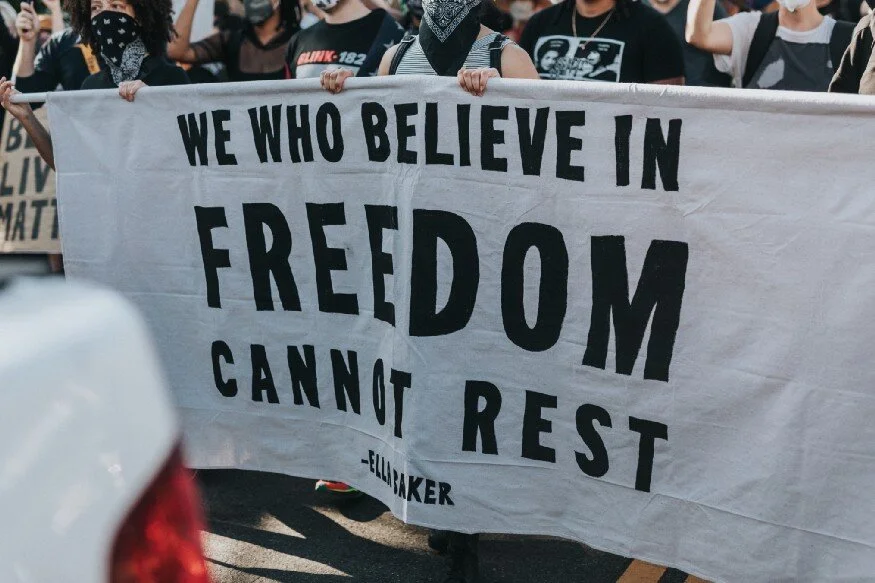
What the Texas abortion ban means to me as a Black woman
Last week, as I watched the media frenzy following the passage of a Texas bill that would ban abortions for pregnant people after six weeks, I stepped away from my computer to take a walk and clear my head.
Our will to rise is greater than the history of oppression
By Fola Onifade
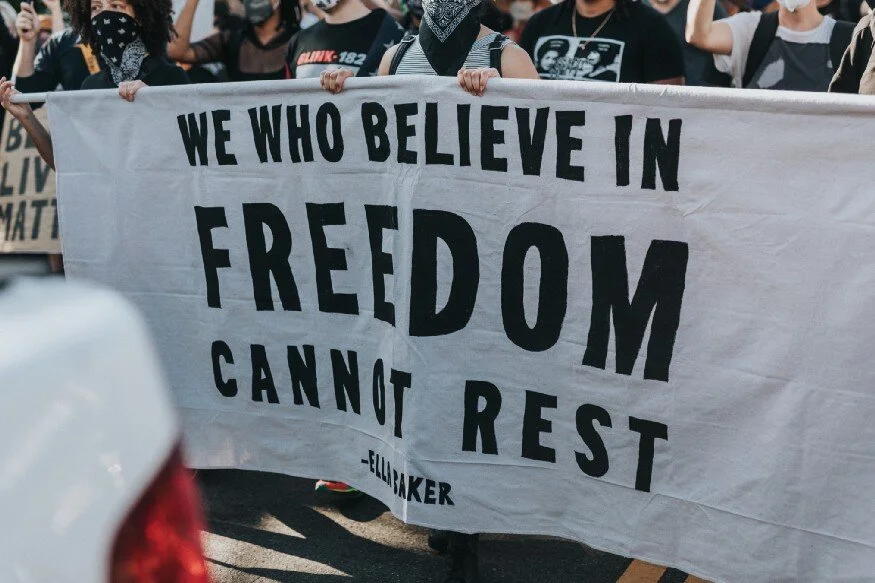
Last week, as I watched the media frenzy following the passage of a Texas bill that would ban abortions for pregnant people after six weeks, I stepped away from my computer to take a walk and clear my head. I was overwhelmed: by the news; the voices shouting across the internet in reaction; the flawed (and quite frankly, Islamophobic) comparisons of Texas to countries in the Middle East or to the white-centered novel and TV show The Handmaid’s Tale. I sensed my body bracing itself against the familiar pangs of anxiety and dread. I felt my heart heavy and racing, palms sweaty, as my stomach ached with tightness.
It took me a while to articulate the meaning of my physical and emotional reaction. But over the last several days, I’ve come to better understand that although my fears are rooted in a long history of violence against marginalized people, my hope is grounded in a deeper and richer history of our undefeatable will to rise.
To be a Black woman in America
As a Nigerian-born immigrant who came to this country at the age of seven and was raised in a large urban city in northern New Jersey, my experience of Blackness in America is a diasporic one, diverse in ways but undeniably connected and related to that of Black Americans descended from enslaved people of Africa. As a Black woman in her late 20s, I am regularly bombarded with racist and misogynistic attacks against my autonomy, exhausting reminders that I will always have to fight for and justify my humanity in every choice I make.
At every turn, I watch my government negate my right to thrive. Black women and people of marginalized genders and ethnicities across the spectrum have to fight on a daily basis for our basic rights, including our right to choose who should speak on our behalf in the seat of government (without lawmakers going out of their way to suppress our votes), and our rights to true public safety, adequate healthcare, housing, living wages, and more.
Abortion laws and us
This new Texas abortion ban is another reminder of how Black folks, other people of color and of diverse genders have to fight on several fronts in order to be seen as humans deserving dignity, safety, and choice over our livelihoods. While abortion bans rarely stop people from terminating a pregnancy, such bans do put poor people and people of color at greater risk by leaving them fewer options for safe abortion care.
In 2019, about 70% of abortions in Texas were provided to women of color, according to the Guttmacher Institute. For many poor folks, beyond the physical and mental health implications of the right to reproductive choice, these abortions are a necessity for economic stability and well-being. In the U.S., about half the people who get abortions live below the federal poverty level (and Black, Native Americans and Latinxs disproportionately make up the population living below this level). A recent study of women living below the poverty line found that over a span of a decade, 72% of the women who participated in the study and who were denied abortion care ended up living in poverty (compared with 55% of those who received abortion care).
Even for those of us not living in Texas, the current attacks on bodily autonomy paint a terrifying picture of the not-so-distant future, and pose a stark reminder of the horrors of the not-so-distant past, including forced sterilizations performed on Black women and other women of color. According to the Guttmacher Institute, nationally an African American woman is 2.7 times more likely to have an abortion than a white woman, and a Latina 1.8 times as likely. Also, and in the context of reproductive rights as a whole, Black women are three to four times more likely to die from pregnancy-related causes than white women.
These abortion laws also disproportionately affect Black and brown teenagers. While it’s good news that pregnancy and birth rates for Black and Latinx teens have dropped significantly in the past two decades, they’re still more than twice as likely as white (predominantly cisgender) girls to become pregnant, due to poor culturally-specific reproductive health programming and state-specific legislation that makes comprehensive sex education difficult to access.
Still we rise
I’ve been doing my best to stay calm and find hope in the lasting tradition of resistance in this country and around the world, the collective political response of oppressed people — especially those of us marginalized because of our gender — to rise up at times when oppressors are at their most vile and dangerous. When I look to the generation behind me, I see the country’s youth and young adults, driven to take their future into their own hands, armed with more knowledge and enlightenment than I could have imagined for myself at their age.
Specifically the 16- and 17-year-olds leading reproductive justice movements, marching in the streets for climate justice, educating their families and friends on voting rights, and fighting for a better, safer world for everyone remain my greatest source of hope. It’s their ability to rise up from the dirt, from the “bitter, twisted lies” — as the late Maya Angelou said in her famous poem “And Still I Rise” — that reminds me: it is often the darkest moments in history that galvanize great movement and change.
My hope is in the youth
As we noted in a recent episode of the Democracy in Color podcast about the 2020 Census, people of color make up more than half of the nation’s total youth population, with Latinx youth comprising 25.7% and Black youth 13.2%. According to a Pew report, people of color made up 38% of Democratic votes in 2020, and young people between the ages of 18–29 made up 17% of the party’s votes. Those numbers are only set to grow. Every year, about 4 million young people turn 18 before election day in the U.S. That’s 16 million new voters by 2024 who, as Steve has pointed out before, are not easily startled by the terms “socialism” or “defund the police.”
That’s why Republicans and conservatives are so afraid: because they see the writing on the wall and are doing anything to try to curb this rising tide.
When I am most overcome with distress about what the future may hold, I remind myself that the future includes these young people too: the rising New American Majority that isn’t afraid to dream big and demand a more just and equitable society that protects everyone regardless of race, ability, faith, gender identity, and sexual orientation; one that prioritizes mutual cooperation to make amends for the past and work towards the greater good in order to care for an ailing planet.
I believe the future of our country will encompass a story greater than oppression, and to achieve that we’ll need to listen to, invest in and support the young people who are ready and desiring racial and social justice, and change.
In Solidarity and Love,
Fola and the Democracy in Color Team
A version of this article was published in the Democracy in Color newsletter. Sign up to receive weekly letters like this in your inbox here.
Newsom taking Black and brown voters for granted may cost him recall election
Despite having raised $57 million, Gov. Gavin Newsom's recall campaign is about to blow it in the final stretch, imperiling not only his governorship but also the quality of lives of tens of millions of Californians.
By Ludovic Blain, Director, California Donor Table

Source: @guisanden24
Despite having raised $57 million, Gov. Gavin Newsom's recall campaign is about to blow it in the final stretch, imperiling not only his governorship but also the quality of lives of tens of millions of Californians. All because his campaign—as Democrats tend to do—is planning to spend most of their money on last-minute ads rather than on mobilizing voters of color who make up the majority of the state electorate.
Over the past ten years Democratic and progressive California donors and activists helped win key elections in other states. This time national donors must step up ASAP (election day is Tuesday, September 14) to close the budget gaps of independent political organizations rooted in communities of color running “No” campaigns here in California against the recall.
National donors must 1) urge Governor Newsom to spend more of his campaign funds on direct voter contact of voters of color, and 2) give directly to organizations that do that work (see below for list).
Roots of the recall
The same white supremacists behind Trump and the January 6th insurrection have targeted California by promoting the recall. In addition to being angry that California took COVID seriously, their goal is to undermine California’s multiracial democracy, uproot the power progressive communities of color have built over the past decades, and build Republican momentum to take back the House in 2022. (At least three Republican-held and likely several Democratic-held House seats are contestable in California next year.) Right-wingers pushing for Newsom’s recall are being helped by $22 million dollars from national Republican leadership and donors, as well as 6 million Golden State Trump voters, the country’s largest group of Trump voters in any state.
This recall election, a statewide special election, is just shy of a month away. Ballots have already started dropping; votes will start to be cast in just a few days. If the election was today, according to polls, 51% of California voters would vote to recall Newsom. (Poll respondents state that their main reasons for supporting the recall are: Newsom’s spending decisions, mishandling of unemployment, and handling of COVID restrictions.) Out of California's 22 million registered voters, 46% are Democrats, 24% are Republicans, and 30% are independents or registered to third parties.
Newsom’s team on track to waste millions on ads
The nearly $57 million that Governor Newsom and his allies have raised is more than double what the campaigns for the recall have raised. That’s enough money to defeat the upcoming recall if Newsom and his team spend it wisely. Unfortunately, they’re heading down the wrong path. We believe Newsom’s campaign has been saving most of that money for a huge ad blitz in the final month. This is a very expensive and risky strategy. Based on both recent polling and field experiences from our civic engagement partners—savvy electoral organizers rooted in Black, Latinx and AAPI communities across the state–their plan is unsound.
Newsom’s team’s campaign has thus far committed to spend a mere few million dollars (about $5 million, based on our conversations with people in the know) on field and other outreach to voters of color who make up the majority of California’s eligible voters and, according to Pew Forum, a whopping 60% of California’s Democratic majority.
The governor’s efforts were already up against the challenge of overall Democratic apathy and GOP excitement regarding the recall. As the Public Policy Institute of California wrote last month: “The likely voters who wanted to remove Governor Newsom were much more interested in the recall than those who wanted to keep him in office. If the governor’s supporters remain less engaged in the upcoming election, then the recall could end up being closer than the polls to date have indicated.”
On top of that enthusiasm gap, Republicans continue to show that they understand the importance of lifting up candidates of color and influencing the opinion of voters of color. The GOP successfully used disinformation campaigns in 2020 to flip California congressional and mayoral races. In many of those cases they beat Democratic candidates of color with their own Asian, Latino and Black and women Republican candidates. The GOP is repeating that strategy for the CA gubernatorial recall. The leading recall candidate is Larry Elder, a Black Republican who thinks the state’s minimum wage should be $0.00. There’s also a Republican campaign targeting Latinos. And a right-wing Asian infrastructure, built to oppose the reinstatement of affirmative action, is engaging Asian American communities, especially in Orange County where this infrastructure has had electoral success.
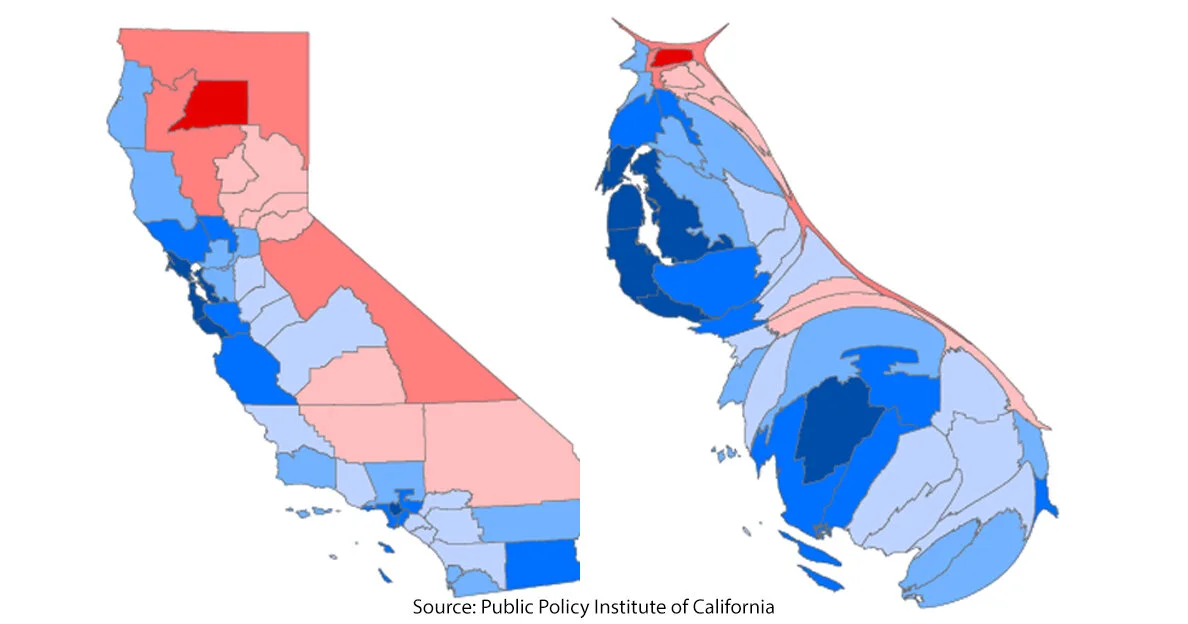
For Republicans, getting voters of color to support the recall is the key to victory. According to a recent poll, Latinos are the only racial/ethnic group for the recall. Latinos/Hispanics are in favor of the recall (54% recall/41% keep. White respondents were split (48% recall/49% keep). Most Black respondents (41% recall/57% keep) and Asian respondents (30% recall/49% keep) were in favor of keeping Newsom as governor.

Source: Public Policy Institute of California

.jpg)
Source: Public Policy Institute of California
Black and brown leaders can save the day...again
California actually does have what it takes for Democrats and progressives to win. Groups like the Million Voters Project Action Fund, and regional civic engagement groups like Alliance San Diego, Inland Empire United, Orange County Civic Engagement Table Action, Communities for a New California, and Lift Up Contra Costa Action have the infrastructure and multi-cycle track record of mobilizing voters—especially voters of color—at scale.
These regional groups helped Democrats win congressional seats in 2012, 2018, 2020, turning previously red areas like the Inland Empire, the Central Valley and Orange County purple. They helped elect progressives like Assembly Majority Leader Eloise Goméz Reyes in Amazon warehouse-land in 2016, Anaheim City Councilmember Dr. Jose Moreno in Disney territory in 2016, and have helped turn San Diego from a right-wing Republican haven to a county with a progressive majority on the Board of Supervisors. California Donor Table (CDT) powered those wins. (CDT is a network of donors committed to building power in California's communities of color and making lasting progressive political change.)
What’s at stake
Not only is defeating next month’s recall important in and of itself, but allowing a high-profile Democratic governor (considered among the most progressive in the country) to be recalled in the nation’s largest and bluest state would have national implications.
As we saw in 2012, 2018, and 2020, the road to a Democratic congressional majority goes through California. The regions in California where the Republican recall campaign efforts are gaining the most traction are exactly where Democrats need to win not only against this recall, but in congressional races next year: the Central Valley, Orange County, San Diego, and the outskirts of LA.
How you can help
Please join us to close the budget gap of key people of color-led political organizations who can communicate with and mobilize Latino voters running “No” campaigns here in California by 1) urging Governor Newsom to spend more of his campaign funds on direct voter contact of voters of color, and 2) directly giving to these organizations.
CDT has raised a total of $1.4 million so far for anti-recall-related efforts in California over the past three months directly to the above-mentioned groups. These groups still have a $1.1 million gap. Please give online below, or ask us for wiring instructions for larger donations:
We are all in this together. The stakes are enormous, for California and the nation. For those of us committed to justice, we must do what needs to be done to win.
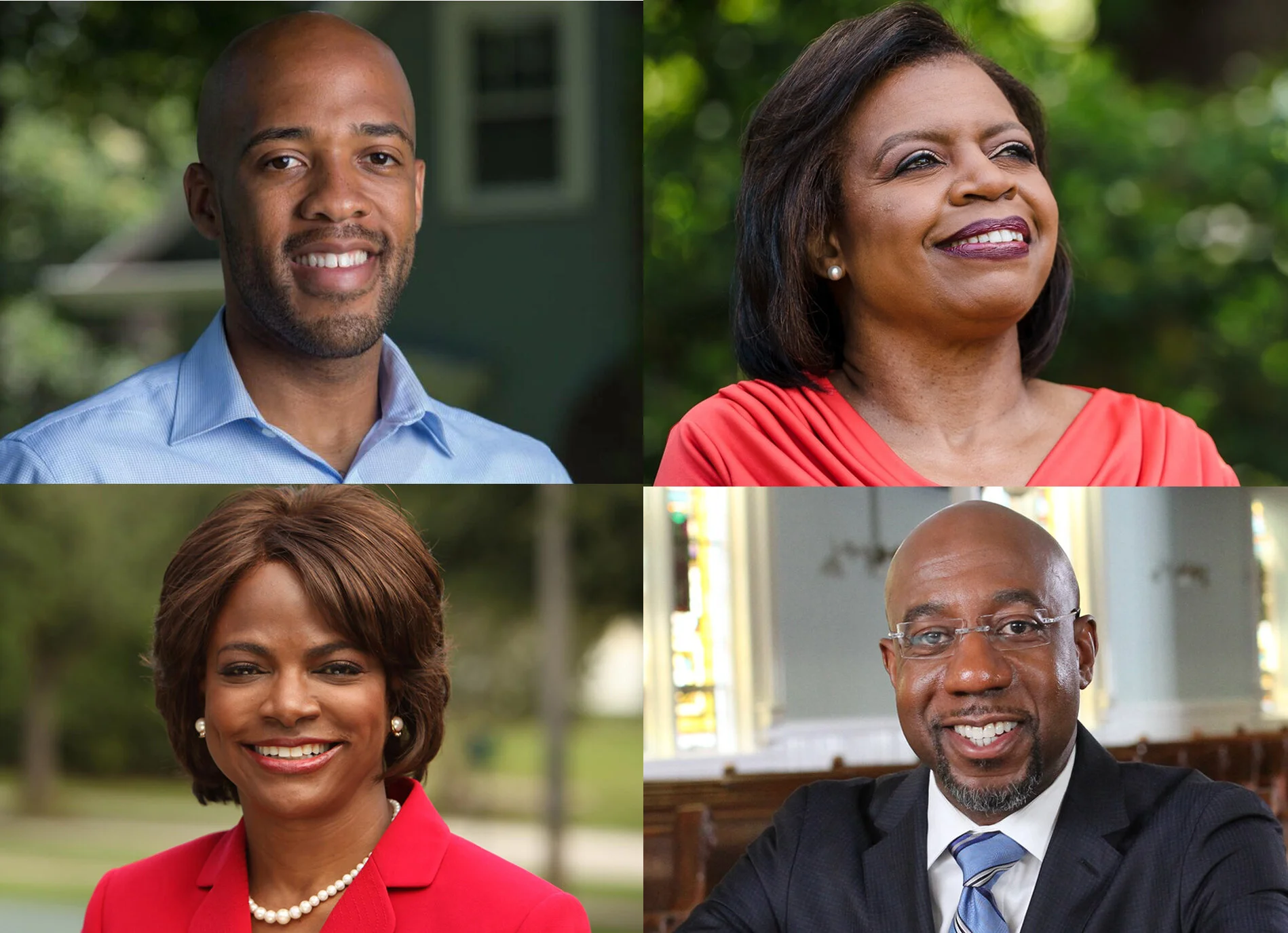
Black Candidates Will Help Democrats Win These 4 Swing Senate Seats in 2022
These key states are most likely to expand Democrats’ majority in the chamber while deepening racial and gender diversity
These key states are most likely to expand Democrats’ majority in the chamber while deepening racial and gender diversity
By Fola Onifade
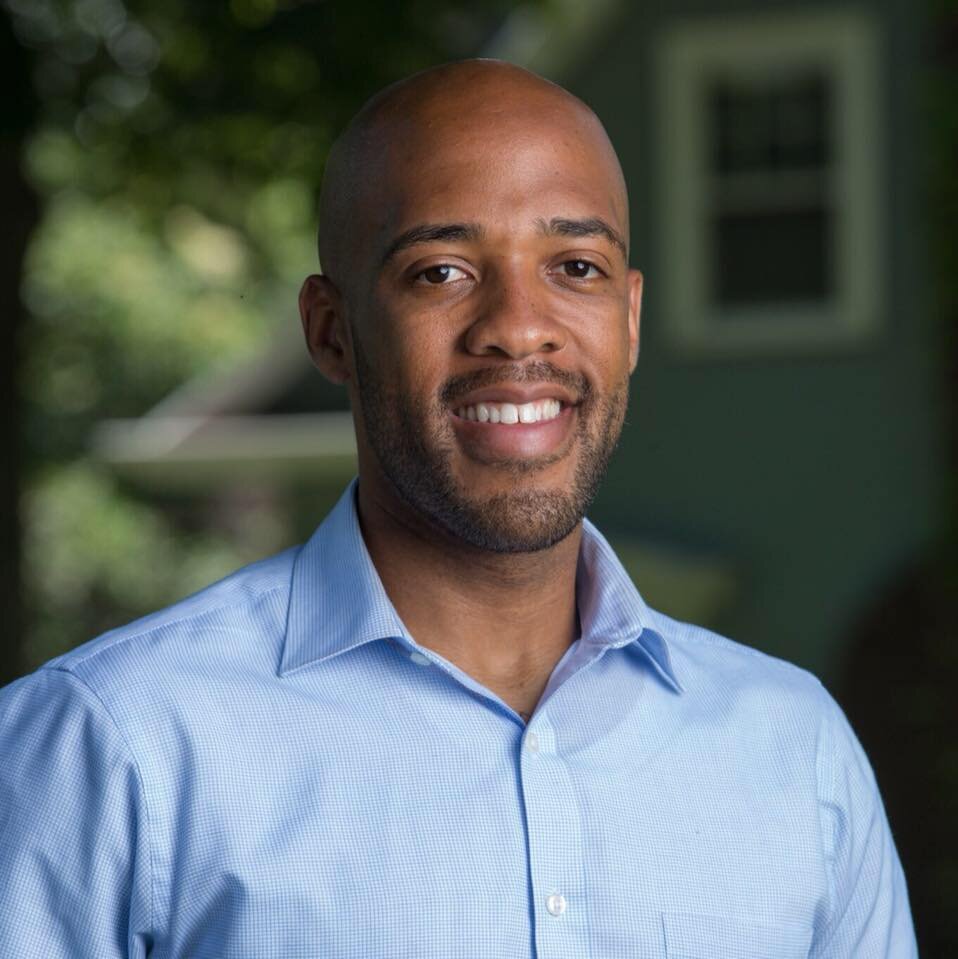
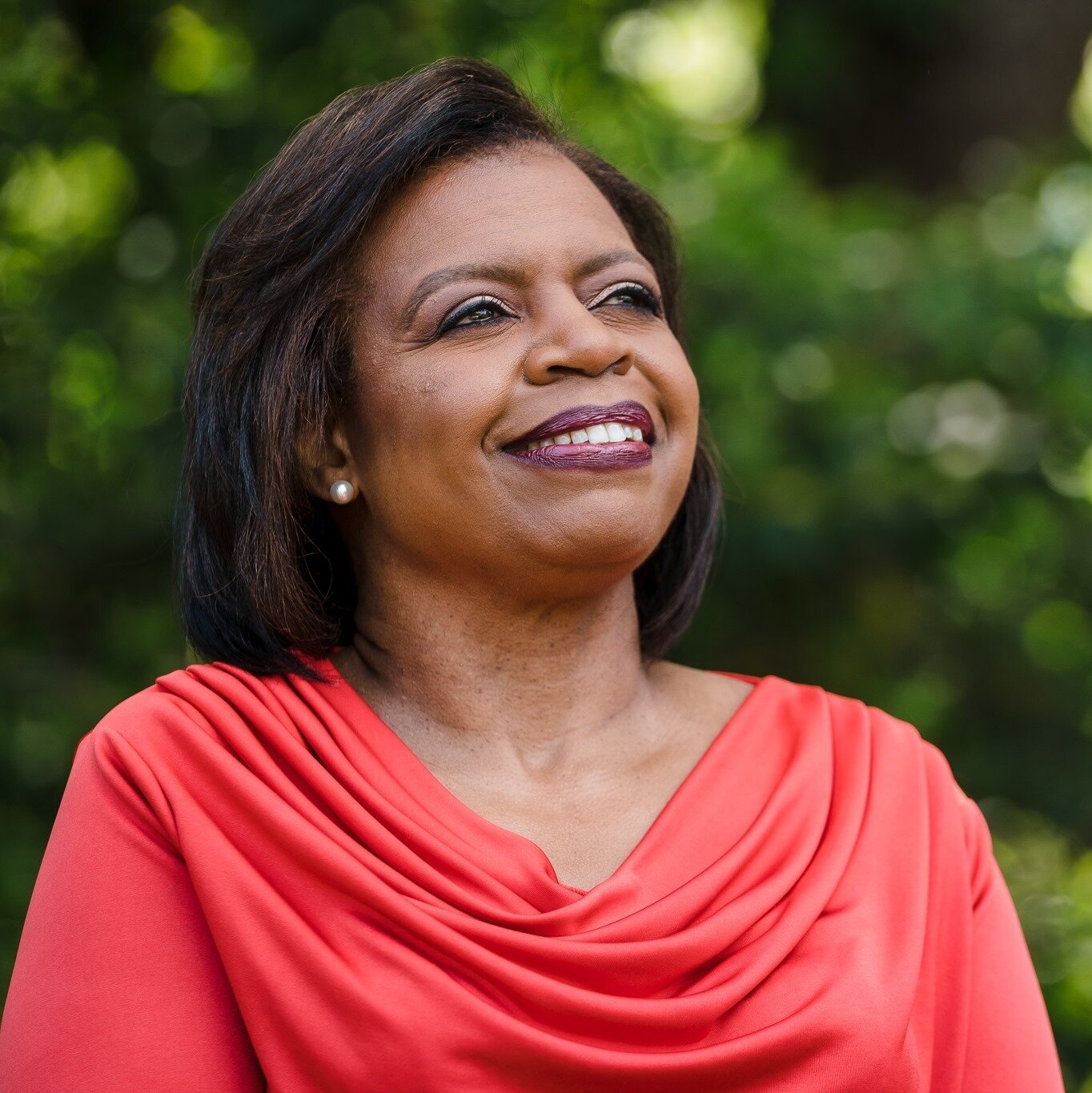
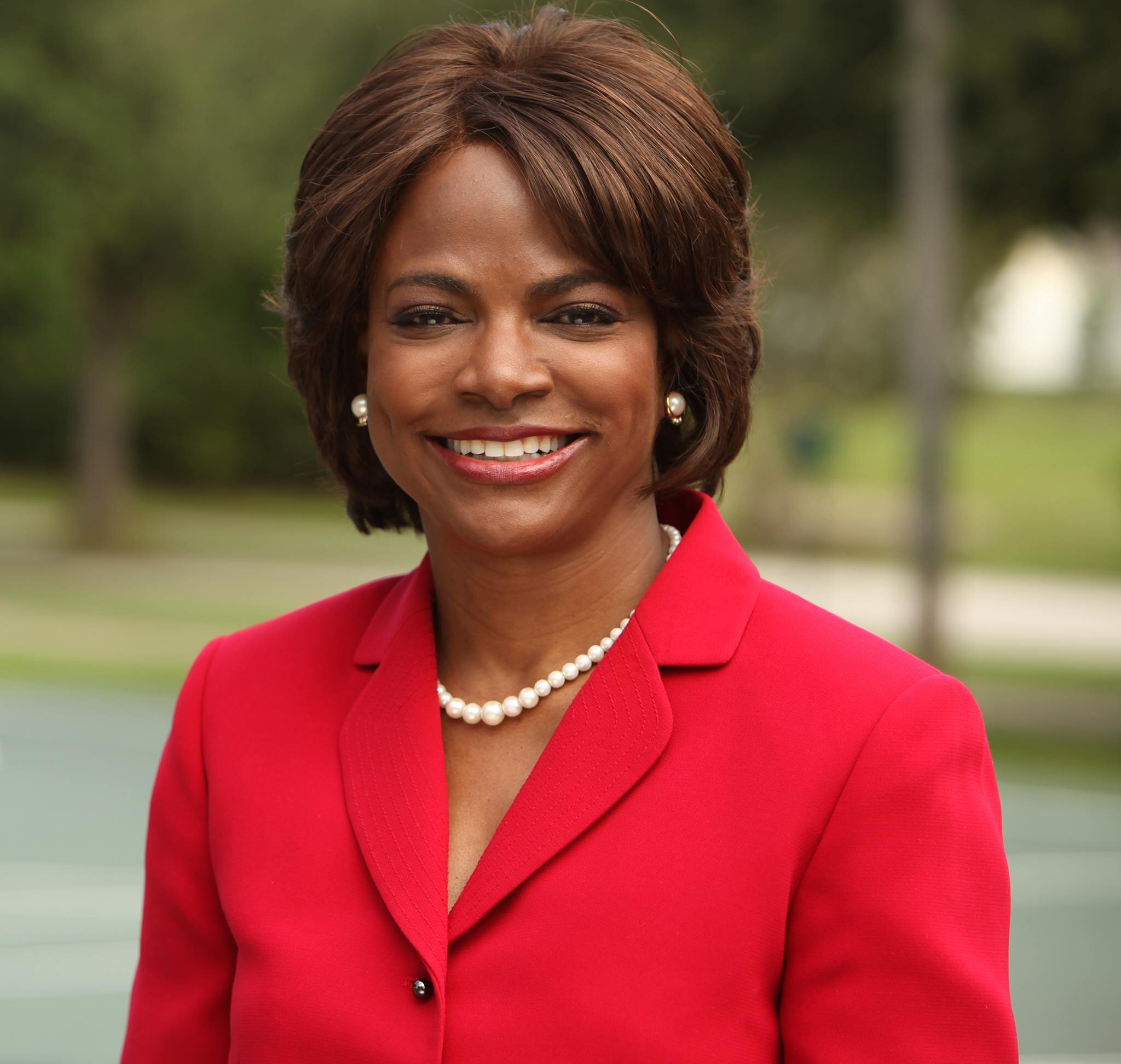
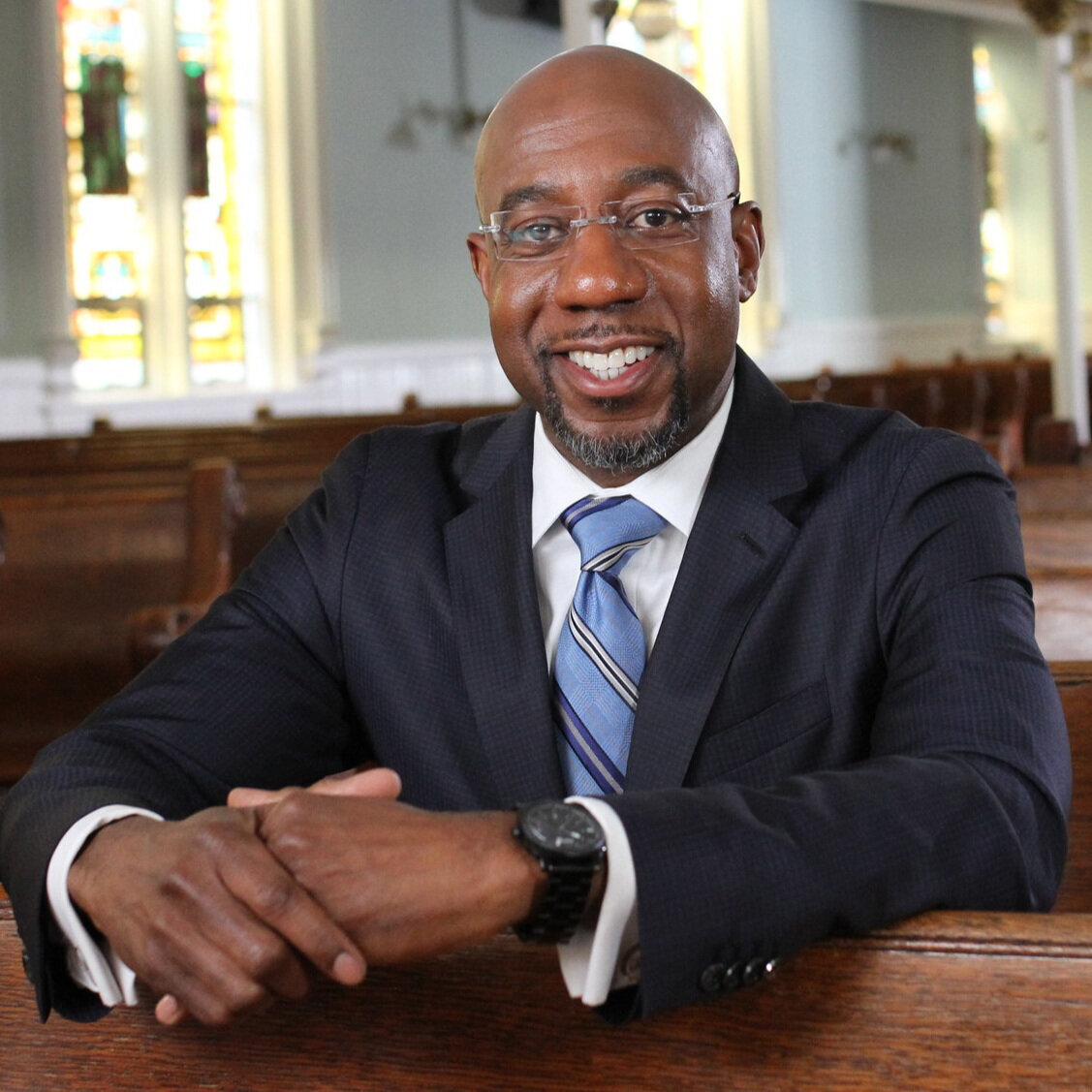
Somehow, it’s almost August and you may have forgotten that late last year through January of this year, the country scored major victories in Georgia that paved the path to Joe Biden’s presidency and a Democratic Senate majority. You may also recall that any celebration or sigh of relief was cut short as modern-day Confederates and white nationalist insurrectionists stormed the U.S. Capitol brandishing weapons and actual Confederate flags, attempting to block the certification of the election and threatening the lives of the Vice President and several Congresspeople and Capitol Hill staff.
They were ultimately unsuccessful, and while we’re still waiting to have both the insurrectionists and the Republican members of Congress who voted against certifying the election held accountable, the best thing we can do to secure our democracy is to win more seats in the Senate. Across the country, several candidates of color are stepping up to fight for the multiracial democracy that modern-day Confederates are working hard to prevent. So, we’re turning our eyes to 2022, when Democrats will have the opportunity to expand on their wins from last year, if they make wise decisions about the candidates they support with money and early action.
As Democracy in Color’s founder Steve Phillips continues to flesh out a pathway for How We Win the Civil War (the title of his forthcoming book and the very legitimate question plaguing American democracy today), there are four specific Senate races that offer our best bets to not only hold, but expand, the Democratic majority in Congress.
While the Democratic Party was slow to get on board with the possibility of winning in Georgia in 2020, the victories in both December and January, bolstered by a decade of organizing across the state, affirmed that there is a formula for winning. High turnout from voters of colors aligned with progressive whites is a winning strategy, and driving those levels of turnout is often attached to running a Black candidate who can inspire the electorate. This analysis leads us to the four states where Democrats have the best shot of replicating (or repeating) Georgia’s victory.
Wisconsin: Mandela Barnes
His name is Mandela...need we say more? In all seriousness, in a state that voted Democrat for seven consecutive presidential elections prior to Hilary Clinton’s campaign, Lieutenant Governor Mandela Barnes is the kind of candidate that would inspire the party’s multiracial and progressive base and drive voter turnout in 2022. In his 2018 primary run for lieutenant governor, Barnes won in “virtually all of the state’s 72 counties”, buoyed by his ability to secure votes in rural areas despite being outspent, according to Cap Times.
Why this race matters: While Wisconsin was considered ‘reliably blue’ up until 2016, the presidential races tend to be close, dating back to Gore v. Bush in 2000 when Al Gore won the state by just under 6,000 votes. Former President Barack Obama’s election in 2008 proved the power of having a candidate that voters of multiracial backgrounds could connect with. Barnes can speak to issues of “economic anxiety” that affect not just white people, but plague Black communities and communities of color as well, in the form of the racial wealth gap or disproportionate unemployment.
North Carolina: Cheri Beasley
In North Carolina, Cheri Beasley, the first Black Chief Justice of the Supreme Court of North Carolina is running for Senate to replace Senator Richard Burr, who will be stepping down after he finishes his term. If elected, Beasley would be the first African American woman to serve as senator from North Carolina.
Why this race matters: Since Vice President Kamala Harris left the Senate to serve as second-in-command to President Joe Biden, the chamber has been absent a Black woman. In the 2020 election cycle, Cheri Beasley was narrowly defeated in her race to hold on to her seat by just 401 votes. She still received thousands more votes than President Biden, according to the Washington Post, making her a frontrunner in the race. If Beasley and Val Demings who’s next on the list are successful, the Senate would gain not one, but two Black women where there is currently none.
Florida: Val Demings
Representative Val Demings, a former police chief in Orlando who was vetted for Vice President by the Biden team, is challenging Senator Marco Rubio, who continues to align himself with the incendiary white nationalist rhetoric of Trump Republicans. Demings, on the other hand, grew to national recognition as one of the managers in Donald Trump’s first impeachment trial.
Why this race matters: The January 2021 Georgia run-off elections were the first indicators of what is possible when Trump is not on the ballot, a major point that continues to frame the races for vulnerable Republican Senators, forcing them to fully align with Trump and run the risk of alienating less extreme conservatives or attempt to win without support from the party’s leading figure. In the 2018 gubernatorial race, Andrew Gillum, the first Black nominee for Florida governor was narrowly defeated by 32,000 votes. Now, Floridians will have the chance to make history by electing a Black woman to the Senate.
Georgia: Raphael Warnock
In January 2021, Raphael Warnock, senior pastor at Ebenezer Baptist Church (the church that was led by Dr. Martin Luther King) made history as the first Black Senator from Georgia. His victory, along with Senator Jon Ossoff's, played a critical role in Congress passing a $1.9 trillion relief bill that has, among other things, delivered direct payments to individuals and couples, extended unemployment benefits, and expanded the child tax credit for families. Because his race was a special election, he’s up once again to hold on to his seat and the Senate majority.
Why this race matters: Georgia’s shining role in the 2020 elections are a result of a decade-long effort to turn demographic potential into political power. According to the Pew Research Center, Black, Asian and Latino Americans have been the driving factor in Georgia’s voter registration growth since 2016. Across the state, racial and ethnic groups broke records that led to historic voter turnout numbers and Democratic victories.
Georgia is proof-positive that dynamic and engaging candidates who speak to the issues that matter to Black people and people of color can drive winning levels of support across racial and ethnic lines.
Pennsylvania: Still Watching
We’re still assessing the landscape in the Pennsylvania Senate race to replace Senator Pat Toomey. There are currently two Black primary candidates we’re watching: State Senators Malcolm Kenyatta and Sharif Street. It’s still unclear who the leading candidate will be in the crowded race, and we’ll have more to say in the weeks ahead.