5 Things You Can Do to Fight for Democracy Right Now
One year after the racial reckoning that swept the country and the globe in the wake of George Floyd’s murder, we’re still in the trenches fighting to advance a multiracial and progressive democracy where diversity of race, gender, orientation, faith, heritage, and ability are valued.
American democracy is at stake. It’s going to take all of us.
By Fola Onifade

One year after the racial reckoning that swept the country and the globe in the wake of George Floyd’s murder, we’re still in the trenches fighting to advance a multiracial and progressive democracy where diversity of race, gender, orientation, faith, heritage, and ability are valued.
As many of us reflect on what one year of protest and organizing has meant for social justice and progress, we’re still aware of the work we have to do to help make the potential for a multiracial democracy possible. Right now, a big part of that work is beating back the Republican assault on the franchise and defending and expanding the right to vote where we can.
Here’s what you can do to help.
Participate in Fair Fight’s Hot Call Summer; call your Senators and tell them to support the For the People Act to safeguard the right to vote.
Stacey Abrams and the team at Fair Fight are not new to saving democracy. Because the For the People Act and the John Lewis Voting Rights Amendment Act—two bills that would help strengthen and protect democracy—risk not passing in the Senate, she and her team are organizing a summer of phone banking to Senators.
If you want to volunteer with Fair Fight to make calls, sign up here.
Donate and support grassroots electoral organizing groups.
Keep up with the work happening in important states by supporting groups like the Texas Organizing Project, New Georgia Project, New Virginia Majority, Florida Rising, and LUCHA in Arizona. With the exception of Virginia, these are key states currently facing major voter suppression.
While we need our representatives in the Capitol to do their part and fight to pass both the For the People Act and the John Lewis Voting Rights Amendment Act, we can’t rely on our elected officials alone. Grassroots organizations do the work on the ground each day to educate their communities on the issues, and drive voters to turn out. Supporting these organizations during this time is one of the most important actions we can take right now. Donate here.
By the way, you can learn more about the New Georgia Project (NGP) by listening to our Democracy in Color podcast episode with the group’s founder, Stacey Abrams, or NGP Action Fund CEO Nse Ufot. If you want to learn more about the New Virginia Majority and how Virginia remains the sole former Confederate state to actually expand democracy, listen to our episode with NVM’s Co-Executive Director Tram Nguyen.
Volunteer or support groups who are holding corporations accountable by pressuring corporate leaders to speak out against voter suppression.
If corporations are paying attention to anything happening in the U.S., they should be as alarmed and as fired up as the rest of us are, but that doesn’t seem to be the case. Several of the organizations we mentioned above have organized and pressured companies like AT&T to back up their business leaders roundtable talk with action. Color of Change is another organization that has done plenty of work around corporate accountability and social justice.
Many corporations who denounced the introduction of these state voter suppression bills were silent as the laws made their way through state legislatures, and several continue to provide donations to Republican politicians who support these voting rights restrictions.
With the public’s changing understanding of what should be expected from corporations and business leaders, real corporate social responsibility (and not just lip service) can matter more to a company’s bottom line today than it did in the past.
Follow race-conscious journalists for sharp thinking on the rapidly evolving nature of the fight.
We recently had New York Times political reporter Astead Herndon on our podcast to discuss the changing nature of U.S. politics and what it means for the country. Astead’s work contains the type of critical analysis required to dissect the trends and understand the moment we’re in. Other key thinkers and reporters we look to for clarity and insight are Joy Reid, Errin Haines, Adam Serwer and Ron Brownstein.
Share information within your network from trustworthy news sources and organizations
One reason to stay hopeful even in the middle of conservative assaults on democracy is the public’s awareness of the onslaught of voter suppression tactics, as well as the considerable amount of related news coverage. Republicans working to disenfranchise large sections of the population that are majority people of color is nothing new. This time, however, more people, including journalists, are paying attention. Choose your sources wisely. (Shameless plug: our newsletter is full of good links and information.) And help keep your network in the know about how they can do their part.
Throughout American history, Black Americans, Asian Americans and Pacific Islanders, Latino Americans, Arab Americans, Native Americans, whites and more of all origins, orientations, and abilities have linked together to build a country that works for all of its people. The greatest threat to that work has always come from those who loathe the idea of a multiracial democracy, one that represents the diversity of its constituents’ needs, aspirations, and futures. As activist Angela Davis once said, “Freedom is a constant struggle,” and so we continue to fight for the democracy we hope to see.
For more insights from the Democracy in Color team around race, politics, and history, sign up for our weekly Democracy in Color newsletter.
the problem with cisgender bathrooms
in the late 90s, i was driving from kansas city, mo, through nebraska, by myself, to go home to wyoming to visit my family. at the time, i had a buzzed haircut & a wary approach to most anyone new i met.
By Dc Lozano
Updated Intro Published June 23, 2021
Original Article Published on Medium February 24, 2017
dr. martin luther king jr. once reminded us that the arc of the moral universe is long, but it bends towards justice. forgive me when i tell you i have a hard time tolerating this quote. it’s a beautiful saying, like so many out there. a few come to mind, like: do unto others, love your neighbor, love is love. but for those of us who have spent our lives in the margins: the queer, the non-white, the gender-defiers, they’ve lost meaning. pretty phrases make us feel like we’re advocating for change, so we post them, bumpersticker them, or wear them & call it a day. & i get why. conquering injustice, bias, hatred, & fear can feel like trying to put the ocean in a paper cup. as i write this, the republican party is actively blocking legislation that would protect our lgbtq+ youth, especially our transgender siblings.
& republicans, as per normal, are oddly obsessed with #1 and #2. in the year of their lord, 2021, a.d. — rather than codifying science & reparations, providing affordable health care to a country ravaged by a pandemic, & passing legislation requiring schools to teach critical race theory, aka our real american story — they’re playing the bathroom card, again. they are demonizing the lgbtq+ from their porcelain thrones … & the neverending question is WHY? you can’t make it make sense to me.
most americans, fortunately, see through the crack in the stall door, but ... back to that arc. it can’t bend on its own. we have to force it. here’s the thing: you can put the ocean in a paper cup. you just have to do it 6 ounces at a time. since i wrote this article in 2017, i’ve taken that salty blue & made small resorts for those in need of shelter. grab a cup, raise it in toast to all we’ve accomplished & all that’s left to do, & start actively bending that arc towards justice.
the problem with cisgender bathrooms
in the late 90s, i was driving from kansas city, mo, through nebraska, by myself, to go home to wyoming to visit my family. at the time, i had a buzzed haircut & a wary approach to most anyone new i met. honestly, i was wary of most of the people i’d known before the buzz cut, because, myself, out loud, as an obvious lesbian (who flaunted it with her boyish looks), made a lot of people uncomfortable. those of you who have lived in the margins know there are times (fewer now than before, but for how long?) when you moved quickly through territories with known or unknown threat levels: walmart, suburban grocery stores, anything with boutique in the name, states between california & new york, etc. you very carefully chose when & where (or even if) to use a public bathroom.
it was late summer, & the sky was wide open & edged with the purple of a coming star-filled night. most of my friends thought i was crazy to drive that stretch of the world, primarily because it’s a yawn fest, but it’s what took me home to a loving family. remember, it was the 90s, which meant the world was perhaps a bit of a darker place for me than some women. part of this darker world meant knowing that i needed to stop as few times as possible along my 11-hour way: something i wouldn’t have to worry about if i had long flowing hair & wore fashionable women’s attire (i didn’t & still don’t). i knew that when i did stop, it needed to be fast & efficient: pump the gas. get some snacks & water. stretch my legs. call home collect & tell my parents where on the map i was. & no matter how tired i got, don’t drink too much coffee because you do not want to have to pee in goddamn nebraska if you can help it. (sorry nebraskans, but y’all were scary in the 90s.) however, running out of fuel had far scarier scenarios attached to it so, inevitably, i stopped to get gas at a little place off the interstate. a common, easy thing to do, right? no biggie. just a girl filling up the tank & emptying her bladder.
i remember it like yesterday. the smell in the air. the smell of the great plains, fresh with a hint of sugar beets & hay. crisp like hope when the breeze makes you feel like you’re on top of the world. if you’ve never enjoyed the dusk of nebraska or wyoming at the end of summer, you may be missing out on one of the wonders of the universe. & i felt good in that night air as my punk rock t-shirt & cutoff shorts caught the ruffle of the wind. but as per usual in the world, things go as they go until someone like me goes to the bathroom.
you all know the set up: doorless entries facing each other with a water fountain in between. signs make it clear: cowgirlsthis way, cowboys that way. as i was walking toward the restroom a trucker & his belly (whatever you picture here, you’re probably right) came into the station & harrumphed his clearly tired body past the candy & chips to where i was, standing at the place where two roads diverged in a yellow fluorescent wood. so i took the road i’ve always traveled by & went the way of the pointing cowgirl, giving her an imperceptible look of solidarity knowing full well she’d never have chosen that outfit to wear for all her sign-ly eternity if it had been up to her — as trucker belly took a right at cowboys. but i wasn’t going to get off that easy. he’d caught a glimpse of me out of the corner of his eye & jumped back like he’d been bit by an electric rattlesnake. he had mistaken me for a boy. i have not heard again the likes of the high-pitched startle that emitted from him all because he thought he was going into the wrong bathroom. so, instead, he turned to follow me into what he assumed was the men’s room. hail mary when he realized that i was never a boy & that he was now in the women’s room — time … literally … slowed … down. this time, when he jumped into the air, arms spread out like there was a sheriff with a warrant waiting in there for him, his high-pitched startle came out in slow-mo & i am not kidding when i tell you i thought he was going to kill me. he was so animated. it was like his brain just quit being able to make sense of the world. & then he got mad. because that, in my experience, is what men do when they can’t compute — not computing makes them embarrassed & being embarrassed makes them feel like they were wronged & being wronged causes them some sort of emotion & that emotion makes them feel weak & that weakness makes them angry — & that anger needs to be taken out on somebody.
i can’t say i’ll ever fully understand it, this reaction to someone who doesn’t fit someone’s idea of woman or man. i can’t imagine, personally, wanting to be any other kind of woman than the woman i am, & i wouldn’t want another woman to be different than the kind of woman she is. because it’s not a cliché when i say our differences are what makes the world so much better, smarter, exciting.
anyway, i didn’t get to use the bathroom at the gas station that day. & the woman working there said, honey let’s get you out of here & she rung me up faster than she’d ever rung anyone up in her life & didn’t charge me for my snacks because i could only grab what was at the counter. all the while she was keeping an eye on angry trucker belly who had begun yelling at me, what are you! what the hell are you! he was so angry he was spitting. his hands were clenched. he was so red i thought he might drop dead. i didn’t run to my car. & i didn’t look back. i knew if i ran, he’d chase, & if i looked back we’d make eye contact & he’d get even more mad, or i’d say fuck off you fat slobbery redneck dickwad piece of shit. i got in my car & pulled back onto the highway. he got in his truck & barreled after me, honking & swerving & flipping me off & making rude gestures (my own private thelma & louise moment!). it was probably just a few seconds that he was behind me before he passed me & left me & my aching bladder in the dust, but it felt like a lifetime. not because i was scared, which i was, but because this is where i stopped being able to compute. as it was happening i was replaying it, looping it over & over — what in the hell are you ! — trying to figure out what in the hell was happening, trying to figure out why he was so mad.
i’m not telling you this to make you feel bad for me (dear gods don’t!), because that guy was an idiot & i am/was strong, & i wouldn’t change any of my experiences because they reinforce my reasons & needs to be overtly who i am. i shaved my head & said without saying a word, i am a motherfucking proud lesbian, in a time & place where most people didn’t. i made that man see me. & maybe somewhere along the way he stopped & took a look at himself.
i’m telling you this simple & ultimately painless story because it is not my only terrible public bathroom experience, as so many of my lgbtq sisters & brothers will tell you: the verbal & physical abuse we have endured just trying to pee is beyond most people’s comprehension.
i am telling you this because i am asking you to fight for my community, especially & most importantly for the trans community. when a government decides to take away protections for children in our public schools simply because they are trans, that is NOT government for, of, & by the people. it is an endorsement by that government to enact hatred upon a community — & people follow their government’s lead.
i am telling you this because i am asking you to stand up to people who use christianity as an excuse to bully others. i am asking you to tell the people in your churches & communities that if they believe that we are all, indeed, made in god’s image then we are as loved as anyone.
i am telling you this because when you take away protections for those in the lgbtq community, specifically protection for lgbtq youth, suicides & suicide attempts rise. i am telling you this because not everyone feels safe telling you.
i am telling you this little story because ignoring little things leads to big things. big things that history won’t forget. because hatred that starts designating who can use which bathroom or drink from which drinking fountain or buy a wedding cake from which shop, will, unless we stand up together & loudly say no, find us all, shamefully, sadly, finally — equal.
dc lozano is a writer & activist who lives in southern california with her wife & 2 dogs.
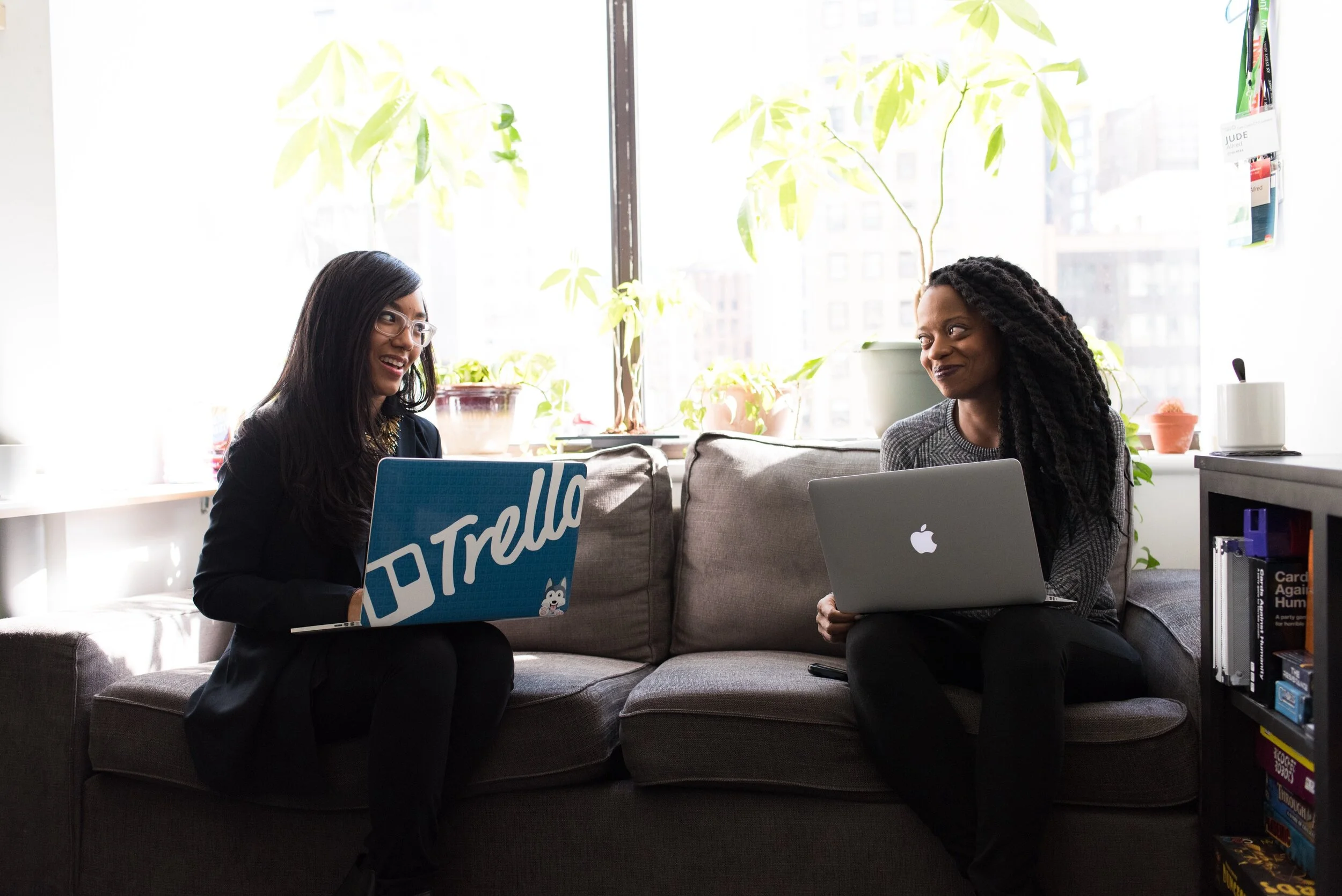
5 Newsletters That Don’t Drop the Ball on Race & Politics
Like podcasts, there seems to be no shortage of newsletters from the corporate marketing email blast to the political candidate’s weekly fundraising plea begging for all your coins OR ELSE.
Because you can’t talk about American politics without race.
By Fola Onifade

Like podcasts, there seems to be no shortage of newsletters from the corporate marketing email blast to the political candidate’s weekly fundraising plea begging for all your coins OR ELSE.
But good newsletters, ones you look forward to regularly and open every time they land in your inbox, are harder to come by (trust us, we try to write one every week). In the political sphere, it’s even more challenging to find newsletters that provide a sharp analysis of race and social justice in the greater discussion of politics and policy.
While we most certainly hope you’ll subscribe to our newsletter, here are five others we read to stay smart on politics, and think you should too.
The Platypus: Justice, Joy and Ideas by Deepak Bhargava and Harry Hanbury
Birthed from an informal email blast to friends in the early stages of the pandemic, The Platypus is now a (mostly) weekly newsletter from former executive director of Community Change Deepak Bhargava and documentary filmmaker Harry Hanbury. The Platypus provides sharp insights and opinions on news and politics, but doesn’t take itself too seriously as it infuses reflections on pop culture from Lil Nas X to “Schitt’s Creek” and our new favorite band, the Linda Lindas.
raceAhead by Forbes’ Ellen McGirt
Senior Editor and Writer at Forbes, Ellen McGirt writes a twice weekly newsletter centered around race and politics, especially as it relates to corporate America. At a time when the lack of cultural competency can sound the death knell of a public entity, being smart on racial and social justice impacts the bottom line. If you’re looking for a newsletter at the intersection of business, race, and politics, raceAhead is the one for you.
This Week in the South by Scalawag Magazine
Scalawag Magazine is redefining the South and shifting the narrative to help foster transformational change in the region and across the country. Rooted in liberatory practices and solidarity, Scalawag’s reporting centers the stories of movements, organizers, and the communities that drive them. As the national political center of gravity shifts towards the South and Southwest, sharp reporting that addresses race and politics in the region will continue to grow in importance, and we’re looking to newsletters like This Week in the South for the stories that lift up the folks most affected by the changing winds.
About Us by Washington Posts’ Vanessa Williams and Rachel Hatzipanagos
Twice a week, the Washington Posts’ About Us shares its best coverage on race and culture, and highlights candid conversations across the web about identity, race, and politics from TikTok’ers using the platform to build awareness for social justice issues to Post’s freelancers discussing the legacy of plantations and what they owe to descendants of slavery. About Us pulls together the Post’s sharpest insights on the broad spectrum of race and politics in one place.
The 19th News
The 19th News’ daily newsletter highlights the stories and perspectives of women and people of diverse genders, centering a large portion of the population that are still often overlooked. From assessing the impact of the pandemic on women of color to lifting up trans activists and lawmakers fighting for trans rights, the 19th News is addressing American women everywhere and giving them a news outlet of their own.
At Democracy in Color, we’re lifting up the people, places and organizations that are advancing the vision of a multiracial democracy. It’s why we look to newsletters like the ones listed above to understand the diversity of the communities that make up the New American Majority, a rising multiracial and progressive coalition.
For more pieces like this and greater insight into the intersections of race, history, and politics, sign up for our newsletter here.