Five Things I Didn’t Know About Dolly
By Sharline Chiang
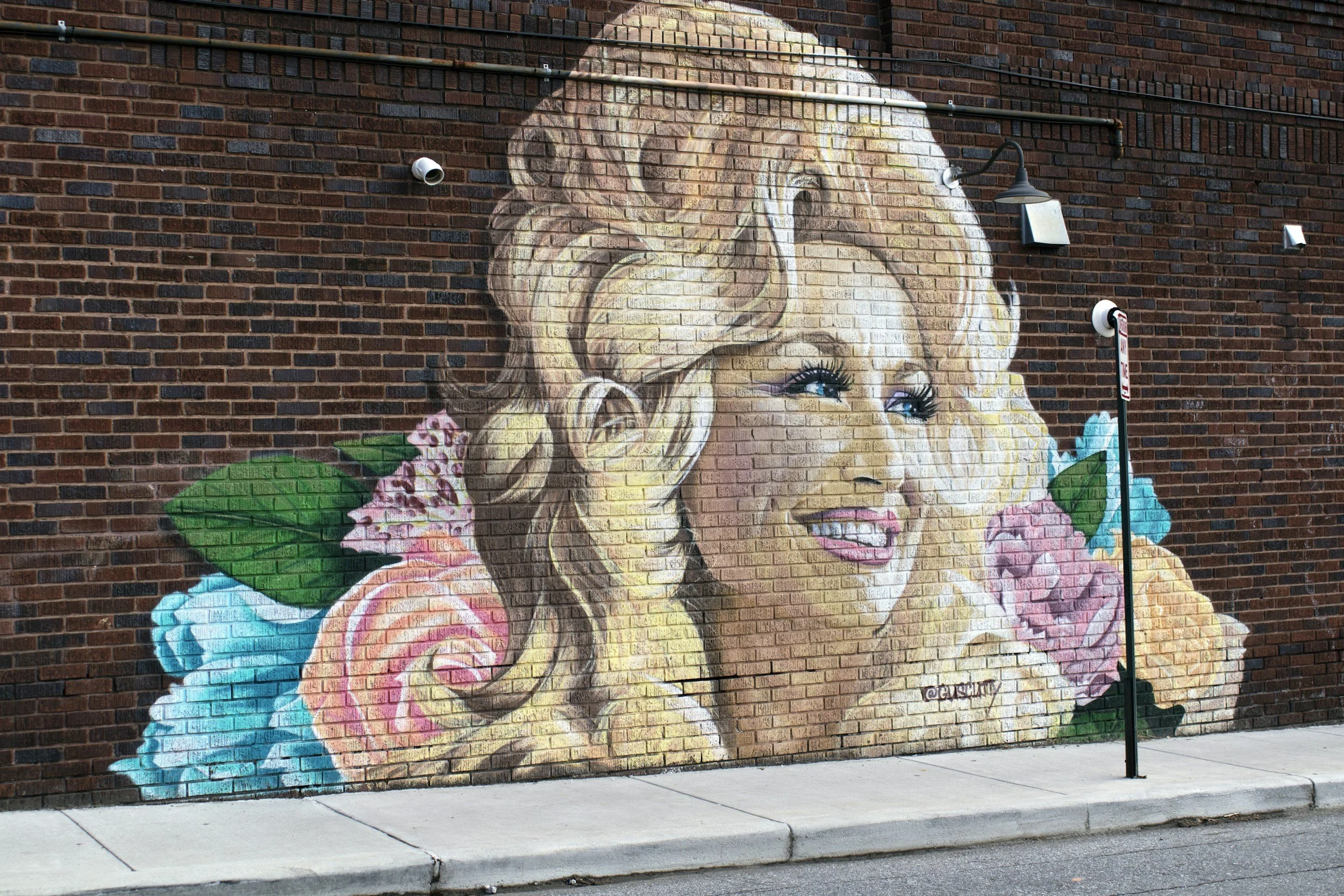
When I heard the news last week that Dolly Parton had died, I felt the same rush of emotions so many did: shock, disbelief, sorrow. As the day went on, reality sank in. I texted friends: How can there be a world without Dolly?
Social media swelled with reactions from fans across race, class, religion, and region, as people collectively processed their grief, sharing what she’d meant to them.
I was not a fan, at first
To be honest, as a daughter of Chinese immigrants who grew up in Jersey in the 80s on a steady diet of Madonna and Prince and heavy metal and rock, I didn’t care that much for country music, and by extension, Dolly. I didn’t care for her wigs, rhinestones, or bright Southern twang. I’d never been to the South, was convinced that the South and country had nothing to offer someone like me.
But year after year there was Dolly—on the radio, TV, and silver screen.
The day I fell in love with her
Then one day, in 2005, I had the privilege of watching her perform at Hardly Strictly Bluegrass, a free concert in San Francisco. I managed somehow to get a spot pretty close to the stage. Apparently some 200,000 people turned out but interestingly I recall the experience feeling intimate.
In her sparkly, beaded turquoise dress and matching guitar, Dolly looked like royalty as she belted out tune after tune, her voice casting a spell over each of us. She cracked jokes, laughed. She made a funny comment about smelling pot in the air and getting a contact buzz. She seemed so human up there, so real. People climbed trees to get a view. They climbed fences to get closer. We danced and sang with her. We screamed. Some of us cried (I nearly did during at least a few songs). At that moment, I got it. I understood the Dolly fever. I mean, talk about a rock star! That was the day I fell in love with her.
Then social media came and she seemed to be everywhere with her quips, down-home advice, and dazzling smile. The power of her mass appeal was undeniable, the draw of this woman, this powerhouse, this legend.
What I learned about Dolly
I have another confession to make: I didn’t realize how much of a badass social justice warrior she was until she left this earth (hides head in shame). Sure, I’d gleaned over the years that she was an icon and idol for the LGBTQ community. But it wasn’t until she died that I learned and realized how much of an outspoken ally she was, and not just for that community, but also for other marginalized groups, the Black community in particular.
Here are just five facts I learned over the past week about Dolly:
She wrote “I Will Always Love” and invested the money in a Black neighborhood
Apparently I’m the only one who didn’t know that the song “I Will Always Love You” was written by Dolly! After Whitney Houston’s version became a massive hit, Dolly earned millions in royalties. She later revealed that she invested some of that money, about $10 million, in a mostly Black Nashville neighborhood to buy a commercial strip mall and office complex.She said “Black Lives Matter” when many other country stars wouldn’t
In 2020, as protests across the country forced a reckoning over racial injustice, Dolly publicly declared: “Of course Black lives matter. Do we think our little white asses are the only ones that matter?” She also called on white Americans to acknowledge that racism still existed—and to do something about it.She quietly dropped the word “Dixie”
In 2018, Dolly renamed her “Dixie Stampede” dinner event “Dolly Parton’s Stampede.” She later explained that she had come to understand the word’s association with the Confederacy and slavery, and that using it could be hurtful to others. (“Dixie” is a longtime nickname for the American South and is closely associated with the Confederacy and its defense of slavery.)She was an LGBTQ ally long before it became easier to be one in country music
Dolly publicly supported same-sex marriage, repeatedly embraced her massive gay fan base and spoke out against Christians who condemned LGBTQ people. She also supported transgender people, saying in 2023, “I think everybody should be treated with respect.”She gave all kids books, for free
Dolly launched the Imagination Library in 1995 because her father, who grew up poor, never learned to read or write. What began in her home county in Tennessee became a worldwide literacy program that has mailed hundreds of millions of free books to children—regardless of their families’ financial conditions. Any registered child can receive a new, free book from birth until their fifth birthday: imaginationlibrary.com.
What a powerful ally looks like
In these times we’re living in, when the country feels more divided than ever, the prevailing ethos—from politicians to billionaires—too often seems to be winner takes all, eat or be eaten. Power and greed reign, while concern for fellow human beings, equality, and protecting the vulnerable can feel not merely like afterthoughts, but values actively under attack, especially under this administration.
Dolly’s words and actions—and now the memory of her—have felt like a balm. Her loss is also a bittersweet reminder that you can be powerful and rich, and white, and still choose generosity over greed, compassion over cruelty, inclusion over exclusion.
Dolly showed us that you can have so much—and still do so much right.
She showed us what a white, straight, ally, including one who is rich and powerful, can look like and act like.
For me, that’s one of the most important parts of her legacy. She was a warrior for love and a true model of a term and value that’s shared across cultures and faiths: loving kindness.
Rest in power, Dolly. We won’t soon forget the lessons you taught us.